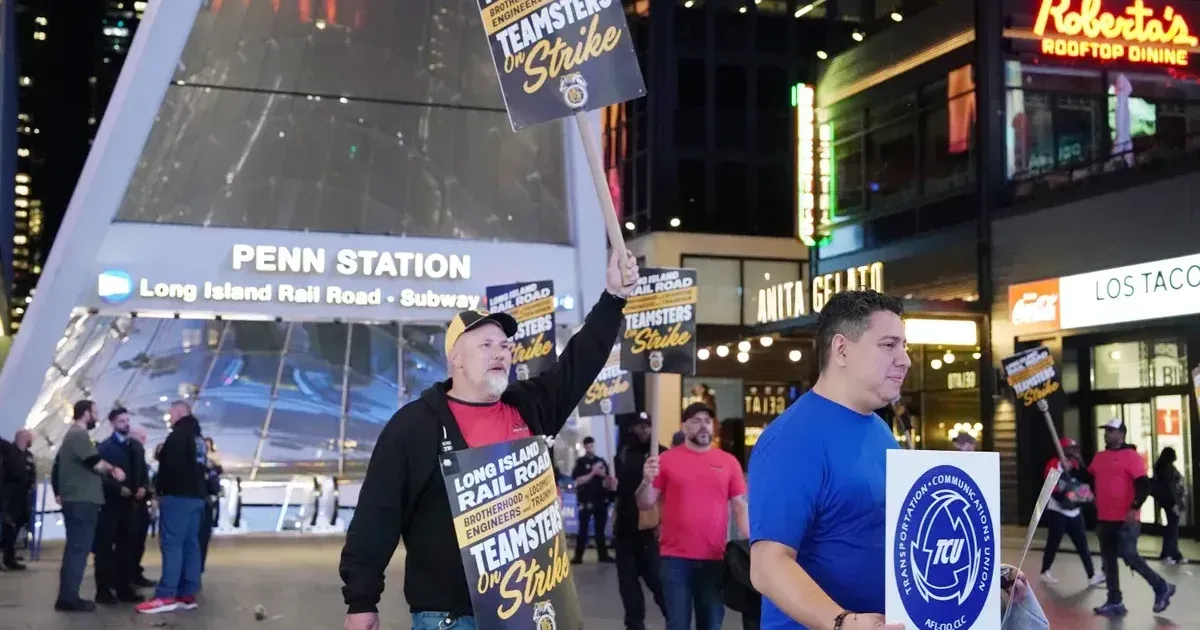
The LIRR strike has turned a contract dispute into an immediate test for New York's commuter network. Hundreds of thousands of riders were pushed toward remote work, buses and already crowded roads. On May 16, 2026, the shutdown began after negotiators failed to settle the final wage year of a proposed four-year deal.
MTA officials confirmed that the strike was triggered by a specific disagreement regarding the final year of the proposed labor deal. While both sides had previously reached a consensus on the terms for the first three years of the package, the fourth year became a point of irreconcilable difference during overnight sessions. Union leaders demanded a wage increase that would offset rising costs of living, while management argued that the requests exceeded the fiscal capacity of the current transit budget. These failed sessions occurred despite three years of ongoing negotiations and multiple attempts to bridge the gap between union expectations and state financial constraints.
Governor Kathy Hochul and MTA Chairman Janno Lieber addressed the public shortly after the 3:00 a.m. deadline passed. They advised the roughly 300,000 daily riders to stay home or use remote work options to prevent a total collapse of the regional road network. Hochul noted that the state is prepared to maintain this stance until a viable compromise is reached. Lieber echoed this sentiment, emphasizing that the agency cannot agree to a contract that jeopardizes its long-term solvency. Traffic on the Long Island Expressway and Northern State Parkway surged within hours of the announcement.
"We are asking every New Yorker who typically relies on the rail to stay home and work from home if possible because the alternatives simply cannot absorb this volume," Governor Kathy Hochul said in a press briefing.
Commuter Fallout Across Long Island
Negotiations preceding the walkout involved two separate federal interventions, including Presidential Emergency Boards tasked with recommending settlement terms. Federal mediators attempted to enable a compromise during the final 72 hours, but these efforts did not produce a signature on a new contract. Union representatives stated that the recommendations from federal boards did not sufficiently address the erosion of purchasing power experienced by their members over the last several years. The lack of a deal forced the activation of strike protocols that have been in development since the cooling-off period expired last month.
Labor coalitions have not set a date for a return to the bargaining table.
Commuters in Suffolk and Nassau counties face the most severe impact as they lack the strong subway connections available to those closer to the city center. Jamaica Station, an essential transfer point for travelers heading to John F. Kennedy International Airport, became a bottleneck for international tourists unaware of the labor dispute. Extra buses were deployed by some local municipalities, but transit experts warned that these measures would only handle a small fraction of the LIRR capacity. Ride-share prices in Queens and western Long Island reportedly tripled in the hours following the suspension of service.
The last strike of this magnitude occurred in 1994.
Why the Wage Year Became Decisive
MTA financial reports indicate that the agency is currently managing a multi-billion-dollar deficit, which has complicated the wage offer. Management proposed a total increase that aligns with other municipal worker contracts, but the LIRR unions argue that the specialized nature of rail work warrants a premium. Within the bargaining room, tensions escalated when the MTA refused to move on its final offer for the 2027 fiscal year. This refusal led to the walkout after a final volley of late-night proposals failed to gain traction with the union rank and file.
Operations at Grand Central Madison, the $11 billion terminal beneath Manhattan, are now completely suspended for the first time since the facility opened. The project was designed to increase capacity by 40%, yet it now sits idle during a peak travel weekend. Security personnel remain stationed at terminal entrances to direct travelers toward the subway or bus lines. Transit police have also increased their presence at major junctions to manage the crowds attempting to board the few available express buses.
Economic analysts suggest that a prolonged strike could cost the regional economy tens of millions of dollars per day in lost productivity. Small businesses near rail stations, which depend on commuter foot traffic, reported an immediate drop in Saturday morning sales. The North Branch and Port Jefferson lines, which typically carry the highest volume of weekend travelers, were the first to confirm a total service blackout. Train sets have been moved to secure yards to prevent any interference with freight rail that continues to operate on separate tracks.
A Prolonged Strike Would Turn Wage Costs Into Regional Losses
The collapse of LIRR service forces a re-evaluation of transit labor stability in a post-pandemic economy. New York City relies heavily on the steady flow of suburban commuters to sustain its commercial tax base, and this strike threatens that fragile equilibrium. Governor Hochul's decision to urge remote work reflects a shift in emergency management strategy that was not possible during the 1994 labor dispute. While technology allows for business continuity, the underlying fiscal health of the MTA is now in question if it must choose between service cuts or excessive wage growth. The strike may embolden other transit unions in the region, including those serving the subway and bus systems, to seek similar concessions in their upcoming contract cycles.
Will the state eventually capitulate to union demands to restore order to the suburbs?
The duration of this stoppage depends on the political pressure applied to the Governor's office by disgruntled voters on Long Island. If the road networks become permanently gridlocked, the cost of the strike will quickly outweigh the cost of the wage hike. Negotiators must find a creative way to fund that fourth year of the contract without triggering a round of fare increases that would alienate the public. For now, the trains stay parked in the yards while the rhetoric between the MTA and labor continues to sharpen.