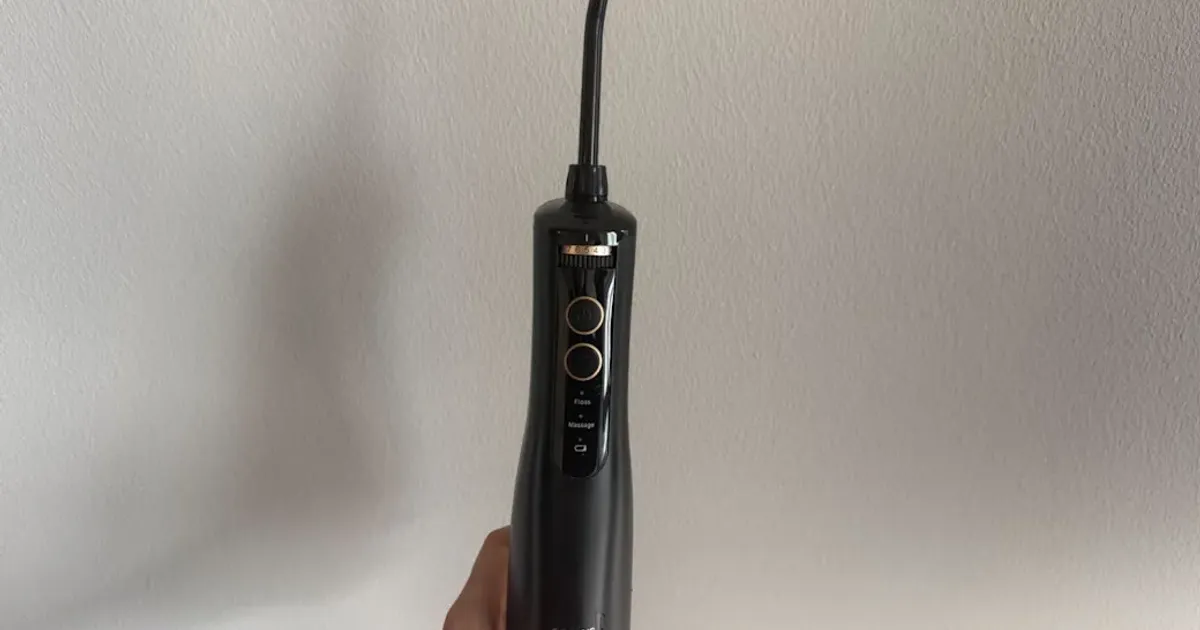
A two-week product review of the Coslus E40 described a water flosser that was easy to adjust and comfortable on sensitive gums. It did not test a stainless steel tongue scraper, analyze oral biofilm under a microscope or measure whether the device prevented dental or systemic disease.
MindBodyGreen commerce editor Carleigh Ferrante used the cordless oral irrigator nightly after brushing. She reported that her mouth felt cleaner than it had with brushing and string floss alone and that she experienced no irritation or bleeding. Those observations describe one person's experience, not a clinical trial.
The distinction changes what can be concluded. A consumer review can assess setup, controls, tank size, mess and subjective comfort. It cannot establish changes in plaque, gingivitis, cavities, periodontitis, cardiovascular risk or Alzheimer's disease without appropriate measurements and comparison groups.
The Device Was a Water Flosser With Five Tips
The Coslus E40 directs a pressurized stream of water along the gumline and between teeth. It has two modes, labeled Floss and Soft Clean, with ten adjustable speeds in each mode. A roll dial allows gradual pressure changes instead of limiting the user to a few preset levels.
The device has a 300-milliliter detachable tank, USB charging and five interchangeable tips: two standard jet tips, an orthodontic tip, a periodontal tip and a tongue-scraper attachment. The presence of that attachment does not turn the product test into evidence about stand-alone tongue scraping.
Ferrante began with Soft Clean at a low speed and increased the setting during the first week. She found the controls simple and the tank large enough for one session. Her criticisms were practical: water could splatter while she learned the technique, and the package did not include a charging brick.
The article listed the price as $28 and included a purchase link. MindBodyGreen identifies Ferrante as its senior commerce editor and says it may earn commissions from product links. Readers should therefore treat the piece as an affiliate-supported product review, even though the publication says commissions do not influence its selections.
What Research Says About Interdental Cleaning
Toothbrush bristles do not clean tight spaces between teeth effectively. Interdental tools include string floss, small brushes, wooden or rubber cleaning sticks and oral irrigators. The American Dental Association recommends cleaning between teeth once a day with floss or another interdental cleaner, while noting that the choice should reflect a person's dental needs and ability to use the tool.
A 2019 Cochrane review assessed 35 randomized trials with 3,929 adult participants. The studies compared several interdental devices used with toothbrushing against toothbrushing alone or another cleaning device. Most lasted only one to three months, many participants began with little gum inflammation, and the evidence was rated low or very low certainty.
For oral irrigation, very low-certainty evidence suggested a reduction in gingivitis at one month compared with toothbrushing alone. That benefit was not evident at three or six months. Compared with floss, low-certainty evidence suggested oral irrigation might reduce gingivitis at one month, while plaque results did not show a clear difference.
The review found no randomized trials that assessed interproximal tooth decay and very few that evaluated periodontitis. Its authors warned that observed effect sizes might not be clinically important. This evidence supports continued research and individualized tool choice, not a claim that every water flosser outperforms correct string flossing.
A Cleaner Feeling Is Not a Plaque Measurement
The two-week review recorded no baseline plaque score, gingival bleeding index, periodontal examination or professional assessment. It did not compare the E40 with another water flosser, string floss or brushing alone under controlled conditions. There was also no follow-up after the reviewer stopped using the device.
A subjective cleaner feeling can still matter because comfort and ease may affect whether someone maintains an interdental routine. It does not reveal how much plaque was removed or whether gum inflammation changed. The claim is properly limited to the reviewer's experience with this device at the settings she chose.
The article's reference to associations between gum disease and heart disease, diabetes or Alzheimer's does not show that using this product changes those risks. Periodontal disease and systemic conditions are studied at a population and biological level. A two-week consumer test cannot turn that association into a preventive effect for a specific appliance.
The same limit applies to the included tongue attachment. Ferrante's review focused on water flossing along the gumline and between teeth. It did not report collected tongue residue, volatile sulfur compounds, bacterial counts or changes in taste. Claims about stainless steel, Ayurvedic practice or tongue-scraper efficiency belong to a different evidence question.
The Useful Question Is Whether the Tool Fits the User
A water flosser may be easier for some people to handle, particularly when conventional floss is difficult to maneuver. Others may prefer string floss or an interdental brush. Dental work, gum condition, spacing between teeth, sensitivity and manual dexterity can affect which option is practical.
Pressure control is relevant to comfort, but more pressure is not automatically more effective or safer. Users should follow the device instructions, begin at a tolerable setting and seek dental advice if bleeding, pain or swelling persists. A home appliance does not replace professional diagnosis or treatment.
The product review offers useful information about the E40's controls, capacity and everyday handling. The independent evidence offers a more restrained conclusion: oral irrigators are one option for cleaning between teeth, but long-term comparative data remain limited.
The evidence does not support broader claims about disease prevention or industry motives. A simple device may help a person maintain a routine without proving superior plaque removal or changing heart-disease risk. The honest assessment is narrower: one reviewer liked using this $28 water flosser, and clinical claims require a different kind of test.