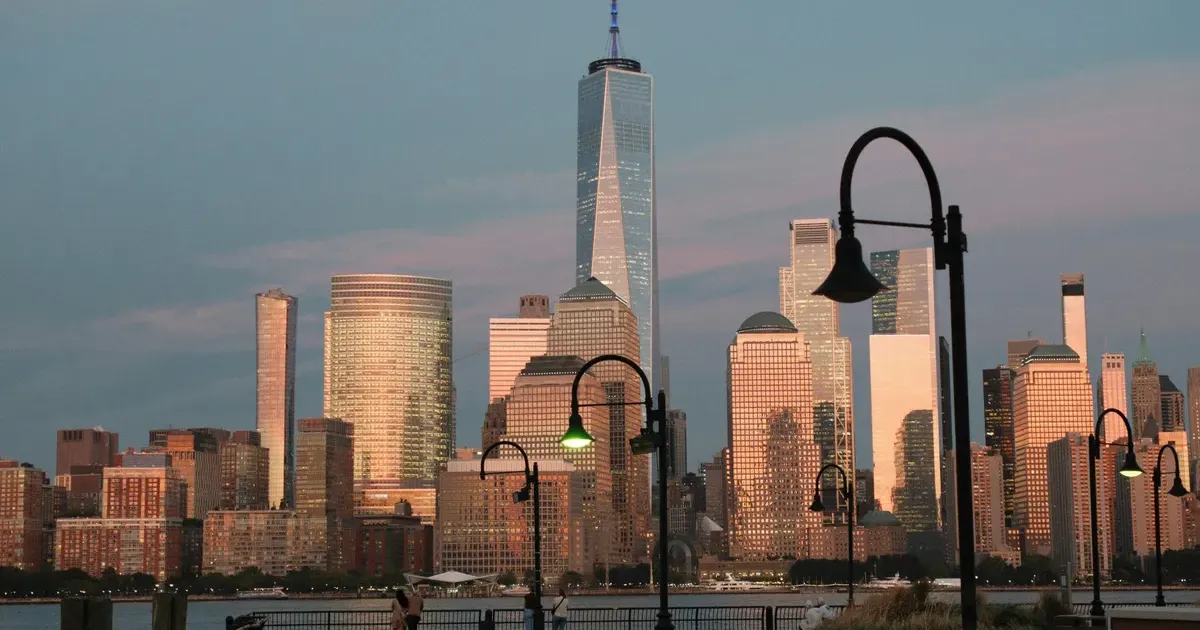
Lower Manhattan activists and urban planners gathered to celebrate the completion of the latest residential conversion project on Wall Street. Visitors now encounter a neighborhood that operates far beyond the traditional opening and closing bells of the New York Stock Exchange. Long perceived as a cold canyon of limestone and commerce, the Financial District has morphed into a dense residential enclave where high-end retail and curated dining replace the drab cafeterias of the previous decade. The April 4, 2026 neighborhood data reflected a downtown district no longer defined only by office hours. Census data reveal that the local population has nearly tripled since the turn of the century. Over 80,000 residents now call these narrow, winding streets home.
Walking through these corridors requires a different mindset than navigating the grid system of Midtown. Early Dutch settlers laid out these paths before the 1811 Commissioner's Plan imposed order on the rest of the island. As a result, the geometry of the area feels European and intimate. Daylight hits the pavement in sharp, brief intervals between towering skyscrapers. Modernity and antiquity collide at every corner, with glass-clad towers like 40 Wall Street casting shadows over colonial-era graveyards. Property values in the district have maintained a steady upward trajectory as the mix of commercial and residential space achieves a new equilibrium.
Stone Street Dining and Historical Preservation
Culinary enthusiasts often begin their day on Stone Street, one of the first paved thoroughfares in the city. Cobblestones underfoot provide a tactile connection to the seventeenth century, yet the atmosphere is purely contemporary. Outdoor seating dominates the block during warmer months, creating a communal dining hall environment that is rare in New York. Established taverns like Ulysses and Adrienne’s Pizzabar anchor the eastern end of the street. Local regulars often bypass the more famous uptown steakhouses in favor of the authenticity found in these dense, historic blocks.
Fraunces Tavern is a physical anchor for the neighborhood's revolutionary history. George Washington famously bid farewell to his troops here in 1783, and the building continues to operate as both a museum and a working bar. Patrons drink craft ales in rooms that once housed the Department of Foreign Affairs. Preservationists have fought to maintain the structural integrity of these low-rise buildings against the constant pressure of vertical development. These efforts ensure that the scale of the street level remains human and accessible. Historic districts in the area now cover more than thirty blocks of prime real estate.
Retailers have noticed the shift in demographics and adjusted their inventory accordingly. High-fashion brands that once clustered exclusively on Fifth Avenue now occupy the ground floors of converted bank buildings. Hermès and Tiffany & Co. provide anchor points for a shopping experience that feels more curated and less chaotic than the Midtown equivalent. Sales figures from 2025 indicate that luxury spending in the district grew by 14 percent year-over-year. Residents value the ability to shop for high-end goods within a five-minute walk of their apartments.
Waterfront Development Reshapes Lower Manhattan
Public space has undergone a similar revolution along the edges of the island. The Battery, formerly known as Battery Park, has transitioned into a world-class horticultural destination. Landscaping experts have replaced traditional lawns with perennial gardens designed to withstand the increasingly volatile coastal climate. Children and tourists gravitate toward the SeaGlass Carousel, a shimmering aquatic-themed ride that glows from within a nautilus-shaped shell. Benches along the promenade offer unobstructed views of the Statue of Liberty and the constant ferry traffic of New York Harbor. Over $100 million in private donations fueled these park renovations.
"Lower Manhattan has become a 24/7 community where people live, work, and play," said Jessica Lappin, president of the Alliance for Downtown New York.
Active recreation thrives on the piers jutting into the Hudson River. Basketball courts, beach volleyball pits, and sailing schools have replaced the industrial shipping infrastructure of the mid-twentieth century. People use the bike paths that wrap around the entire southern tip of Manhattan, connecting the East Side Greenway to the Hudson River Park. This contiguous loop allows for miles of transit without ever crossing a major vehicular intersection. Urban planners cite this connectivity as a primary reason for the neighborhood's high quality-of-life rankings. Recreational visits to the waterfront reached 12 million last year.
Market dynamics shifted again with the opening of the $1.4 billion redevelopment at the Seaport. Jean-Georges Vongerichten led the revival of the Tin Building, a large seafood market turned food hall. Inside, shoppers find specialty groceries alongside multiple sit-down restaurants ranging from French brasseries to Chinese noodle shops. The design preserves the industrial aesthetic of the original 1907 structure while introducing climate control and modern logistics. Food critics have noted that the quality of ingredients here exceeds that of traditional supermarkets. Demand for artisan products keeps the stalls busy seven days a week.
Luxury hotels have followed the crowds into the district. The Beekman and the Four Seasons Downtown offer some of the highest average daily rates in the city. Guests prefer the quiet, dignified atmosphere of the district over the neon-soaked chaos of Times Square. Concierges report that their clients increasingly request walking tours of the local architecture over Broadway show tickets. The shift in tourism patterns suggests that more sophisticated travelers are seeking out the layers of history buried in these streets. Room occupancy remains above 85 percent year-round.
Lower Manhattan Turns Culture Into Leverage
Lower Manhattan's advantage is that culture, housing and transit now reinforce one another. The district is no longer just a financial address, and that broader daily use is what makes the shift durable.