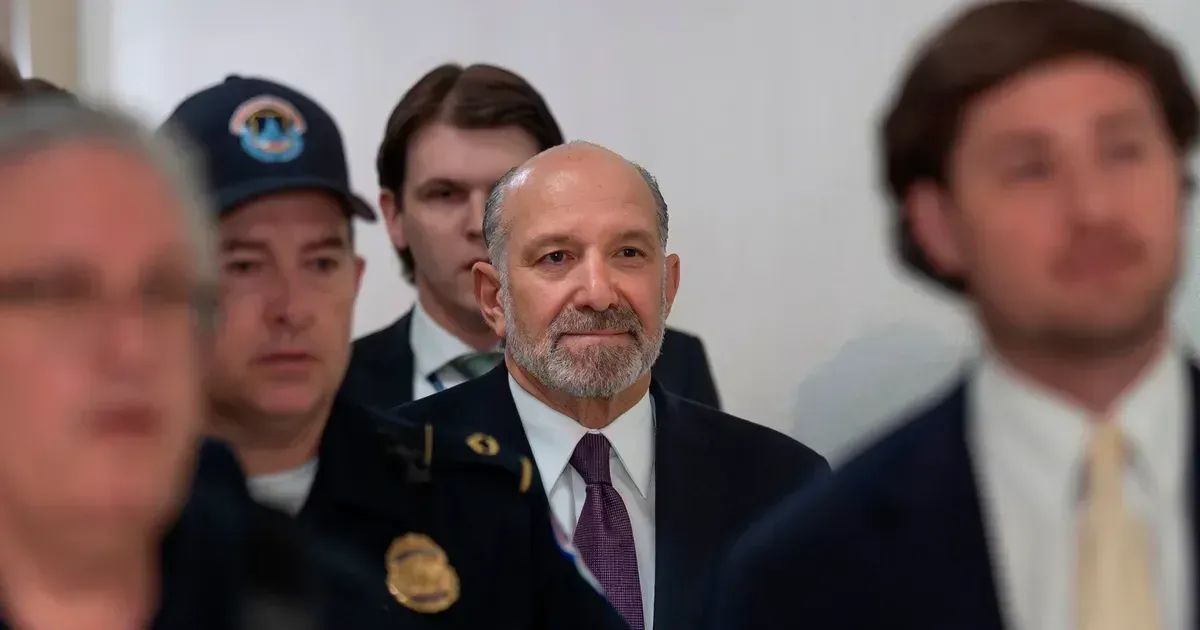
Lutnick's appearance put a Cabinet-level figure inside a politically sensitive Epstein inquiry. Lawmakers used the hearing to press for clearer answers about private relationships, business ties and government disclosure. The exchange also showed how Epstein questions keep moving between legal, political and reputational arenas. Committee members are likely to seek documents that test the testimony. Private contacts can matter politically even when they do not establish wrongdoing. On May 6, 2026, the hearing made Lutnick part of the renewed congressional record. Commerce Secretary Howard Lutnick faced House Oversight questioning over his past contacts with Jeffrey Epstein, including a reported 2012 lunch on Little St. James. The closed-door session on May 6 put a Cabinet official at the center of Congress's continuing review of Epstein-related records and political disclosures. It also showed that the panel is willing to question current administration figures, not only people who held power when Epstein was first investigated.
Lutnick has not been accused of criminal activity. The issue before lawmakers is narrower but still politically serious: whether his public explanations of the relationship match documents and testimony now being examined by the committee. That distinction is important because an oversight inquiry can damage credibility even when it does not produce a criminal referral.
Reports from NPR, AP and other outlets said lawmakers pressed Lutnick on contacts after Epstein's 2008 conviction, including the island lunch involving Lutnick's family. The questions were aimed at chronology, memory and disclosure rather than at an allegation that Lutnick participated in Epstein's crimes. That timeline matters because Lutnick has previously sought to distance himself from Epstein while acknowledging limited later contact. The committee is therefore examining not only whether the lunch occurred, but whether the way it was later described gave lawmakers and the public a full picture of the relationship.
House Panel Tests Lutnick Timeline
House Oversight Chairman James Comer said the committee would let the public judge whether Lutnick's credibility had been damaged. Democrats focused on why a senior official could not provide a clearer account of a visit to Epstein's private Caribbean island years after the financier's conviction. Republicans were more cautious in describing the testimony, but the existence of bipartisan questioning kept the session from becoming a purely partisan exchange.
The committee's questions also reflected a broader strategy. Investigators have been using newly released Epstein files, calendars and contact records to test the statements of powerful figures who crossed Epstein's orbit. A single meeting does not prove misconduct, but a changing timeline can create disclosure and credibility problems for an administration. For members of Congress, the point is to build a record that can be compared against calendars, travel logs and earlier public statements.
Lutnick has described Epstein as a former neighbor and has said he made clear personal judgments about Epstein years earlier. The 2012 lunch complicates that public narrative because it suggests contact continued in a setting that was not incidental. Lawmakers asked whether business, donations or other matters came up during the visit. Lutnick has sought to portray the contact as limited and personally uncomfortable, but the location and timing gave lawmakers a concrete fact pattern to test.
AP reported that Lutnick appeared before a House committee investigating Epstein and tried to explain contact after Epstein's conviction.
Epstein Note Adds Separate Pressure
The Lutnick questioning unfolded as a federal judge released a separate document described as a purported Epstein suicide note. That note was not found after Epstein's death, as some early summaries implied. It was said by former cellmate Nicholas Tartaglione to have been found after Epstein was discovered injured in July 2019, weeks before he died in custody.
Judge Kenneth Karas ordered the note released after The New York Times sought access to sealed materials in Tartaglione's case. The document is undated and unverified, so it should be treated as a piece of custody evidence rather than a settled account of Epstein's final hours. Its release matters because it shows how even narrow filings in related criminal cases can become part of the public Epstein record years later.
The distinction is important for Lutnick's story because it shows how Epstein material is moving into public view in fragments. Some records concern political and financial contacts. Others concern the conditions of Epstein's imprisonment. That mix makes the archive unusually difficult to cover: a document about jail custody can land in the same news cycle as a document about elite social access. Together they keep pressure on institutions to explain what was known, when it was documented and why some material remained sealed for years.
Oversight Consequences
For the House committee, the Lutnick session is less about proving a criminal case than testing the integrity of official disclosures. Cabinet members are expected to answer Congress with precision, particularly when questions involve a convicted sex offender whose network has become a recurring subject of federal transparency fights.
That does not mean every disputed memory becomes a legal violation. A credible explanation could reduce the political damage, especially if records show the 2012 lunch was isolated and did not involve business or policy. But unclear answers can keep the story alive and invite requests for travel records, calendars and additional testimony. The next phase of the inquiry is likely to turn on documentation rather than rhetoric, because written itineraries and contemporaneous messages are harder to explain away than general recollections.
The political risk is straightforward. The Epstein files remain a tool for oversight because they attach private associations to public office. For a Cabinet secretary, the standard is not simply avoiding prosecution; it is giving Congress and the public a coherent account before contradictory records define the story. Lutnick's challenge is to show that his prior descriptions were incomplete rather than misleading, and that the island visit does not undercut the ethical standard expected from a sitting Cabinet secretary. Until that explanation is documented, the committee has reason to keep the record open.