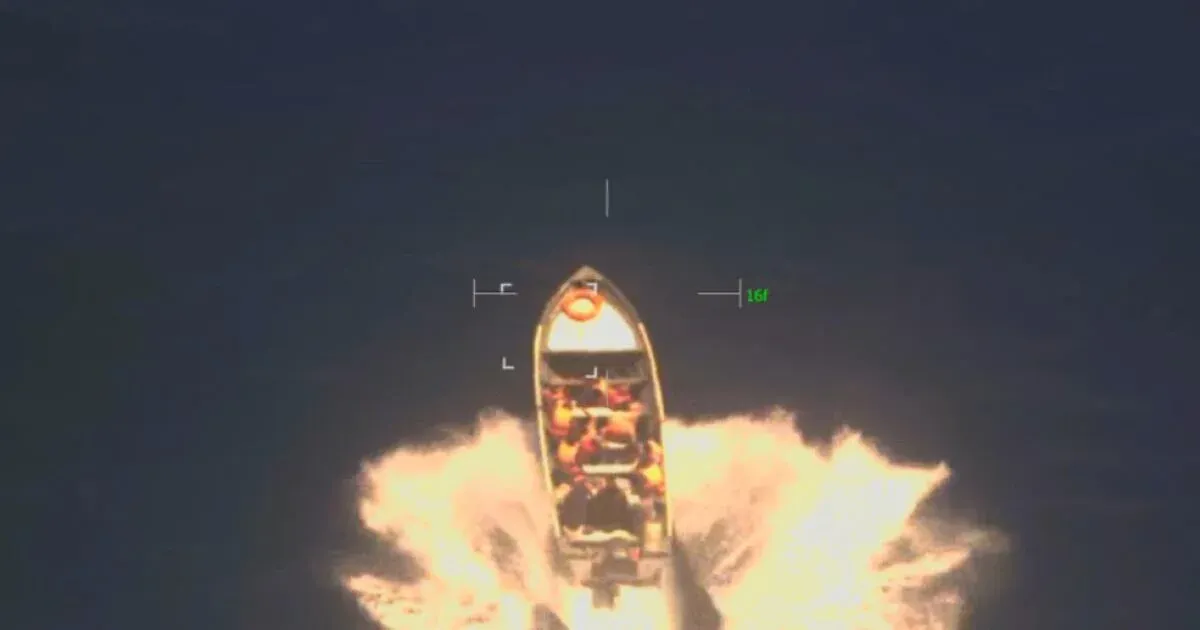
A 56-year-old man died after federal crews intercepted a panga carrying 21 people in the Pacific west of San Clemente Island. Coast Guard responders found him unresponsive aboard the boat, began CPR and arranged an airlift to Ronald Reagan UCLA Medical Center. The emergency unfolded during an operation that began with a civilian report rather than a routine encounter at a port.
The operation began around noon on July 29, 2026, when the Coast Guard received a report from a member of the public about a vessel suspected of carrying people illegally. The report placed the boat 14 miles west of San Clemente Island, more than 70 miles from the Southern California mainland. The Coast Guard disclosed the operation two days later, on Friday, according to the Los Angeles Times.
A Coast Guard boarding team and U.S. Customs and Border Protection personnel stopped the panga and counted 21 people aboard. One passenger was a minor. A Coast Guard spokesperson told the Los Angeles Times that the vessel's departure point had not been determined. That unanswered question leaves the beginning and intended route of the trip outside the confirmed account.
CPR Began Before the Helicopter Transfer
Responders started cardiopulmonary resuscitation after finding the man without a response during their assessment of the boat. A Coast Guard Air Station Ventura MH-60 Jayhawk crew then moved him from the offshore scene to the Westwood hospital. The sequence required treatment to begin on the water before the aircraft could complete the transfer inland. Authorities have not said whether the man showed signs of illness earlier in the voyage.
Medical personnel at the hospital were able to restore a pulse, the Times reported, citing the Coast Guard. The man was later pronounced dead. Authorities did not release his name or a medical explanation for his death. They also did not say how long he had been unresponsive before the federal boarding team reached the panga, leaving the medical timeline incomplete.
The remaining 20 people were detained and handed to U.S. Border Patrol. Federal agencies described the group as suspected of entering the country illegally. That wording records the agencies' stated reason for taking custody, not a finding made in court. Authorities announced no individual charges, nationalities or later immigration proceedings, leaving the custody transfer as the last publicly confirmed step. The minor was among the 20 people transferred after the medical evacuation.
Official image metadata adds detail to the division of work at sea. It identifies a Customs and Border Protection Air and Marine Operations crew alongside a boarding team assigned to Coast Guard Station Los Angeles-Long Beach. The helicopter came from Air Station Ventura, while Border Patrol received the surviving passengers after the maritime phase ended. At least four operational units therefore appear in the reported chain, each handling a different stage.
Distance Turned One Boarding Into a Multiagency Response
Long Beach lies about 55 miles north of San Clemente Island, which is included in California's Channel Islands. The vessel was reported another 14 miles to the island's west. Those locations put the initial response well offshore and help explain the combination of a maritime stop, treatment aboard the panga and an aviation transfer instead of a direct handoff to an ambulance on land. No nearby harbor formed part of the sequence publicly described by the Coast Guard.
The operation moved along separate medical and immigration tracks. The unresponsive man entered an emergency-care chain that continued at UCLA, while the other passengers entered federal custody. Keeping those tracks distinct matters because the publicly confirmed facts do not connect the man's death to a specific condition, injury or event during the voyage. The Coast Guard account documents the agencies' suspicion about the crossing but gives no medical cause.
The unknown departure point sets a firm limit on the story. The public tip, offshore position and federal suspicion explain why authorities treated the voyage as a possible smuggling operation, but they do not identify an organizer or establish where the boat began its trip. What is confirmed is narrower: a report led crews to the panga, two federal maritime teams stopped it, responders tried to save one man, and Border Patrol took custody of the other 20 people.