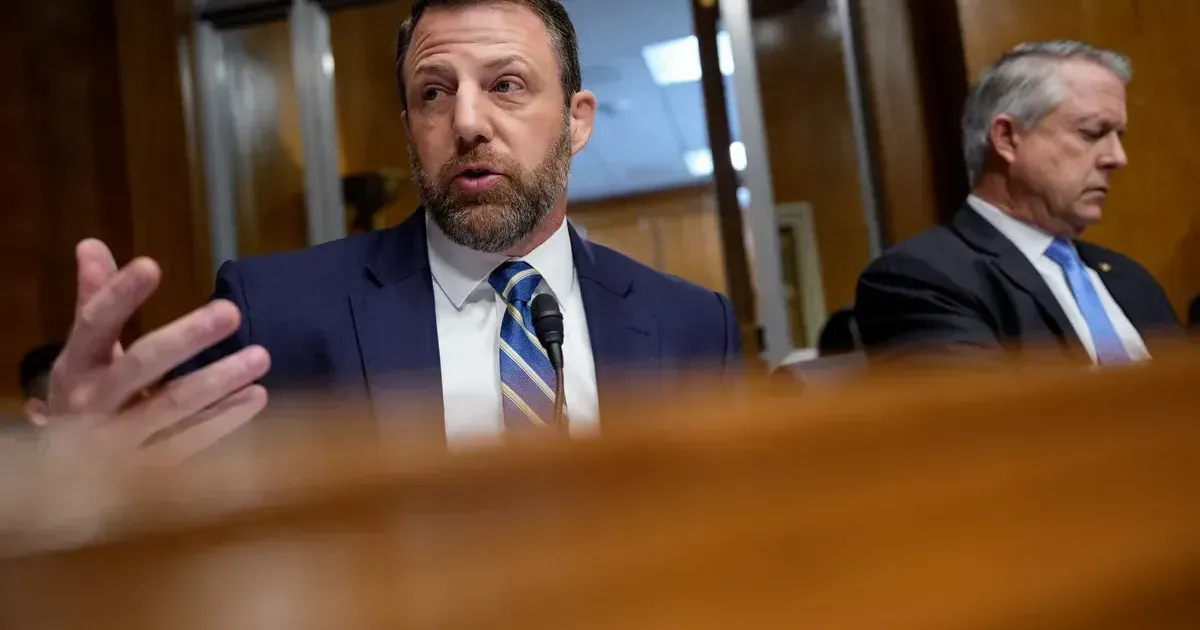
Markwayne Mullin arrived at the Senate Dirksen Building on Wednesday morning to defend his nomination as the next Secretary of Homeland Security. President Donald Trump selected the junior senator from Oklahoma to take control of a department that has struggled with leadership vacancies and policy shifts. Members of the Senate Homeland Security and Governmental Affairs Committee prepared to grill the nominee on his readiness to manage 240,000 employees. This administrative structure includes agencies ranging from the Secret Service to the Transportation Security Administration. On March 20, 2026, the stakes became easier to read from the public record.
Meanwhile, the political climate in Washington remains charged as Democrats seek to challenge the executive branch's recent personnel decisions. Senators expect the hearing to last several hours, covering topics such as immigration enforcement and federal disaster response. Mullin will have to convince a divided chamber that his legislative experience translates to executive competence. Republican colleagues have already voiced strong support for his nomination, citing his history as a business owner and athlete. Republican strategists view the appointment as an attempt to project strength at the border. Markwayne Mullin previously served in the House of Representatives before moving to the Senate, establishing a reputation for aggressive debate and unwavering loyalty to the current administration. His background as a former mixed martial artist often surfaces in political discussions regarding his temperament. Supporters claim this competitive drive is exactly what the Department of Homeland Security requires during a period of geopolitical instability.
Markwayne Mullin and the Department of Homeland Security
Trump relies on Mullin to bring a more confrontational approach to the agency than his predecessors. The Department of Homeland Security manages an annual budget exceeding $100 billion, making it one of the largest entities in the federal government. Managing such a vast portfolio requires a deep understanding of maritime security, cybersecurity, and border surveillance. Critics point out that Mullin has never managed a multi-layered bureaucracy of this magnitude. They argue that his private sector experience with a plumbing business is insufficient for the task.
In fact, the department has faced significant criticism over its handling of recent migration surges. Markwayne Mullin will likely face pointed questions about his plans to use technology versus physical barriers. Senate records show that Mullin has been a consistent advocate for finishing the wall at the southern border. He has also supported increased funding for Border Patrol agents and surveillance drones. These positions align closely with the executive branch's stated goals for the 2026 fiscal year. Leadership of the department has changed hands four times in three years.
Still, the transition from the legislative branch to a cabinet role is rarely smooth. Markwayne Mullin must demonstrate that he can maintain the non-partisan operational integrity of agencies like FEMA and the Coast Guard. The Senate committee will look for specific details on how he intends to address the morale issues that have plagued DHS employees for over a decade. Internal surveys often rank the department near the bottom of federal agencies for employee satisfaction. High turnover rates in mid-level management have slowed the implementation of long-term security projects.
Border Security and Departmental Leadership Goals
Kristi Noem previously held the position before her abrupt departure left the seat vacant. Her tenure was marked by friction with congressional oversight committees regarding the use of emergency funds. Markwayne Mullin is expected to provide a contrast in style, focusing more on legislative outreach. He spent much of the past week meeting with individual senators in their private offices to secure their votes. These meetings were described by staff as professional and focused on the logistics of the confirmation vote.
Separately, the nominee must address the growing threat of foreign interference in domestic infrastructure. Cybersecurity and Infrastructure Security Agency officials have warned about vulnerabilities in the national power grid. Mullin has not historically focused on digital policy during his time in the Senate. This perceived gap in his expertise could provide an opening for opposition members to delay the final floor vote. He will need to rely on his designated deputies to manage the technical aspects of the CISA mission. "The department requires a leader who understands both the tactical reality of the border and the administrative labyrinth of the federal budget," Mullin said in his opening statement.
Yet, the debate over his qualifications often returns to his persona rather than his policy papers. Markwayne Mullin is known for a direct, often blunt, communication style that appeals to his base in Oklahoma. Some senators worry this approach might alienate international partners who cooperate with the Department of Homeland Security on counter-terrorism efforts. Intelligence sharing with European and Canadian allies is still a foundation of the domestic security strategy. Any disruption in these relationships could lead to intelligence gaps.
Replacing Kristi Noem at Homeland Security
For instance, the Secret Service has come under renewed scrutiny following security lapses at recent campaign events. Markwayne Mullin will be responsible for ensuring that the agency has the resources and training to protect government officials. He has previously called for a top-to-bottom review of the Secret Service's protective protocols. Republican leaders believe Mullin will be more effective at implementing these reforms than a career bureaucrat would be. They see his outsider status as an asset for clearing out entrenched administrative habits.
By contrast, Democratic members of the committee have highlighted his voting record on disaster relief. Markwayne Mullin has occasionally voted against major spending packages that included funding for FEMA. His critics argue that this record makes him a poor choice to lead an agency responsible for responding to hurricanes and wildfires. They will likely press him on whether he would approve emergency declarations for states with different political leanings. Mullin has dismissed these concerns, stating that his primary goal is fiscal responsibility and effective resource allocation. The confirmation process is a test of political math. Republicans currently hold a narrow majority in the Senate, meaning Mullin can only afford a few defections. Some moderate senators have expressed reservations about his recent comments regarding the deployment of the military for domestic law enforcement. Markwayne Mullin has clarified that such measures would only be used in extreme circumstances. The Department of Homeland Security rarely coordinates directly with the Department of Defense for civilian matters.
Senate Scrutiny of Oklahoma Legislative Record
To that end, the committee will examine his history of bipartisan cooperation. Markwayne Mullin has worked across the aisle on several bills related to tribal sovereignty and rural healthcare. These successes could provide him with enough goodwill to clear the committee stage with a favorable recommendation. However, the final floor vote will likely follow strict party lines. Trump has urged his party to remain unified to ensure the Cabinet is fully staffed by the end of the month. Senators from both parties agree that the position cannot remain vacant much longer. Global threats and border management issues require a permanent secretary with full legal authority. Markwayne Mullin seems prepared for a long day of questioning and has brought a full team of advisors to the hearing room. His performance today will determine whether the Department of Homeland Security finally finds the stability its leadership has lacked for years. The final vote is expected to occur early next week.
The Confirmation Risk for Homeland Security
If the American public expects a cabinet secretary to be a silent administrator, they have fundamentally misunderstood the selection of a former cage fighter. Tapping Markwayne Mullin to lead the Department of Homeland Security is a deliberate move to transform a defensive agency into an offensive tool of the executive branch. The department was born from the trauma of 9/11 as a shield, but the current administration clearly intends to use it as a sword. Appointing a man whose public identity is built on physical confrontation signals that the days of polite bureaucratic negotiation are over.
Skeptics who point to his lack of administrative experience are missing the forest for the trees. The goal here is not to manage the 240,000 employees with surgical precision, but to bend the agency's vast resources to a specific, hardline agenda. Whether Mullin can handle the $100 billion budget is secondary to whether he can dominate the political theater that now defines American governance. This is not about policy expertise; it is about the projection of power. By placing an Oklahoma loyalist at the helm, the president is ensuring that the most powerful domestic security apparatus in history answers to a single vision without the friction of traditional departmental independence.