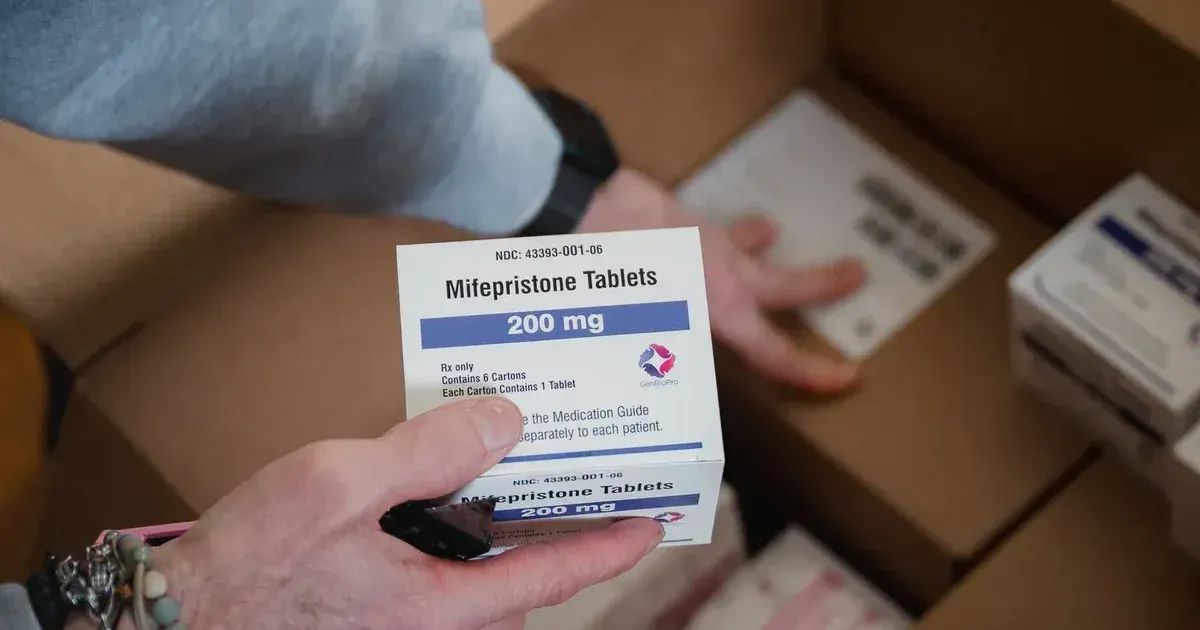
Louisiana officials petitioned the Supreme Court to restrict nationwide access to medication abortion through mail delivery services. Legal filings made public on May 7, 2026, request an immediate stay on Food and Drug Administration rules that currently permit mifepristone to be prescribed via telehealth. The move expands a multi-state effort to roll back federal deregulatory actions that occurred during the last five years. The case also matters because medication abortion policy often turns on mail access, state enforcement and federal drug approval. Louisiana is asking the justices to move the dispute toward a more restrictive national rule.
Regulators at the federal level previously eliminated the requirement for in-person clinical visits, allowing patients to receive the two-drug regimen through the mail. Louisiana argues that the federal policy overrides state-level safety standards and bypasses essential medical supervision. The state seeks to reinstate stricter protocols that would require physicians to dispense the pills in person within a clinical setting.
Louisiana Challenges Federal Medication Rules
Attorneys representing the state contend that the Food and Drug Administration exceeded its statutory authority by easing distribution restrictions. The primary focus of the challenge involves the 2021 decision to permanently allow mail-order delivery. According to the petition, the removal of in-person safeguards creates a jurisdictional conflict between federal agency guidance and state health codes.
A federal appeals court earlier issued a temporary block on the mail-delivery regulation. That judicial intervention prompted the current escalation to the high court as both sides seek a definitive resolution. Legal documents suggest that the appeals court focused specifically on whether the agency adequately studied the long-term impact of remote prescribing before making the 2021 changes permanent.
The request follows lower-court scrutiny of an FDA regulation that expanded access to mifepristone by mail, turning what began as an agency safety dispute into a national test of federal authority over medication abortion.
Judicial scrutiny of medication abortion has intensified since the reversal of federal abortion protections. State-led lawsuits now target the administrative process used by the agency to certify drugs for wide distribution. Louisiana asserts that the current framework ignores the potential for complications that may arise when a patient lacks a direct physical connection to a supervising physician.
FDA Telehealth Expansion Faces Judicial Scrutiny
Mifepristone was first approved for use in the United States in 2000 under a specific set of safety restrictions. These rules stayed largely intact until 2016, when the agency extended the approved timeframe for use and decreased the required number of office visits. The most serious shift occurred when officials determined that the drug could be safely mailed directly to patients without an initial in-person exam.
Telehealth became a primary vehicle for abortion access in states with restrictive local laws. Data from national health organizations indicate that more than half of all pregnancy terminations in the country now use medication instead of surgical procedures. Because of this high volume, any change in mail availability would affect thousands of patients across dozens of states regardless of their local legislative environment. The nationwide dispute over mailing abortion pills has therefore drawn close legal scrutiny.
Federal authorities maintain that decades of clinical data support the safety of the current mail-delivery model. They argue that the Supreme Court should defer to agency expertise in matters of pharmaceutical safety. State challengers, by contrast, insist that the agency prioritized political expediency over rigorous clinical oversight during the pandemic era.
Potential Consequences for Reproductive Healthcare
Healthcare providers who rely on remote prescriptions warn that a reversal would create substantial logistical barriers. Many clinics have shifted their operations to accommodate digital consultations, which lower the cost and increase the speed of care. Removing the mail-order option would force these entities to return to a model that requires physical infrastructure and increased staffing in every jurisdiction where they operate.
Mail-order distribution is a critical link for patients in rural areas who lack proximity to specialized clinics. These individuals often travel long distances for medical appointments, making the telehealth option a preferred method for many. If the high court sides with Louisiana, the resulting shift would require a large reorganization of the medication supply chain.
Recent developments suggest the court will likely review the case during its upcoming term. The specific timeline means that a final ruling could be months away, leaving the current mail-delivery system in a state of temporary legal limbo. Lawyers for the federal government have already begun drafting their response to the state's request for a stay.
The Case Could Give States New Leverage Over FDA Delivery Rules
Recent litigation involving the administrative state suggests the Supreme Court may be receptive to arguments regarding agency overreach. If the justices uphold the lower court's block on mail-order mifepristone, the ruling would establish a serious precedent for judicial review of pharmaceutical regulations. It could potentially allow states to challenge other federally approved medications if they can demonstrate a conflict with local health and safety statutes.
Federal preemption usually protects agency decisions from being overruled by individual state laws. However, the unique nature of abortion jurisprudence since 2022 has created a fragmented legal environment. A decision in favor of Louisiana would effectively grant states a veto over specific delivery methods of FDA-approved drugs, provided they can frame the objection as a safety concern rather than a policy disagreement.
Legal experts observe that the outcome will likely hinge on whether the court views the 2021 rule changes as a technical update or a shift in regulatory policy. If the court determines the agency bypassed necessary procedural hurdles, the entire telehealth framework for medication abortion could be dismantled. It would require the agency to restart the lengthy rule-making process to justify remote distribution under a more rigorous standard of evidence.