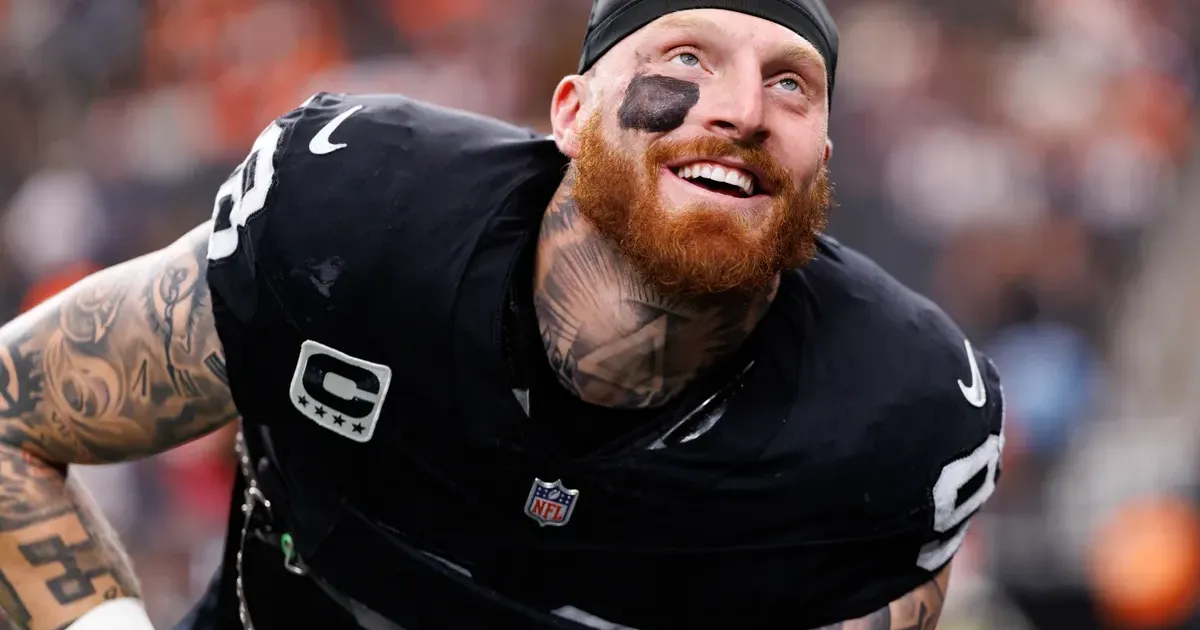
Maxx Crosby is staying with the Raiders after a dramatic trade reversal, keeping one of the franchise's defining players in Las Vegas at a moment of roster uncertainty. The trade question had hovered over the Raiders for weeks. The reversal stood out on March 12, 2026 because pass rushers of Crosby's caliber rarely become purely transactional assets. They shape how a team defends and how an organization explains its direction. For the Raiders, keeping him is not only about sacks. It is about identity, credibility and the message sent to the locker room.
Why Crosby Changes the Defense
An elite edge rusher can alter an entire defensive plan. Opponents slide protection, speed up throws and change play-calling when they know pressure can arrive without a blitz.
That is why Maxx Crosby staying matters so much. The Raiders keep a player who can make average coverage look better and give the defense a chance to win possessions without constant schematic risk.
Crosby also brings visible effort. For a franchise trying to build consistency, that matters because effort becomes a standard other players are expected to match.
The Trade-Reversal Signal
A trade reversal can mean several things: the market did not match the player's value, the team reconsidered its timeline or leadership decided that moving the player would damage the broader plan.
In this case, the practical result is that Las Vegas keeps its defensive centerpiece and avoids the backlash that would come from dealing a fan-favorite star without a convincing return.
The decision does not solve every roster question. It simply keeps the Raiders from creating a new one at the most valuable defensive position.
What Las Vegas Must Do Now
Keeping Crosby raises the standard for the rest of the offseason. If the team believes he is too valuable to move, it also has to build a roster that does not waste his prime. That means improving support around him, protecting the offense from constant negative game scripts and finding enough depth that the defense is not dependent on one player carrying every pressure situation.
The decision may also help the Raiders in the free-agent market. Players notice whether a franchise keeps elite teammates or sends them away when the roster gets difficult. Stability around a respected star can make the broader project more credible.
There is still a financial side. A top edge rusher commands major resources, so the team has to balance Crosby's value against needs at quarterback, offensive line, secondary and depth positions. The Raiders cannot let the decision become symbolic only. Keeping a star is popular, but the move works best if the front office follows it with choices that make the roster more competitive quickly. Crosby's presence also raises expectations for the coaching staff. A defense with that kind of anchor should have a clear pressure plan, defined roles and enough support to avoid wearing him down. The reversal keeps the Raiders connected to their best version of themselves. Now they have to prove the rest of the organization can match the commitment. Fans will also read the reversal emotionally. Crosby has become associated with the Raiders' edge and persistence, so trading him would have felt like a surrender of identity as much as a roster move. The front office still has to avoid sentimentality. Keeping a star because he is popular is not enough; the team must believe his production, leadership and contract fit the competitive timeline. Quarterback uncertainty makes that harder. A great defense can keep games close, but the Raiders still need enough offensive stability to avoid asking Crosby and the pass rush to rescue every week. The move also affects draft strategy. Las Vegas can prioritize help around its core rather than using high picks to replace a player it already knows can perform at an elite level. The cleanest reading is that the Raiders chose continuity at a premium position. That is sensible, but it increases pressure on the organization to make the rest of the roster worthy of that continuity. The decision may also affect the locker room because stars often serve as informal proof of direction. If the best player believes the team is worth staying with, others can buy into the plan more easily. Opponents will still game-plan around Crosby, so the Raiders need complementary rushers and coverage players who can punish protection schemes that slide toward him. Otherwise, his impact can be blunted by isolation. The reversal buys Las Vegas time and goodwill. It does not buy automatic progress. The organization now has to turn a popular decision into a better roster.
The Raiders avoided a painful reset by keeping Crosby, but the reversal cannot become a substitute for roster construction. Las Vegas kept its defensive anchor; now the front office has to build a team that does not ask one pass rusher to cover every institutional weakness.