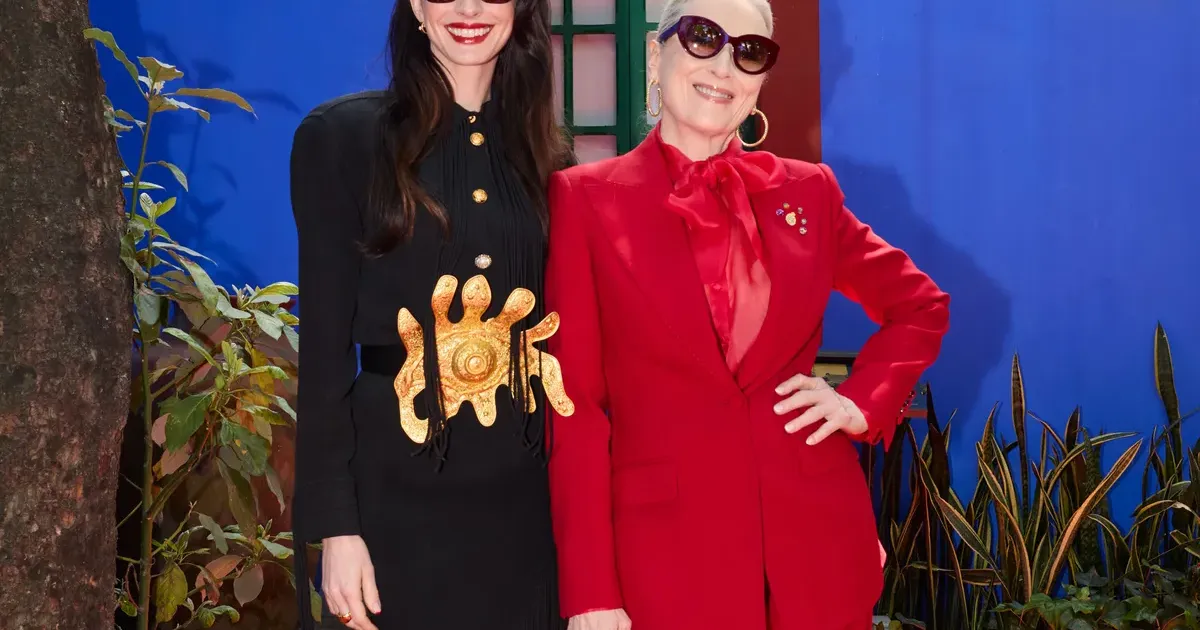
Meryl Streep and Anne Hathaway's Devil Wears Prada 2 press tour worked because the franchise already taught audiences to read clothes as power. The original film did not use fashion as decoration. Miranda Priestly's wardrobe explained authority before she spoke, while Andy Sachs' transformation turned styling into plot.
The original film's visual memory gave every sequel appearance a heavier job. A coat, suit, bag or color choice was never just a red-carpet look. It became a signal about what the film thinks image, work, age and status mean now.
The Clothes Had to Do Story Work
A normal comedy sequel can sell chemistry, jokes and nostalgia. The Devil Wears Prada cannot. Its audience expects clothing to carry meaning, and the sequel's press tour leaned into that expectation with deliberate references rather than casual dressing.
Streep's custom red Prada suit in Seoul, the caped red Givenchy look in New York and the cerulean references around her appearances all worked because they reactivated the film's visual memory. They did not need to copy Miranda exactly. They needed to remind viewers how Miranda reads.
Meta Dressing Fits the Franchise
The risk with a campaign like this is costume play. If every look simply repeats 2006, the tour becomes a luxury tribute act. A stronger campaign quotes the old language while updating the sentence.
The update requires sharper tailoring, modern materials, comfort choices, broader body representation and enough restraint to let Streep remain Streep rather than a mannequin for Miranda nostalgia. The successful looks acknowledge the character without letting the character swallow the actor.
Hathaway Carries the Bridge
Hathaway gives the campaign a second kind of force. For viewers who grew up with the original, she carries the memory of Andy's transformation. For younger audiences who know the film through streaming, clips and fashion accounts, she is a contemporary style figure meeting inherited iconography.
Hathaway's role matters because the fashion internet is faster than it was in 2006. A premiere look now becomes a professional review, fan edit, shopping search and meme within the same hour. The campaign has to be deliberate without looking desperate.
The Fashion Industry Is Closer Now
The sequel also arrived in a different relationship with fashion. The original had a sharper satirical distance from the magazine world. The new campaign was more openly embraced by brands, stylists and fashion media, which made the tour feel like part of the industry calendar.
Industry support brings polish, access and spectacle. It also softens the edge. A franchise built on the cruelty and labor behind glamour has to be careful when the glamour machine welcomes it too warmly.
The Wardrobe Cannot Become a Museum
The press tour was smart because it understood the franchise's real asset: image as labor, armor and self-defense. Streep and Hathaway were not only promoting a sequel. They were reopening a style language audiences already know how to parse.
The shared visual language gives the film a head start and a trap. If the sequel finds a fresh reading of power, age, work and visibility, the clothes become argument again. If it only repeats the old formula, the wardrobe becomes a museum display. The devil may still wear Prada, but the sequel has to prove the language has kept moving.