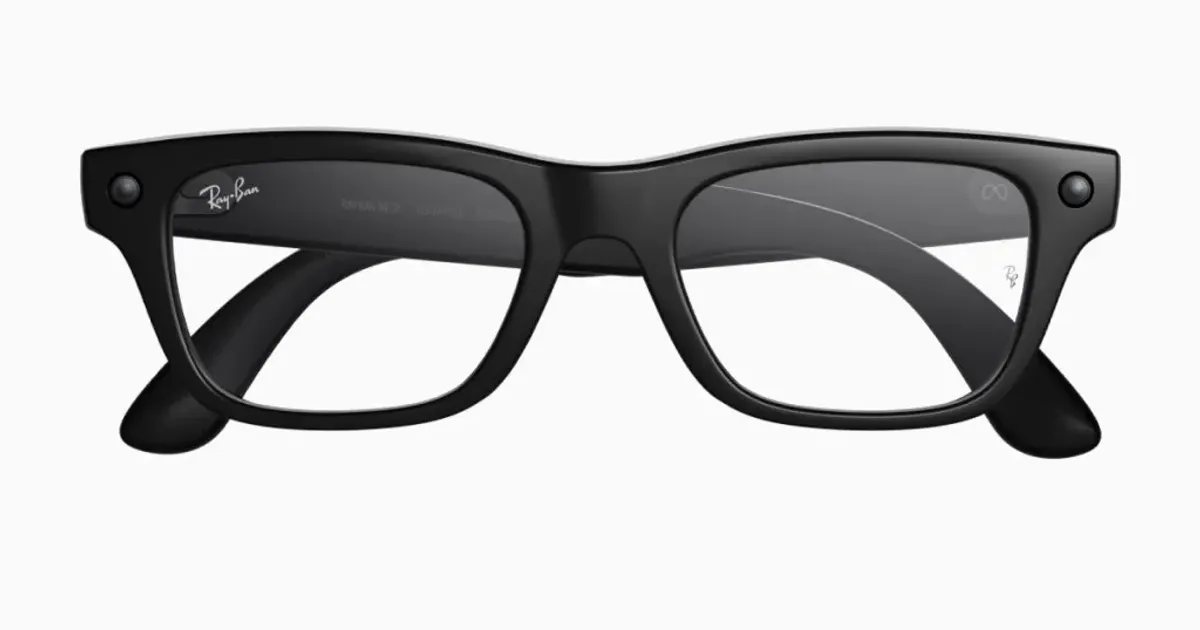
Mark Zuckerberg and EssilorLuxottica executives finalized the rollout of prescription-ready AI frames. Meta solidified its wearable technology strategy after selling 7 million units of the Ray-Ban Meta collection in the previous calendar year. On April 1, 2026, Meta’s prescription expansion made AI glasses more relevant to international travelers. Millions of travelers who previously relied on contact lenses or separate smartphone apps now have access to a single-device solution for corrected vision and live interpretation. Corrective optics integration targets a global demographic of roughly 4.2 billion people who require glasses for daily activities.
Sales figures from the 2025 fiscal year indicate a serious saturation of the early-adopter market for smart eyewear. Integration with prescription services transforms the device from a niche gadget into a necessary medical accessory. Travelers frequently cite the convenience of hands-free interaction as the primary driver for adoption. Audio quality remains crisp even in loud environments like busy train stations or open-air markets.
Translation software within the frames operates through directional speakers and an array of five microphones. Wearers hear real-time interpretations of foreign languages delivered directly through the temples of the glasses. Processing speeds have improved to the point where latency is barely perceptible during normal conversation. Recent firmware updates allow the software to handle over 27 distinct languages including Mandarin, Spanish, and French.
Prescription Expansion Reaches Global Vision Markets
Retailers across the United Kingdom and the United States began stocking the new prescription-compatible frames today. EssilorLuxottica handles the specialized lens grinding for these AI units through its existing laboratory network. Lenses must be precision-engineered to accommodate the internal wiring and sensors that power the camera and speakers. Traditional frames often lack the structural integrity to house such complex electronics without increasing bulk.
Optical technicians face new logistical challenges when fitting these high-tech frames. Weight distribution is a primary concern for long-haul travelers who wear glasses for up to 14 hours per day. Batteries and processing chips sit within the hinges, requiring a sturdy construction that avoids pinching the user. Engineers moved the thermal management components to the outer edge of the frame to prevent heat transfer to the face. Early feedback from optometrists suggests that these tech-integrated frames are only slightly thicker than standard Ray-Ban Wayfarers. Most patients find the additional weight acceptable when weighed against the benefit of built-in artificial intelligence. Corrective power ranges from mild reading prescriptions to complex progressive lenses for multi-focal needs. Manufacturing teams have improved the assembly line to ensure that lens replacement does not damage the sensitive internal circuitry.
Live Translation Integration Changes International Travel
Travelers no longer need to look down at smartphone screens during critical interactions in foreign countries. The AI identifies the language spoken by a counterpart and provides a verbal overlay in the user's preferred tongue. Direct eye contact persists, maintaining the social cues that are often lost when using handheld translation devices. Natural communication flows more easily when both parties can see each other's facial expressions.
Zuckerberg addressed the hardware's evolution during a recent product demonstration at the company's headquarters.
Putting a powerful computer and a live translator onto the faces of billions of people who already wear glasses is the most logical step for our AI ecosystem.
Hand gestures and tonal details remain part of the communication loop when the hardware stays out of the way. Translation latency has dropped below 150 milliseconds in the latest version of the multimodal LLM. Local dialects are increasingly supported as the training data for the translation engine grows more diverse.
Data Privacy and Onboard Processing Standards
Privacy advocates have raised concerns about the constant listening state of the microphones in public spaces. Meta claims that the translation processing occurs locally on the device or via an encrypted link to a tethered smartphone. No audio data resides on company servers without explicit user consent through the companion app. Security protocols include end-to-end encryption for all data transmitted between the glasses and the cloud. LED indicators on the front of the frames signal to bystanders when the camera or microphones are active. These lights serve as a standard across the wearable industry to notify the public of potential recording. Regulators in the European Union are currently reviewing these hardware safeguards for compliance with updated digital privacy laws. Legal teams for Meta maintain that the device adheres to all current surveillance and wiretapping statutes.
Future updates may include visual translation for signs and restaurant menus using the built-in cameras. Current hardware already captures 12-megapixel images, but the live overlay of text in the user's field of vision remains in the final testing phase. Travelers anticipate this feature will be available via software patch by the 2026 holiday season. Developers are also working on integration with popular flight and hotel booking platforms.
Prescription Lens Use Case
Software engineers are building travel-specific plug-ins that operate through the Meta AI assistant. These include real-time currency conversion and navigation cues delivered through the spatial audio system. Each pair of glasses functions as a sensory hub for the broader Meta ecosystem. Market research indicates that the 40 to 65 age bracket shows the strongest interest in the prescription-ready models. Prescription AI glasses make sense for travelers because translation, navigation and hands-free capture are most useful when people are moving through unfamiliar places. The product becomes more practical when it fits a real vision need.
Privacy remains the constraint. A wearable camera and assistant can help tourists, but it also draws scrutiny about consent, data processing and whether bystanders know when AI features are active.