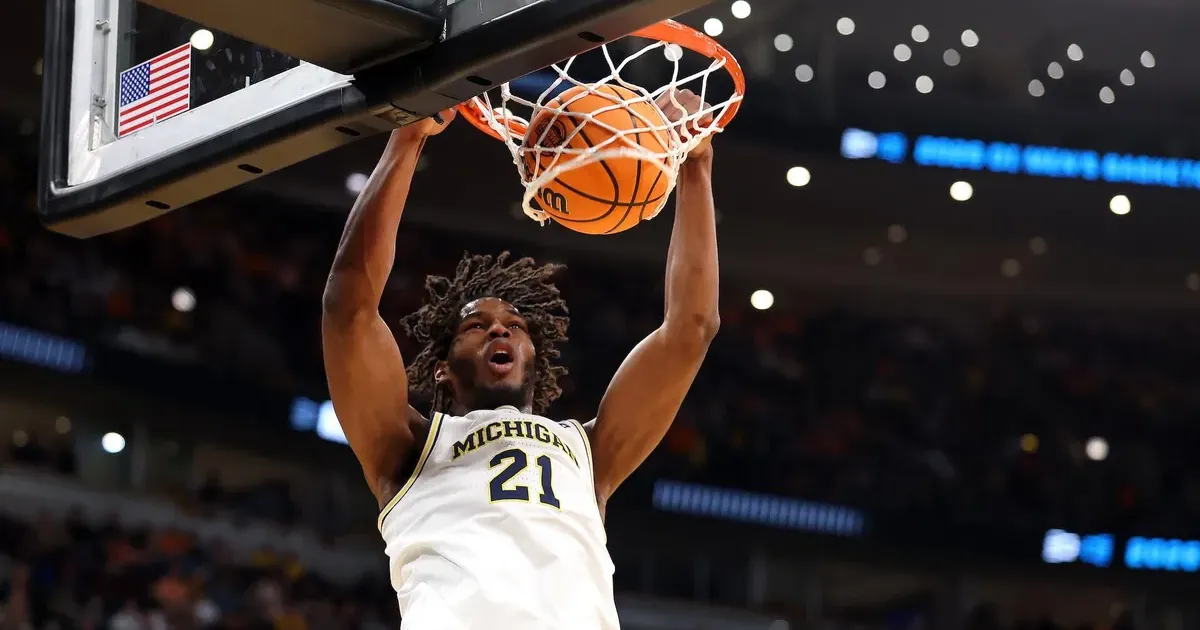
San Antonio hosts the NCAA Final Four as Michigan and Arizona prepare for a collision of number one seeds. On April 1, 2026, both programs reached the national semifinals through high-scoring displays that solidified their status as the premier teams in the tournament field. Analysts from ESPN and Yahoo Sports currently categorize this matchup as a meeting between the two most efficient offenses in collegiate basketball. Betting markets have installed the Wolverines as a 1.5-point favorite in a game with an expected total of 157.5 points. Outcomes in the previous round suggest neither squad plans to prioritize defensive stagnation over transition scoring. Michigan beat Alabama 90-77 to secure their spot, while Arizona dismantled Arkansas in a 109-88 blowout.
Michigan Pace and First Half Efficiency
Data from the last five Michigan contests reveals a pattern of aggressive early-game execution. Michigan starters recorded first-half totals of 38, 50, 48, 49, and 48 points during their recent stretch. These figures consistently surpassed betting totals for the opening twenty minutes of play. Matt Jacob of Yahoo Sports noted that the Wolverines average 46.2 points in the first half across their last five appearances. High efficiency from the perimeter and a relentless transition game define the current tactical approach under the coaching staff. Scoring volume often increases when Michigan faces opponents that also prefer a high-tempo environment. Alabama discovered this reality when they allowed 96 combined points before the halftime buzzer in the Elite Eight.
Arizona presents a similar statistical profile despite their status as a slight underdog. Wildcats players have participated in six games over their last eight where the combined first-half score reached at least 74 points. Their scoring average of 37.1 points in the opening minutes of those contests demonstrates a consistent ability to generate looks early in the shot clock. Coach-led sets frequently target the paint before kicking out to shooters who have benefited from the gravity of Arizona interior threats.
The Sweet 16 victory over Arkansas featured 97 total first-half points, acting as a blueprint for the anticipated track meet in San Antonio. Professional handicappers expect these trends to persist regardless of the larger shooting environment found in a professional football stadium.
Illinois Defensive Adjustments for UConn
Illinois enters the Final Four as a narrow favorite against a UConn team that survived a dramatic regional final. While UConn relies on momentum, CBS Sports analysts suggest Illinois possesses the specific personnel required to neutralize the Huskies' offensive sets. The Fighting Illini roster features defensive versatility that matches up favorably against the UConn backcourt. Position-by-position breakdowns indicate that Illinois holds an edge in bench depth and frontcourt mobility. These factors often determine outcomes in the second half when fatigue begins to impact shooting percentages. Illinois coaches have emphasized rim protection throughout the tournament, leading to a meaningful reduction in opponent field goal percentages inside the arc.
UConn reached this stage by completing a 15-point comeback against Duke in the Elite Eight. That 73-72 victory relied on a last-second 3-pointer that shocked the number one overall seed. $11 billion in estimated wagers across the tournament has shifted toward the Huskies following their resilient performance. Despite the emotional high of that win, the Huskies remain underdogs against a disciplined Illinois squad. Corbie Craig and Matt Russell of Yahoo Sports indicate that the betting public has shown interest in the Illinois spread due to their consistency. Both Arizona and Illinois reached the semifinals after overcoming significant gaps in their respective program histories.
Illinois has avoided the large deficits that nearly ended the UConn season a week ago. Success for the Fighting Illini depends on their ability to prevent the Huskies from entering another late-game shooting rhythm.
Arizona Offensive Firepower Versus Michigan Edge
Ranking the individual talent across the four remaining teams reveals a concentration of elite prospects in the Michigan-Arizona game. ESPN identifies five starters across the Final Four field as top-tier talents, but only one semifinalist features two of those individuals. Michigan’s roster construction emphasizes multiple ball-handlers who can create their own shots under pressure. This depth allows the Wolverines to maintain their scoring pace even when primary options face double teams. Arizona counters this with a starting lineup that has outperformed expectations for field goal percentage.
The Wildcats’ ability to score 109 points against Arkansas established a new benchmark for offensive output in the 2026 tournament. No other team in the field has shown a comparable ceiling for raw point production.
Matchups in the paint will likely dictate which number one seed advances to the championship game. Michigan's interior defenders must contend with an Arizona frontcourt that specializes in offensive rebounding and second-chance points. By contrast, the Wildcats' perimeter defense faces a Michigan backcourt that shoots over 40 percent from distance as a unit. Previous games in the tournament show that Michigan excels when they can force long rebounds into fast-break opportunities. Their victory over Alabama was defined by a 14-4 run in the second half that started with defensive stops. Arizona has shown vulnerability when opponents can match their speed while maintaining better ball security. The Wolverines turned the ball over only eight times in their last outing.
UConn Momentum After Duke Comeback
Huskies players enter the weekend with the psychological advantage of having beaten the tournament favorite. That win over Duke erased a double-digit halftime deficit and reaffirmed the program’s reputation for tournament resilience.
We saw the definition of March Madness last weekend, when No. 2 UConn stunned No. 1 overall seed Duke with a last-second 3-pointer to win 73-72.
Veteran observers note that such emotional victories can lead to a championship run or a subsequent letdown. UConn must now recalibrate for an Illinois team that plays a vastly different style than the Blue Devils.
Illinois prioritizes physical play and transition defense, areas where Duke struggled during the Huskies' second-half surge. Transitioning from the underdog role against Duke to a semifinalist requires a shift in tactical focus.
Handicappers like Matt Jacob warn that the cavernous environment of the San Antonio stadium can hinder shooting percentages early. This environmental factor often favors teams with strong interior scoring like Illinois. If UConn's outside shots do not fall early, they may find themselves chasing points against a team that rarely surrenders leads. Illinois has led for over 35 minutes per game on average throughout this tournament. UConn has spent far more time playing from behind, which places immense pressure on their late-game execution. Betting lines at BetMGM have moved slightly toward Illinois as the weekend approaches.
The Huskies must prove that their comeback against Duke was a reflection of talent rather than a statistical anomaly. Final Four games are rarely decided by a single miracle shot in consecutive weeks.