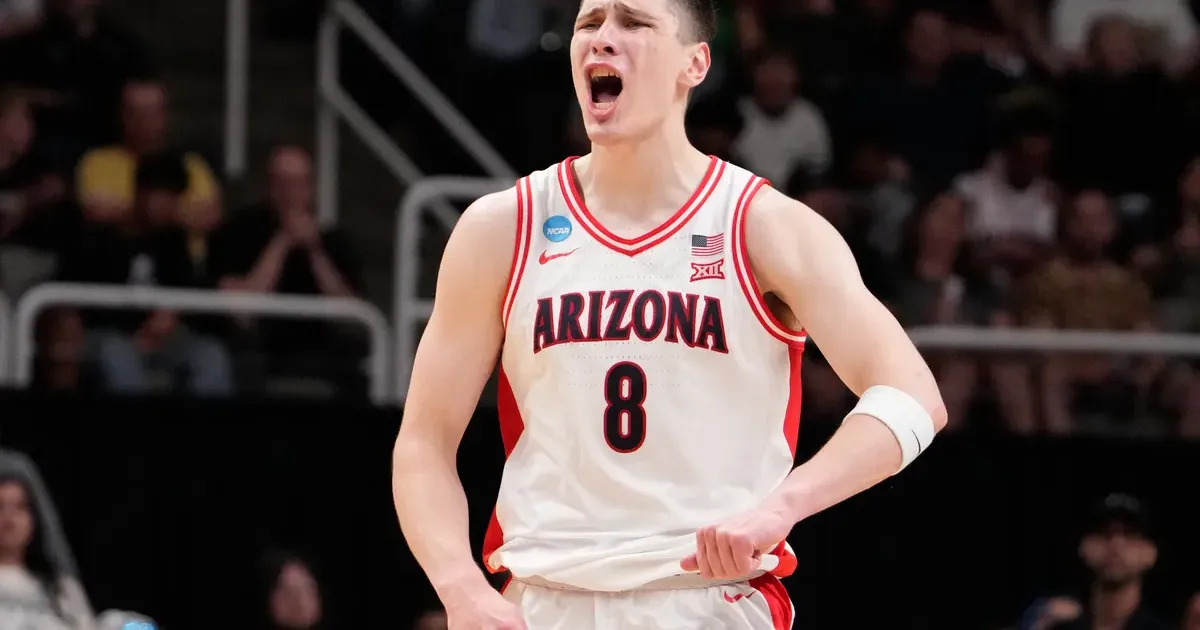
Arizona defeated top-seeded Purdue to clinch a berth in the Final Four for the first time in a generation. Freshman forward Koa Peat led the offensive charge, scoring 20 points in a dominant 79-64 victory that dismantled the Boilermakers in the West Region final. The March 29, 2026 win marked the conclusion of a 25-year wait for the Wildcats, a program that had not reached the final weekend of the NCAA Tournament since the 2001 season. Thousands of fans watched as the Tucson-based team controlled the tempo from the opening tip-off.
Arizona Wildcats End Quarter-Century Tournament Slump
Koa Peat delivered a performance that justified his high-school scouting reports, using a mix of interior physicality and mid-range precision to unsettle the Purdue defense. His scoring output provided the cushion necessary to withstand a late second-half push by the Boilermakers. Purdue struggled to contain the athleticism of the Arizona frontcourt, frequently yielding second-chance points and losing the battle on the boards. Statistics from the box score confirm that Arizona outrebounded Purdue by a margin of 12, a factor that effectively neutralized the size advantage typically enjoyed by the Indiana-based program.
Purdue simply could not find an answer for the freshman.
Coach Tommy Lloyd has spent several seasons engineering a roster capable of high-octane offensive production while maintaining defensive integrity. His current group relies on a balanced attack where multiple players can initiate the offense. Beyond Peat, the backcourt rotation provided critical spacing that prevented Purdue from doubling the post. Arizona shot 48 percent from the field, an efficiency rating that proved overwhelming for a Purdue team that saw its primary scoring options go cold during the final ten minutes of play.
"Arizona is headed back to the Final Four for the first time in 25 years after the top-seeded Wildcats got 20 points from freshman Koa Peat to beat Purdue 79-64," reported the NY Post on the game's outcome. Historic parallels between this team and the 2001 squad under Lute Olson have already begun to circulate among sports analysts. That earlier iteration of the Wildcats featured future NBA talent like Richard Jefferson and Gilbert Arenas, falling only in the national championship game to Duke. The 2026 roster shares a similar depth, though it operates with a much faster transition speed. Arizona will now travel to the final site with the momentum of a 10-game winning streak.
Brad Underwood Rebuilds Illinois Basketball Identity
Illinois secured its own place in the Final Four on March 29, 2026, ending a 21-year drought that had haunted the program since 2005. Head coach Brad Underwood achieved this by blending traditional physical play with modern offensive concepts that prioritize floor spacing and ball movement. The Fighting Illini displayed a level of cohesion that has made them a national title contender. This success mirrors the legendary 2005 run led by Deron Williams and Dee Brown, though the tactical approach differs sharply. While the 2005 team relied on a guard-heavy rotation, the 2026 squad utilizes a versatile lineup where every position can enable the offense. See how Arizona advances to Elite Eight after their dominant regional victory over Arkansas.
Illinois has integrated what analysts describe as a dash of European flavor into its half-court sets. This approach emphasizes constant movement and back-door cuts, a departure from the isolation-heavy schemes often seen in high-major college basketball. International scouting has played a major role in this evolution, with several key contributors originating from overseas leagues. These players brought a fundamental proficiency that Underwood has harnessed to create a multi-dimensional attack. Defensive pressure from the Illini held their regional final opponent to under 40 percent shooting.
The bracket now features two programs that have defined themselves through long-term frustration. Brad Underwood maintained a disciplined rotation throughout the regional rounds, ensuring his starters remained fresh for the closing minutes. His ability to adapt to in-game defensive shifts has been a hallmark of this tournament run. Illinois fans have waited since the Bruce Weber era to see their team reach this stage of the competition. The University of Illinois athletic department reported record-breaking merchandise sales in the hours following the regional victory. Roster continuity played an essential role, as several seniors elected to return for their final year of eligibility rather than enter the professional draft.
Tactical Shifts and European Influences in College Hoops
European influences have fundamentally changed how high-major programs like Illinois structure their offensive strategies. Teams now prioritize players who possess the passing ability of a point guard regardless of their physical height. This trend has led to a decrease in traditional back-to-the-basket centers in favor of mobile big men who can stretch the defense to the three-point line. Scouting reports indicate that Illinois specifically targeted recruits who excelled in EuroLeague youth academies. These athletes arrived on campus with a tactical maturity that allowed Underwood to implement complex offensive systems.
Arizona, however, has focused on a more domestic recruiting model, securing top-tier American talent like Koa Peat to anchor the rotation. The contrast between these two philosophies will be a primary focus for analysts as the tournament moves into its final weekend. Peat's ability to dominate the paint provides Arizona with a traditional anchor, whereas Illinois relies on its collective movement to create scoring opportunities. Data from the regular season shows that Arizona leads the nation in points in the paint per game. Illinois counters with a top-five ranking in secondary assist percentages.
Player development within the NCAA Tournament environment remains the most volatile factor in predicting a champion. Arizona has shown a striking ability to maintain composure during high-pressure sequences. Illinois has proven it can come from behind, erasing double-digit deficits in two of its four tournament games. Both programs have successfully navigated the emotional hurdles associated with their respective droughts. Experts suggest that the mental fortitude required to break these streaks often carries over into the championship rounds.
Financial projections for the 2026 Final Four suggest a meaningful boost for the host city and participating universities. Arizona and Illinois represent large, passionate fan bases that historically travel in great numbers. Travel agencies in Phoenix and Chicago reported a 300 percent increase in flight bookings to the host site within six hours of the final buzzer. The $11 billion television contract with broadcast partners ensures that these high-profile matchups receive maximum exposure. Corporate sponsors have already begun rolling out marketing campaigns centered on the "return to glory" narrative for both schools. Ticket prices on the secondary market have surged to an average of $1,200 for the semifinal session. The demand reflects the scarcity of the achievement for these two programs. Alumni associations for Arizona and Illinois have organized large viewing parties across the country, further extending the economic reach of the tournament. The absence of traditional blue-bloods like Duke or Kansas has not dampened interest. Instead, the focus has shifted to the redemption of programs that had spent decades on the periphery of championship relevance.
Winning a national title provides a long-term recruiting advantage that far outweighs the immediate financial gain. Schools that reach the Final Four typically see a 20 percent increase in high-school applications the following academic year. Arizona and Illinois are both positioning themselves as the new standard-bearers for their respective conferences. The Big 12 and the Big Ten will use this success to negotiate more lucrative media deals in the future. Recruiting cycles for 2027 are already being influenced by the visibility these programs achieved in March.
Why These Droughts Ended
Nostalgia masks the mercenary reality of current collegiate sports. While the media focuses on the romantic narrative of 25-year droughts and "return to glory" storylines, the 2026 Final Four is actually a cold demonstration of the power of the transfer portal and NIL capital. Arizona and Illinois did not break their droughts through the slow, organic growth of program culture. They did it by aggressive roster management and the strategic acquisition of elite talent like Koa Peat. The romanticism of Lute Olson or the 2005 Illini belongs to a dead era of college athletics where loyalty had a shelf life longer than a single season.
Brad Underwood's use of "European flavor" is a euphemism for a tactical system designed to maximize the efficiency of professional-grade athletes who are essentially playing on one-year contracts. Any program that fails to embrace this transactional model will find itself permanently excluded from the final weekend. The idea that these victories are a triumph of tradition is a marketing fiction sold to alumni to keep the donation checks flowing. Arizona and Illinois have simply mastered the art of building a championship contender in the age of the highest bidder. If other traditional powers want to return to this stage, they must stop chasing ghosts and start matching the market rate for elite freshmen and international facilitators. The era of the project player is over.