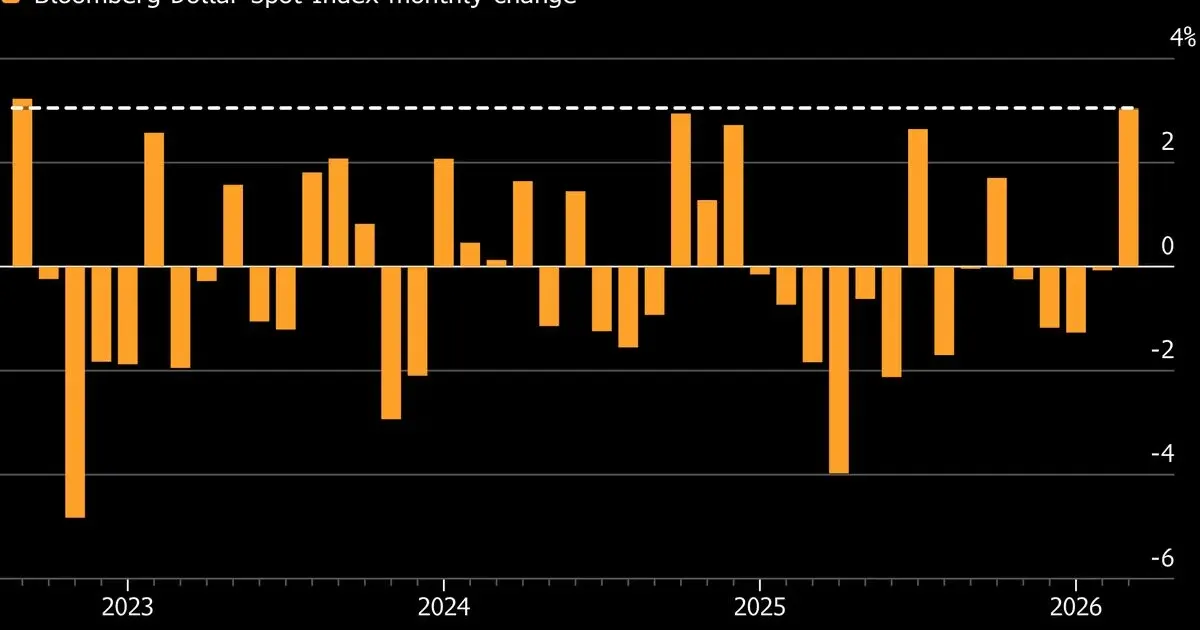
The Iran war gave the U.S. dollar a sharp safe-haven premium during the March market shock, pushing the currency toward a 10-month high before later moves gave back part of that stress trade. The move was never a clean vote of confidence in the American economy. It was a scramble for relative shelter when oil, shipping, inflation and interest-rate expectations became harder to price.
The distinction matters. A stronger dollar can look like stability on a screen, but it often reflects stress elsewhere. Investors reach for dollar cash, Treasuries and dollar-denominated contracts when the next headline could change energy routes or central-bank expectations. The dollar rises because everyone else is forced to hedge around it. The rush benefits some portfolios and painful for economies that buy fuel, service debt or defend currencies in dollars.
Oil Was the Transmission Channel
Energy risk carried the currency move. In late March, Brent crude surged as the Iran conflict threatened Gulf flows and pushed fuel costs sharply higher. Later July fighting revived the same channel, even as the dollar itself moved more unevenly after cooler U.S. inflation data and shifting policy expectations.
The mechanism is direct. Higher oil prices increase dollar demand because crude and many related contracts are priced in dollars. Import-dependent economies need more local currency to buy the same energy. If their currencies weaken at the same time, the shock doubles: oil is more expensive and the dollar used to pay for it is also more expensive.
A Haven Rally Can Export Pain
The uncomfortable side of a dollar rally is that it can spread financial pressure far beyond the original war zone. Emerging markets feel it through debt service, fuel imports and capital outflows. European economies feel it through imported energy inflation and weaker purchasing power. Asian importers feel it when dollar funding and crude replacement costs rise together.
The dollar's strength therefore during the March phase looked defensive rather than celebratory. It helped investors seeking liquidity, but it tightened conditions for borrowers and importers outside the United States. A haven currency can protect the people holding it while making the system around it more expensive.
Inflation Fear Complicated the Usual Trade
Normally, a geopolitical scare can push investors into bonds and lower yields. The Iran war made that harder because the shock was inflationary. If oil rises enough, central banks cannot simply treat the event as distant foreign-policy noise. They have to ask whether fuel, freight and consumer expectations will keep prices elevated.
The inflation risk changed the meaning of safety. Dollar strength came alongside concern about higher yields, delayed rate cuts and tighter credit. Gold and other classic havens did not always behave in the simple textbook pattern because the market was not pricing fear alone. It was pricing fear with an inflation tail attached.
Housing Shows the Spillover
The UK housing example shows how a currency and oil shock can reach ordinary households. Nationwide reported that UK house prices rose in March, but the broader backdrop was less comfortable. Higher energy bills, higher mortgage-rate expectations and weaker real-income confidence can undermine a property market even when one monthly data point is positive.
Housing is where macro stress becomes personal. A stronger dollar, firmer oil and higher bond yields do not stay inside trading desks. They move into mortgage pricing, business costs, buyer confidence and household budgets. The effect is uneven, but the direction is clear: war risk raises the cost of caution.
Central Banks Lose Clean Options
Central banks face the hardest version of the problem. If they look through a temporary oil spike, they risk letting inflation expectations drift. If they respond too aggressively, they can weaken housing, investment and hiring. The more often the Iran conflict sends energy prices higher, the harder it becomes to describe the shock as temporary.
Later dollar pullbacks therefore do not erase the lesson from the March surge. Markets can give back a war premium after one CPI report, one policy reversal or one softer oil session. But if the conflict keeps returning through fuel prices, shipping risk and rate expectations, the dollar can regain defensive demand quickly.
The Dollar Signal Was Fear, Not Victory
The dollar's war premium was not a victory parade. It was a stress signal. Money moved toward the safest and most liquid room because energy, inflation and trade became harder to price. For the United States, a stronger dollar can soften some import costs but pressure exporters and multinationals. For others, it can raise the cost of fuel, debt and currency defense at the same time.
A regional war becomes a global financial squeeze through that chain. The danger is that policymakers mistake dollar strength for confidence. It is closer to a warning. When capital crowds into the safest room, that room looks solid. The rest of the building is where the strain appears.