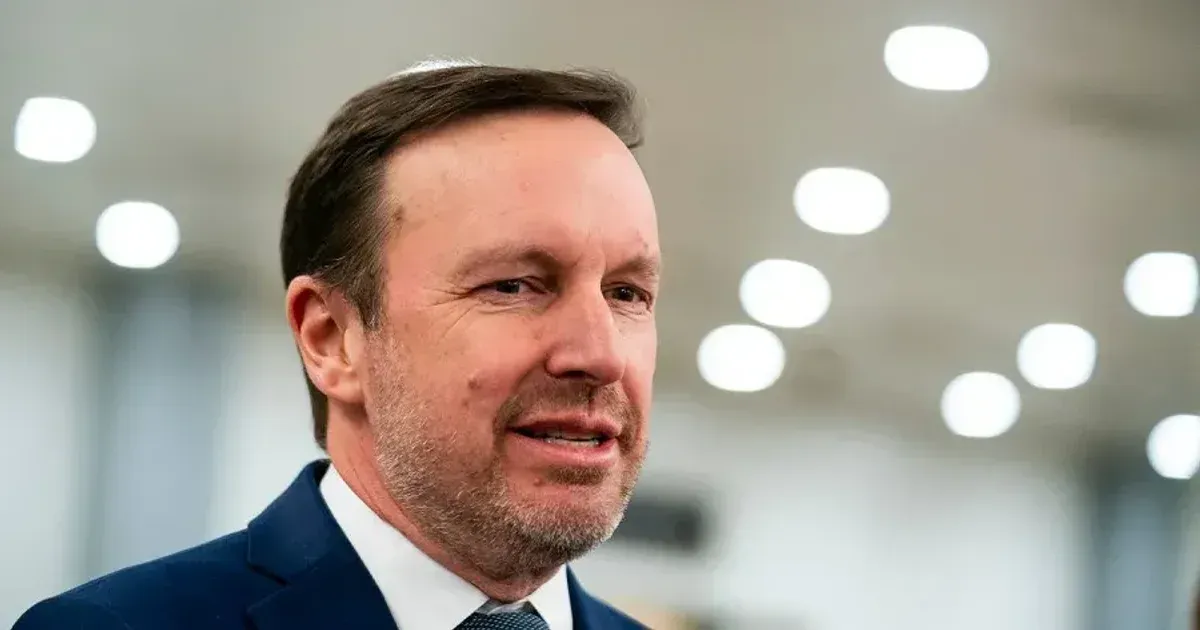
The domestic fight over Iran policy sharpened around one legal claim. The claim gave congressional critics a legal frame before the next military decision. On April 6, 2026, Chris Murphy warned that strikes on civilian infrastructure in Tehran would violate international law. The Connecticut senator pointed to reports that President Trump had discussed non-military targets such as bridges and transit hubs. His criticism framed the issue as more than strategy, arguing that Republican leaders needed to stop a possible move toward mass civilian harm.
Republican leaders received calls to intervene and prevent what the Connecticut senator described as mass atrocities. Senator Murphy claimed on the social platform X that the president was actively briefing reporters on these intended strikes. These specific targets include infrastructure that serves no immediate military purpose for Iran or its regional proxies.
Senator Murphy stated that blowing up bridges and civilian centers constitutes a violation of the Geneva Conventions. He urged his colleagues in the Senate to distance themselves from these threats before military action begins. International observers expressed immediate concern regarding the legality of preemptive strikes on non-combatant facilities.
"Trump is calling reporters today to tell them he is going to commit mass war crimes next week," Murphy wrote on the social platform X.
Washington officials have not yet responded to the senator's specific allegations.
Murphy Denounces Trump Military Target List
Congressional oversight committees are now reviewing the legal framework governing presidential authority in the Persian Gulf. Senator Murphy insists that the executive branch cannot unilaterally designate civilian sites as legitimate military targets. He believes that Republican leadership must act as a check on these aggressive impulses to avoid a prolonged legal and humanitarian crisis. Historical precedents for infrastructure bombing suggest that such actions often lead to civilian casualties rather than tactical advantages.
Intelligence officials have leaked details suggesting the target list includes cultural and logistical sites. These reports align with previous rhetoric from the administration regarding a maximum pressure campaign against the Islamic Republic. Legislative efforts to curb presidential war powers have stalled in recent months because of partisan gridlock. Murphy argues that the silence of GOP leaders effectively sanctions potential violations of international statutes.
Defense analysts suggest that striking bridges would paralyze the Iranian economy while doing little to degrade the Revolutionary Guard. This strategy mirrors older doctrines of total war that many modern legal scholars consider obsolete. Human rights organizations have already begun drafting petitions to the International Criminal Court in anticipation of an escalation. The Pentagon has declined to comment on specific operational plans or the selection of targets.
Iran Energy Shock Disrupts Global Markets
Oil prices surged toward $100 a barrel as the threat of regional conflict intensified. Market participants fear that any strike on Iranian soil will lead to the closure of the Strait of Hormuz. Because of these fears, energy analysts warn that the global economy is ill-prepared for a sustained disruption of crude supplies. Previous attempts to achieve energy autarky in the United States have not fully insulated the domestic market from international price swings.
Energy independence is an alluring concept that often fails when faced with the realities of global trade. While American production remains high, the interconnected nature of refinery logic means that local prices still track global benchmarks. Domestic consumers would likely face immediate spikes at the pump if Tehran retaliates against shipping lanes. Experts at Foreign Affairs have described this vulnerability as the Iran Shock, a phenomenon where geopolitical tension overrides domestic supply levels.
Crude oil futures reached their highest point in three years during morning trading. Economic advisors warned the administration that a hot war would erase recent gains in manufacturing and retail sectors. Investors are moving capital into safe-haven assets like gold and Treasury bonds. The risk of a recession increases with every rhetorical escalation from the White House.
Gulf Allies Seek Protection From Tehran Retaliation
Allies in the United Arab Emirates and Saudi Arabia are currently calculating the cost of being in the crosshairs. These nations host American military assets that would likely become targets for Iranian missile barrages. Diplomatic sources indicate that regional leaders are privately urging the administration to seek de-escalation. Their primary concern is that a US-led strike will leave them vulnerable to asymmetric attacks on their own oil processing facilities.
Regional security depends on a delicate balance of power that is easily upset by unilateral American action. Allies have spent billions on missile defense systems, yet these technologies have limits against coordinated swarm drone attacks. Avoiding the next Gulf war requires a level of coordination that appears missing from current White House strategy. Governments in the region are exploring independent diplomatic channels with Tehran to reduce their own risks.
Security pacts between Washington and its partners are being tested by the lack of clear communication from the State Department. If a conflict breaks out, the logistical burden of defending the entire Arabian Peninsula would fall on a stretched American naval presence. Some analysts believe that regional partners may deny the US use of their airspace to avoid becoming combatants. This shift in loyalty would severely hamper American strike capabilities in the theater.
Diplomatic cables suggest that several European nations are also distancing themselves from the current administration's stance. They fear that a conflict will trigger a new wave of migration and energy instability across the continent. These concerns have led to a fracture in the traditional Western alliance regarding Middle East policy. United Nations representatives are calling for an emergency session to address the rising tensions.
War Powers and Legal Limits
Relying on the sanity of institutional guardrails appears increasingly like a fool's errand for observers of American foreign policy. The current path suggests an administration that views international law not as a binding framework, but as a minor inconvenience to be ignored at will. While Senator Murphy is correct to label the targeting of civilian bridges as a war crime, his appeals to Republican leadership ignore the reality of a party that has largely surrendered its oversight role to the executive branch.
Energy autarky is a dangerous myth that politicians use to justify isolationist or aggressive behaviors. True independence is impossible in a world where a single drone strike in the Persian Gulf can reset the price of bread in Kansas. By threatening Iranian infrastructure, the United States is not projecting strength but is instead revealing its own unstable dependence on a stable global energy market. The administration is gambling with the global economy for a tactical victory that would likely prove pyrrhic.
Washington is sleepwalking into a conflict that its regional allies are desperate to avoid. If Saudi Arabia and the UAE decide that American protection is more of a liability than an asset, the entire post-1945 security architecture of the Middle East will collapse. The United States cannot afford a war of choice while its own alliances are fraying at the seams. A strategic disaster looms.