Donald Trump threatened Iranian infrastructure and energy facilities if the Strait of Hormuz remained closed, drawing criticism from Marjorie Taylor Greene and religious leaders. The threats included a specific timeline for strikes on power plants and bridges. Critics treated the language as a warning sign for both military escalation and civilian harm. The rhetoric intensified on April 5, 2026, as Trump used Truth Social to frame infrastructure attacks as a response to Iran while opponents warned that civilian-adjacent targets could widen the war.
Marjorie Taylor Greene, the former Georgia Representative and a long-time ally of the former president, condemned the rhetoric in unusually personal terms. She characterized the threats to civilian-adjacent infrastructure as insane. Greene further questioned his religious sincerity, stating he is not a Christian. Her comments, delivered on Sunday, signal a fracturing of the conservative coalition that has previously supported hardline maneuvers in the Persian Gulf. She argued that targeting bridges and power plants deviates from the isolationist America First principles she champions.
Greene Rejects Trump Wartime Rhetoric
Republican internal dynamics shifted sharply following the Truth Social posts. Greene had previously served as one of the most vocal defenders of the administration, yet she now finds herself in direct opposition to the commander-in-chief. Her pivot centers on the moral and tactical implications of a multi-front war that targets civilian infrastructure. She emphasized that a genuine Christian leader would seek de-escalation on a holy day rather than promising fire and brimstone. Her sudden defiance highlights a growing fatigue among certain populist factions regarding endless military entanglements.
Voters in the base are now weighing these competing definitions of strength. While some supporters view the bridge day threat as a necessary ultimatum to ensure global energy security, others see it as a dangerous provocation that could lead to a permanent regional conflict. Greene’s use of the term insane suggests that the internal GOP consensus on Middle East policy is deteriorating. Her public distancing is an indicator for how domestic politics might hinder further military expansion if the Tuesday deadline passes without a diplomatic breakthrough.
Marjorie Taylor Greene focused her criticism on the erratic nature of the policy shift. She noted that the suddenness of the Tuesday deadline leaves little room for the very dialogue the international community is requesting. Her criticism coincided with reports that several other House Republicans are privately expressing concern over the lack of a clear exit strategy. The prospect of a prolonged campaign against Iranian power grids has many fiscal conservatives worried about the long-term impact on the federal deficit.
Religious Leaders Condemn Infrastructure Targets
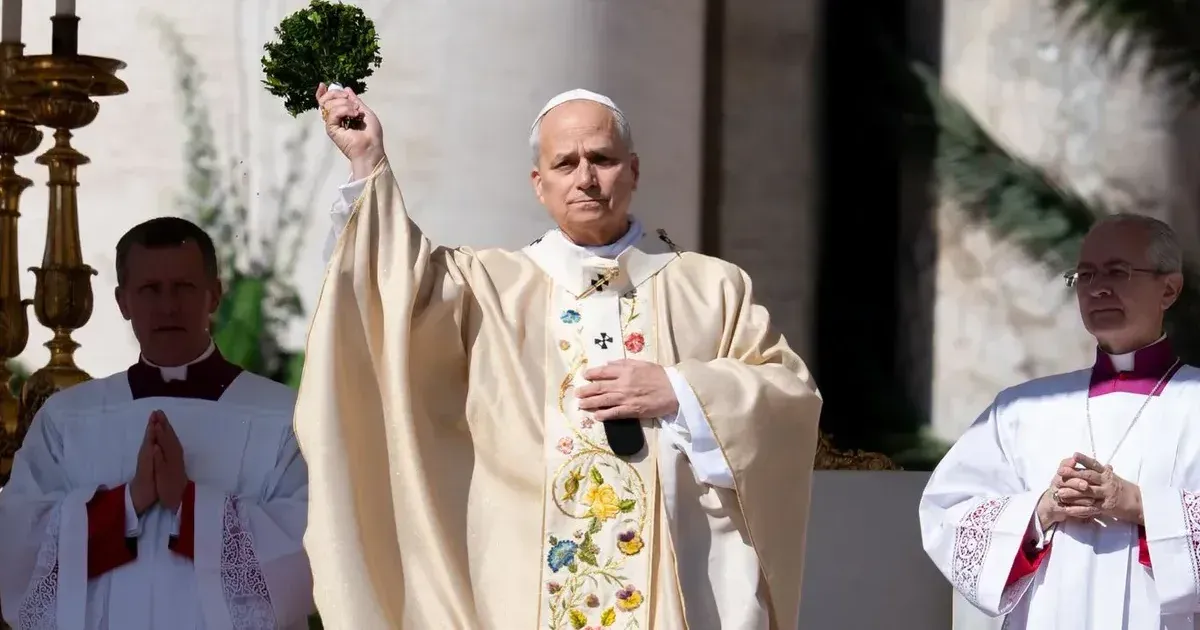
Pope Leo XIV used his first Easter mass at St. Peter’s Basilica to urge global leaders to lay down their weapons. The first U.S.-born pontiff addressed the escalating crisis by calling for peace through encounter instead of force. He argued that those with the power to unleash war must choose the path of dialogue. His message directly countered the rhetoric emanating from the White House, which has prioritized the forceful reopening of the Strait of Hormuz over diplomatic channels. Leo’s intervention adds a meaningful layer of moral pressure on the administration. The administration's focus on Iranian infrastructure and energy facilities remains a central point of the ongoing escalation.
Let those who have the power to unleash wars choose peace! Not a peace imposed by force, but through dialogue! Not with the desire to dominate others, but to encounter them.
Archbishop Timothy Broglio, who leads the Catholic Archdiocese for the Military Services USA, added a domestic perspective to the religious opposition. Speaking on CBS News, he noted that war is always a last resort. Broglio acknowledged that officials might possess classified information that drove their decisions, but he maintained that casting this specific conflict as divinely sponsored is difficult. He emphasized that the message of Jesus focuses on peace, creating a theological friction point for an administration that frequently courts the evangelical and Catholic vote.
Adam Smith, the top Democrat on the House Armed Services Committee, echoed these concerns from a fiscal and strategic standpoint. He described the ongoing war in Iran as a mistake driven by excessive costs. Smith pointed out that repeated strikes are not weakening the Iranian government but are instead hardening the regime’s resolve. The money allocated to these military operations is swallowing funds intended for broader national defense, creating a budgetary vacuum that Smith believes undermines long-term security. He argues that the current strategy is counterproductive and financially unsustainable.
Economic Consequences of Persian Gulf War
Military strikes on Iranian energy assets would likely cause a major spike in global oil prices. Tehran continues to throttle the Strait of Hormuz, a move that has already restricted the flow of crude to international markets. Trump’s threat to bomb power plants and bridges is intended to break this blockade, but analysts warn it could lead to the permanent destruction of essential transit routes. The economic fallout of such a move would be felt in every American household through rising fuel costs and supply-chain disruptions. Financial markets have already shown signs of volatility in anticipation of the Tuesday deadline.
Infrastructure targets present unique risks to the civilian population of Iran. Power plants provide the energy necessary for hospitals, water sanitation, and food storage. A concentrated campaign against these facilities would create a humanitarian crisis that could spill across borders. This potential for regional instability is a primary driver behind the opposition from both religious leaders and veteran lawmakers like Smith. They argue that the tactical gains from destroying a bridge do not outweigh the long-term strategic damage to American interests in the Middle East.
White House Press Secretary Karoline Leavitt defended the administration’s stance by pointing to the necessity of keeping global trade routes open. She argued that the president’s rhetoric is a form of maximum pressure designed to prevent a total shutdown of the global economy. Leavitt dismissed the criticism from the Vatican as a misunderstanding of the security threats facing the United States. She maintained that the administration remains committed to its timeline. The deadline for Tehran to relinquish control of the strait is set for Tuesday morning.
Strategic calculations in Washington remain fluid as the hours count down. Some Pentagon officials are reportedly preparing for various contingencies depending on how Iran responds to the ultimatum. If the Iranian Revolutionary Guard Corps does not pull back its naval assets, the promised Bridge Day may become a reality. This would mark a serious escalation in a conflict that has already strained the resources of the U.S. military. The focus on infrastructure suggests a shift toward a total war posture that seeks to cripple the Iranian state’s ability to function.
European allies have remained largely silent or voiced tepid calls for restraint. The lack of a unified international coalition for these specific infrastructure strikes suggests that the United States may be acting unilaterally. The isolation could have long-term diplomatic consequences, making it harder to maintain sanctions or security agreements in other parts of the world. The Tuesday deadline remains the focal point for both supporters and critics of the current policy.
Infrastructure Threat Fallout
Strategic madness is often mistaken for tactical genius in the heat of a populist fervor, but the Tuesday deadline reveals a dangerous lack of a plan B. By announcing Power Plant Day on a religious holiday, the administration has managed to alienate its most loyal domestic allies and the global moral authority in a single stroke. It is not the calculated brinkmanship of the first term. Instead, it is a desperate gamble that assumes the Iranian regime will buckle under the threat of infrastructure collapse. History suggests that such threats often achieve the opposite, providing the target government with a potent nationalist rallying cry to justify further aggression.
The fiscal reality of this campaign is equally grim. Adam Smith is correct to point out that the cost of these strikes is eroding the very military readiness they are supposed to project. Every Tomahawk missile launched at a bridge in rural Iran is a multimillion-dollar drain on a treasury that is already stretched thin. If the Strait of Hormuz does not open immediately, the administration will find itself in a mess where the only options are total withdrawal or total occupation. Neither outcome serves the America First agenda. The policy is a collision course between high-stakes rhetoric and the cold, hard reality of asymmetric warfare.
Trump has painted himself into a corner where inaction on Tuesday will be seen as weakness, while action will be seen as a war crime by the international community. He is betting the entire presidency on the hope that Tehran is more afraid of losing its power plants than it is of losing its regional standing. It is a reckless wager. The bridge to a peaceful resolution has likely been burned long before the first bomb falls. Predictable chaos is the new standard.