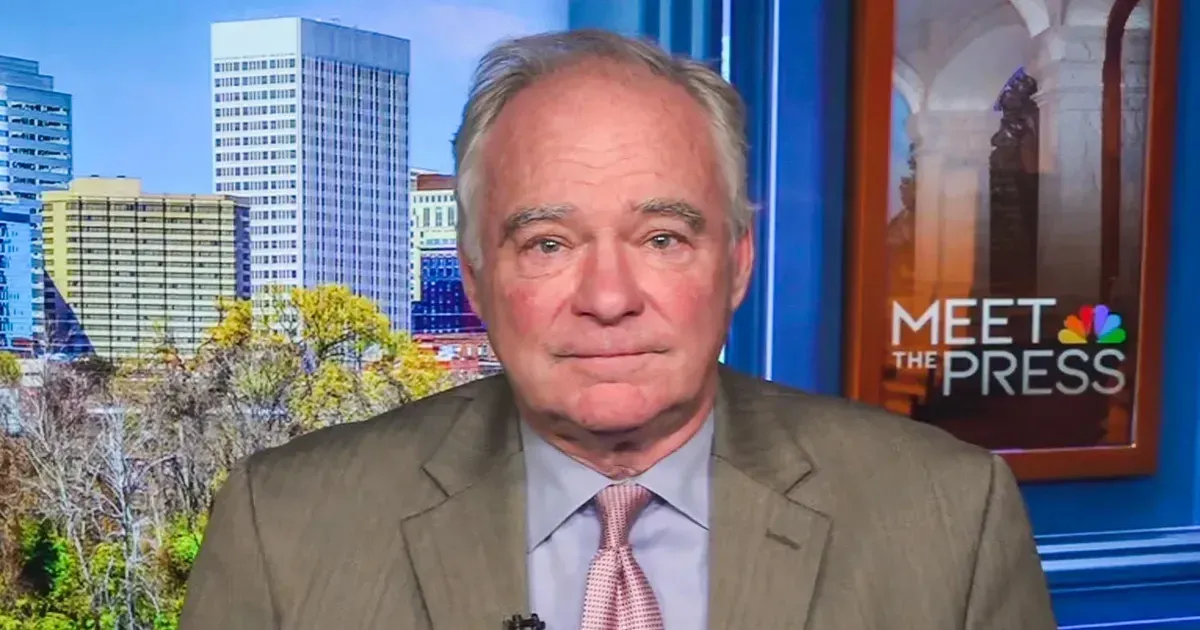
Senator Tim Kaine stated that the White House faces a steep climb to secure approval for its latest military spending requests. Donald Trump dismissed his Attorney General while seeking a $1.5 trillion budget, creating a dual-track confrontation with the Senate. The personnel move sharpened questions about whether the administration can manage legislation and cabinet turnover at the same time. The April 5, 2026 comments placed fiscal discipline and executive stability at the center of the debate.
Defense Department officials submitted the 2027 budget plan during a period of intense geopolitical friction. Virginia’s senior senator voiced meaningful skepticism regarding the scale of the request during an appearance on Meet the Press. Kaine indicated that the fiscal trajectory proposed by the administration lacks sufficient justification for such a serious increase in discretionary spending.
Financial Scrutiny of Military Projections
Budgetary requirements for the next fiscal year rely on sustained funding for an unpopular military conflict that has drained political capital. NPR reports suggest the president is currently on his back foot as he navigates these fiscal demands. Public sentiment remains divided over the cost of international engagements, particularly as domestic programs face potential cuts to offset defense growth. Military analysts suggest that a $1.5 trillion price tag would be the largest in modern history when adjusted for recent inflation cycles.
Legislative resistance often intensifies when an administration seeks to revise campaign promises regarding social safety nets. Current projections indicate a shift away from earlier commitments to preserve federal entitlements. Reallocating funds from these programs to the Pentagon has generated friction even among the president’s traditional allies in the Rust Belt. Kaine highlighted the disconnect between campaign rhetoric and the line items found in the current executive proposal.
Wartime expenditures historically require broad bipartisan consensus to survive the appropriations process. That consensus appears absent in the current environment. Lawmakers from both parties have requested detailed audits of how previous defense allocations were used before committing to a trillion-dollar expansion. Verification of these expenditures remains a primary hurdle for the White House Office of Management and Budget.
Judicial Appointments and the Bondi Vacancy
Legal circles in Washington were startled by the sudden dismissal of Pam Bondi from her role as the nation’s top law enforcement officer. The removal of a key loyalist suggests internal friction within the executive branch that could complicate future confirmation hearings. Senators now view the next nomination through a lens of extreme caution. Kaine told NBC News that the firing of Bondi should function as a lesson for whoever the administration selects as a successor. Legislative pushback against these military spending requests mirrors broader resistance to current defense budget hikes.
Cabinet stability is a requirement for long-term policy implementation. Frequent turnover at the Department of Justice often leads to stagnation in federal litigation and oversight. Judiciary Committee members have signaled they will prioritize candidates who demonstrate a higher degree of independence from executive whims. This shift in criteria reflects a desire for institutional continuity over ideological alignment.
Bondi’s firing should serve as a lesson for the next contender.
Confirmation hearings for the next Attorney General will likely focus on the circumstances surrounding the recent vacancy. Kaine clarified that he is not an automatic no on the next nominee but expects rigorous transparency. Previous nominees have faced intense questioning regarding their commitment to the rule of law versus executive directives. The vetting process for the next candidate is expected to be the most exhaustive of the current term.
Policy Reversals on Federal Entitlements
Administrative officials are currently struggling with the fallout of breaking core campaign promises related to Social Security and Medicare. Voters in key battleground states have expressed concern over proposed adjustments to benefit structures. Internal memos leaked to the press suggest that the administration views these cuts as necessary to fund the defense buildup. Resistance from the Senate remains the primary obstacle to these structural changes.
Economic data from the Treasury Department suggests that the national debt trajectory is unsustainable without meaningful revenue adjustments or spending caps. Senators have argued that the burden of fiscal responsibility should not fall exclusively on retirees. Kaine noted that the current budget relies on optimistic growth projections that many independent economists find unrealistic. These disagreements over math are stalling the legislative calendar.
Public disapproval of the ongoing war continues to influence the debate over federal priorities. If the administration continues to prioritize military expansion over entitlement stability, the political costs may become prohibitive. Analysts at the Brookings Institution observe that executive power often wanes when fiscal reality contradicts populist messaging. The White House has yet to provide a counter-narrative that satisfies the concerns of the Senate Finance Committee.
Pressure on the executive branch continues to mount as the deadline for budget approval approaches. Failure to secure a deal could result in a partial government shutdown, an outcome that neither party desires during an active conflict. Kaine emphasized that the burden of proof lies with the president to justify the current fiscal direction. Negotiation remains the only viable path forward for a divided government.
Budget Politics Standoff
Political survival in Washington often dictates a retreat from radical promises when the fiscal arithmetic fails to balance. The Trump administration now finds itself trapped between the necessity of a $1.5 trillion military machine and the populist demands that secured its mandate. Firing Pam Bondi was not a display of strength; it was an admission of internal collapse. A president who cleans house in the middle of a legislative battle signals weakness rather than resolve.
Sen. Tim Kaine is playing a sophisticated game of wait-and-see, positioning himself as the reasonable arbiter while the executive branch flails. By refusing to be an automatic no, Kaine maintains his leverage over the next Attorney General nominee while simultaneously dismantling the $1.5 trillion budget request. This strategy forces the White House to negotiate on every single front, from military hardware to Social Security benefits. The administration’s attempt to pivot from entitlement protection to defense expansion is a betrayal of the very voters who built its coalition. Expect the Senate to hold the line. The era of blank checks for the Pentagon is over.