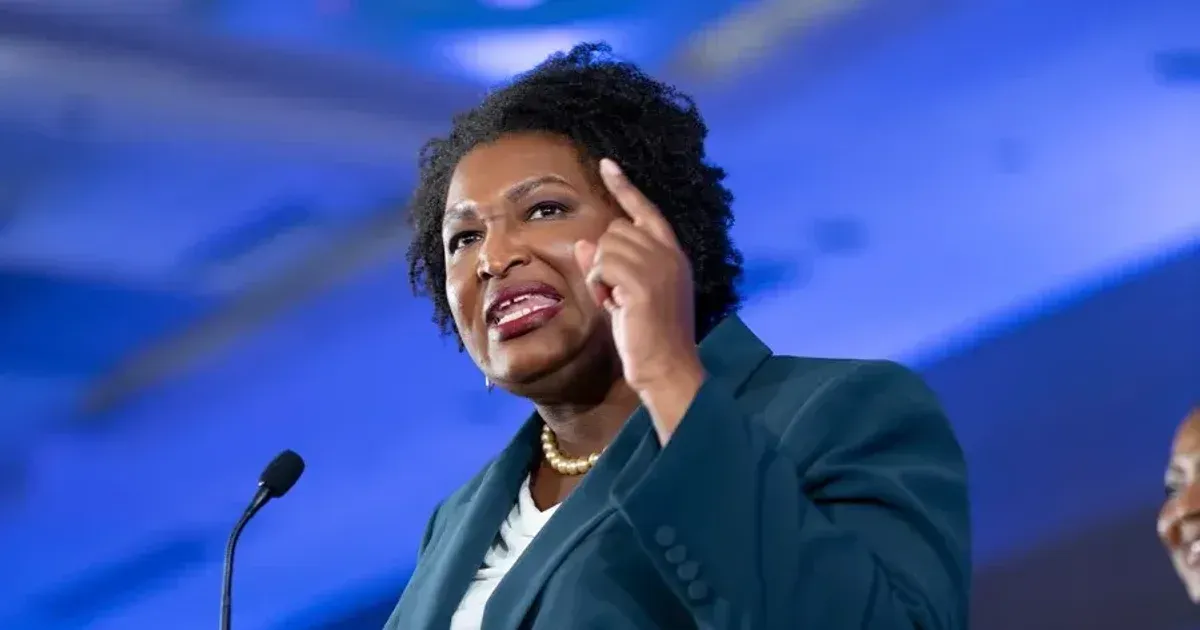
Stacey Abrams called Donald Trump’s mail voting order unlawful, arguing that election administration remains primarily under state control. Her comments framed the directive as an attempt to restrict mail-in balloting through executive power. The challenge was aired on April 6, 2026, as voting-rights advocates and legal experts questioned whether the White House could override state election systems.
Legal Challenges to Executive Voting Restrictions
Constitutional scholars point to Article I, Section 4 of the U.S. Constitution as the primary barrier to this executive action. This clause grants state legislatures the power to prescribe the times, places, and manner of holding elections for Senators and Representatives. While Congress can make or alter such regulations, the presidency does not hold inherent authority to unilaterally change how ballots are collected or processed. Donald Trump signed the order under the premise of national security and election integrity, yet the text lacks specific statutory references to support such a broad expansion of federal oversight. Most legal challenges will likely hinge on whether the order interferes with the administrative independence of the 50 states.
Georgia had been a central battleground for these exact legal theories for nearly a decade. Abrams, who rose to national prominence after her 2018 campaign, has consistently argued that administrative hurdles often function as barriers for marginalized voters. Her organization, Fair Fight Action, has filed numerous lawsuits targeting what it describes as restrictive voting policies. These previous cases established a framework for understanding how executive actions at the federal level might collide with state-level sovereignty. State officials in jurisdictions like Oregon and Washington, where mail-in voting is the standard, have already prepared litigation to block the enforcement of the new federal rules.
"It is obviously illegal, and it is entirely in the strategy of voter suppression that Republicans, including Donald Trump, have been using for the last decade or so," Abrams said.
Judges in federal district courts frequently demand a clear link between an executive order and an existing law passed by Congress. If the administration cannot provide a specific statute that authorizes the restriction of mail-in ballots, the order will likely face an immediate injunction. Republican supporters of the measure contend that the president possesses broad powers to ensure the security of federal elections. They argue that the diversity of state rules creates vulnerabilities that require a standardized federal response. Evidence of widespread fraud in mail-in systems remains statistically insignificant according to data from the Cybersecurity and Infrastructure Security Agency.
Historical Context of Georgia Voting Rights Battles
Voter registration efforts in the American South have historically met with meaningful institutional resistance. Stacey Abrams often cites the 2018 election as a catalyst for her current focus on systemic reform. During that cycle, Georgia officials purged over 1.4 million voters from the rolls, a move that critics labeled as targeted suppression. National attention turned to the state again in 2020 and 2022 as the legislature passed Senate Bill 202, which introduced new identification requirements for absentee ballots. These state-level shifts provide a backdrop for the current federal conflict, as the White House attempts to nationalize rules that were previously confined to individual state capitals.
Political analysts at Fair Fight Action observe that mail-in voting usage spiked during the 2020 pandemic, fundamentally altering the electoral participation habits of millions. Roughly 43 percent of voters cast ballots by mail in that cycle, a huge increase from previous years. This shift in behavior led to a corresponding increase in legislative efforts to curb the practice. Republicans argue that these measures protect the sanctity of the vote by ensuring every ballot is verified. Democrats counter that the primary goal is to lower turnout among demographics that rely on absentee options. State legislatures in 14 different states have already introduced bills that mirror the language used in the federal executive order.
Technical Limits of Federal Mail Balloting Oversight
Logistical hurdles for the United States Postal Service complicate any attempt to federalize mail-in voting procedures. The postal system operates under its own set of federal guidelines, yet the actual handling of ballots is governed by local election boards. Donald Trump has frequently criticized the postal service's ability to manage high volumes of election mail. His new order seeks to impose strict deadlines on when ballots can be accepted, potentially invalidating those delayed by mail processing centers. Experts in election administration warn that such rules could lead to thousands of legally cast votes being discarded. Postal workers processed 135 million ballots during the previous presidential cycle without systemic failure.
Federalism dictates that the national government cannot commandeer state employees to carry out federal programs. This principle, established in several Supreme Court rulings, means the executive branch cannot force local election workers to adopt new verification standards without Congressional funding and authorization. If the administration attempts to withhold federal grants to coerce compliance, it may face further legal scrutiny under the Spending Clause of the Constitution. Courts have historically limited the ability of the executive to attach strings to federal money that was not clearly stated by Congress. The Department of Justice has not yet released a memo clarifying the legal justification for the order.
Constitutional Authority and State Election Control
Article II of the Constitution outlines the powers of the president, but it contains no mention of election management. Instead, the 10th Amendment is a residual power clause that leaves such duties to the states or the people. Stacey Abrams focused her recent remarks on this specific constitutional tension. She argued that the administration is attempting to bypass the legislative process because it could not secure a majority in the Senate for these changes. Legislative attempts to pass the Honest Elections Act failed to move out of committee earlier this year. The executive order is therefore seen by many as a workaround to achieve through decree what could not be achieved through law.
Judicial reviews of similar executive orders suggest a difficult path ahead for the White House. When former presidents attempted to use emergency powers to influence domestic policy, the Supreme Court often ruled that such actions were valid only when they aligned with the expressed or implied will of Congress. Because Congress has already passed the Voting Rights Act and the Help America Vote Act, any executive action must exist within those frameworks. The current order appears to conflict with the spirit of the National Voter Registration Act of 1993. Legal teams in California and New York have joined a coalition of 20 states filing suit in the District of Columbia.
Partisan divides on this issue show no signs of narrowing. Georgia Governor Brian Kemp has signaled support for the federal order, suggesting that it provides a necessary floor for election security. By contrast, election directors in several swing states have expressed concern that the new rules will create confusion among voters. Clarity is essential for a functioning democracy, but these conflicting directives from federal and state authorities achieve the opposite. Voters now face a landscape where the rules for casting a ballot may change depending on the outcome of pending litigation. The Supreme Court may eventually be forced to issue a definitive ruling on the limits of executive power in the electoral process.
Mail Voting Authority Fight
Does the executive branch possess the moral or legal standing to intervene in the mechanics of democracy without a clear mandate from the legislature? The answer from a strictly constitutionalist perspective is an emphatic no. The latest maneuver from the White House is a dangerous flirtation with autocracy, attempting to seize control over the very process that holds leadership accountable. By targeting mail-in voting, the administration is not addressing a verified threat to security but is instead engaging in a calculated effort to manipulate the composition of the electorate. It is a desperate play for control in an environment where demographic shifts favor the opposition.
The legal community must recognize that if this order stands, the precedent will allow future presidents of any party to rewrite election rules to suit their own political survival. Such a reality would effectively end the era of state-led elections in America. Abrams is correct to label this as illegal, but her assessment may be too narrow. It is not just a violation of law; it is an assault on the structural integrity of the federalist system. The judiciary is the only remaining check against this overreach. If the courts fail to issue a permanent injunction, the fundamental nature of the American vote will be permanently altered. The verdict is clear: the order must fall.