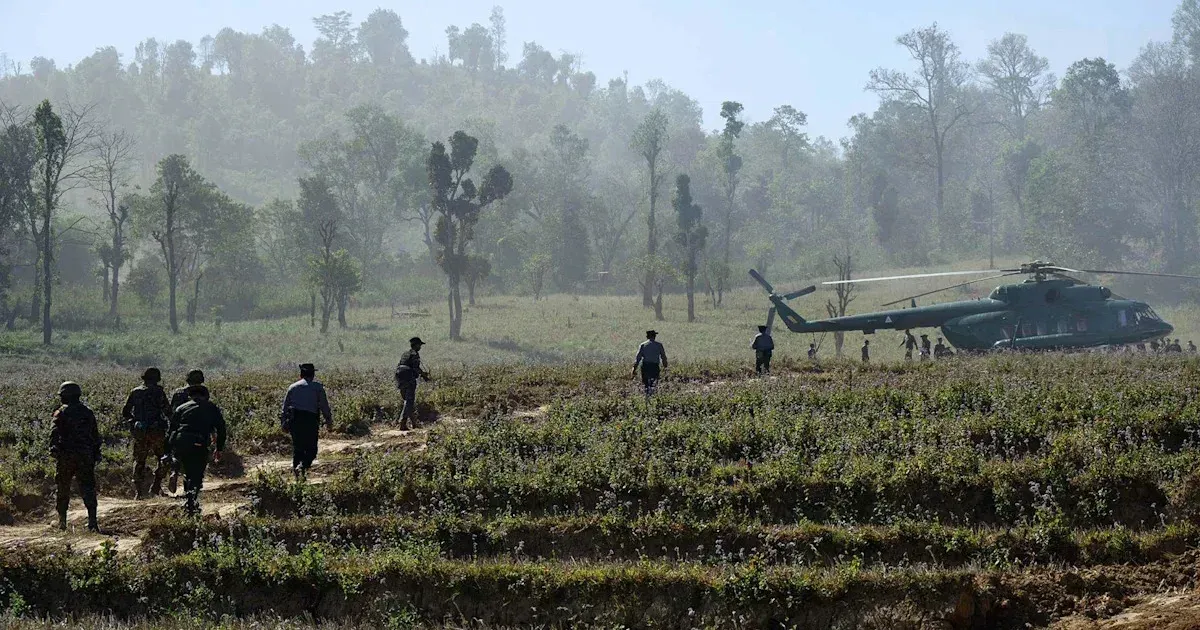
Myanmar rebels are facing renewed pressure as reports from inside the country describe opposition forces losing ground while the military forces more men into its ranks. The account points to a war that is no longer moving only through rebel gains and junta retreat. By June 10, 2026, the sharper question was whether coerced manpower could help the army slow the opposition's momentum even without solving its deeper political crisis.
The military has been battered since the 2021 coup by armed resistance, ethnic insurgencies, sanctions and a collapsing claim to legitimacy. Yet a weakened army can still be dangerous when it has weapons, command structures and the power to punish civilians. Forced recruitment gives the junta one tool for keeping units in the field after years of casualties and defections.
This does not mean the generals have recovered control of the country. It means the conflict is entering a harsher phase in places where manpower, supply lines and local fear matter as much as public support. Rebel groups that once benefited from speed and surprise now have to defend territory, hold communities together and absorb pressure from an army willing to take men by force.
Conscription Changes the Battlefield
Forced recruitment changes a civil war because it can refill depleted units faster than voluntary enlistment. The quality of those troops may be uneven, and morale may be poor, but numbers still matter in checkpoints, sweeps, garrison defense and attacks on contested villages. A soldier who does not want to fight can still hold a road, guard a base or free a more experienced unit for an offensive.
The junta's need for recruits also signals weakness. Governments that command broad loyalty do not have to rely so heavily on coercion. But weakness and brutality can coexist. An army short on consent can still use fear, family pressure, detention threats and local administrators to pull men into service.
For rebel commanders, the immediate problem is practical. They must decide when to defend positions, when to withdraw and how much ammunition to spend against units that may be replaced by another wave of forced recruits. That kind of pressure can exhaust smaller forces even when they retain popular sympathy.
Rebel Forces Face a Harder Phase
The opposition has never been a single army. It includes ethnic armed organizations, newer resistance groups, local defense units and political networks aligned against military rule. That diversity helped resistance spread quickly after the coup, but it also makes coordination difficult when the battlefield turns against one area before another.
Holding ground is harder than seizing it. Once a rebel force controls a town or route, it must provide security, manage supplies, keep civilians from fleeing and defend against airstrikes or artillery. If the army can bring in more troops, even under coercion, rebels may have to choose between a costly defense and a retreat that damages morale.
The risk is not only territorial. A string of losses can test alliances inside the opposition. Groups with local priorities may conserve fighters for their own areas rather than commit to a wider national campaign. Political leaders in exile or underground networks can call for unity, but battlefield stress often exposes the limits of command.
Still, rebel losses in one stretch of fighting do not erase the junta's vulnerability. The military remains widely hated, and forced conscription can deepen that anger. Families that see sons, brothers or husbands dragged into the army may become more hostile to the regime, even if they feel too exposed to resist openly.
Civilians Carry the Cost
The heaviest cost falls on civilians caught between army demands and rebel suspicion. Men of fighting age face the danger of being forced into military service, accused of aiding resistance or pushed to flee before either side arrives. Families lose income when men disappear, hide or are taken from work.
Forced recruitment can also unsettle whole communities. Parents may send sons away. Villages may empty before troops arrive. Local officials may be pressured to produce names, creating disputes that last long after soldiers move on. In a war already marked by displacement, the search for recruits becomes another engine of fear.
For the junta, that fear can produce short-term control. For the country, it deepens the social damage that will outlast any single battle. A coerced army may hold territory on a map, but it does not rebuild trust in courts, schools, police or local administration.
Regional Stakes Grow
Myanmar's neighbors have watched the war through the lens of refugees, border trade, crime networks and diplomatic frustration. A conflict that drags on with more forced recruitment creates fresh pressure on Thailand, India, Bangladesh and China. Border areas can become corridors for people fleeing conscription as well as routes for weapons, fuel and illicit business.
China has particular reasons to watch the balance of forces. Beijing wants stability along its border and protection for infrastructure and trade routes, but it has also dealt with armed groups in border regions when necessary. If the junta regains ground through coercion without restoring order, China may still face the same instability in a different form.
Western governments face their own limits. Sanctions and diplomatic isolation have hurt the regime, but they have not forced it from power. Humanitarian aid is difficult to deliver into contested areas. Recognition of opposition bodies can raise pressure on the generals, yet it does not automatically change battlefield supply.
Another pressure point is information. When front lines move quickly, both the junta and resistance networks try to shape the story before communities know what has actually changed. Claims of advance, retreat or recruitment can influence whether families stay, flee or hide young men from local authorities. That makes verified reporting from inside the country especially valuable, but also harder to obtain as conflict zones become more dangerous. The latest reports therefore matter because they describe a war that can still shift in ugly ways. Myanmar's military may be politically isolated and morally discredited, but it retains enough coercive capacity to impose new costs. The opposition still has legitimacy among many citizens, but legitimacy alone does not defend a town. The next phase may be decided less by dramatic breakthroughs than by whether communities can survive a grinding contest over men, roads and fear.