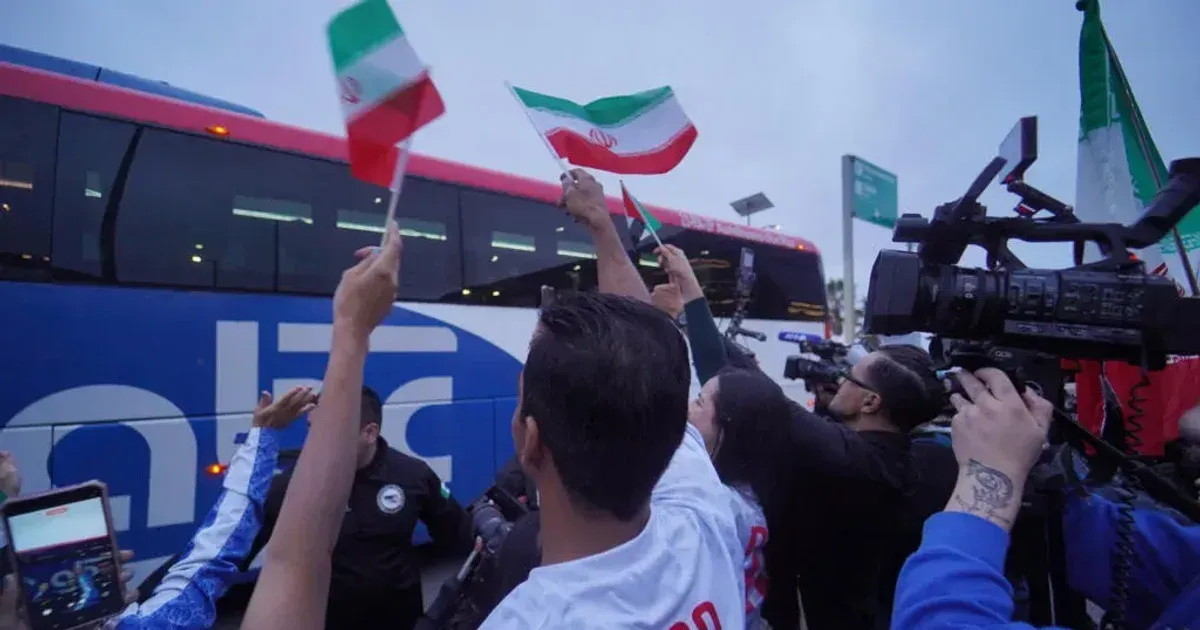
Iran's Football Federation says its ticket allocation for national team supporters was withdrawn days before the 2026 World Cup begins, turning a logistical dispute into a diplomatic argument over access to U.S.-hosted matches. The federation said the decision left it unable to provide tickets to supporters who had expected to attend group games. The announcement was made on June 9, 2026, with the tournament due to start within days.
The claim centers on Iran's group-stage matches in the United States, including fixtures involving New Zealand, Belgium and Egypt. Iran said ticket sales had already begun after it received a quota, but that the allocation was later pulled. The dispute follows separate complaints from Tehran about U.S. visa problems affecting some members of its delegation and support staff.
The federation framed the ticket issue as a breach of sporting neutrality. U.S. officials and tournament organizers had not offered a detailed public explanation in the initial reports, while other accounts pointed to sanctions and payment restrictions as possible factors. That uncertainty matters because fans are now trying to understand whether the barrier is political, financial, security-related or administrative.
Iran called on FIFA and tournament organizers "to uphold the principles of neutrality, fairness, and established regulations."
Ticket Dispute Adds to Visa Tension
The ticket complaint did not appear in isolation. Iran had already accused U.S. authorities of creating visa obstacles for members of its World Cup operation. Those disputes have made the team's arrival and supporter planning more complicated than an ordinary tournament schedule.
Host countries often have to reconcile domestic law with FIFA's expectation that qualified teams and their supporters can participate without discrimination. The difficulty is sharper when the host country has sanctions, travel restrictions or diplomatic conflicts involving a participating nation.
Iran's team had also adjusted its preparations amid the uncertainty. Reports described a move away from an Arizona training base toward Tijuana, Mexico, as officials tried to reduce visa exposure and keep the squad near its match venues. That shift shows how administrative friction can change sporting logistics even before a ball is kicked.
Fans Face the Immediate Cost
For supporters, the practical problem is time. Flights, hotels and match plans are difficult to unwind days before a tournament, especially for fans traveling through third countries or waiting on visa decisions. Some Iranian supporters living outside Iran may still have separate routes to attend, but the federation allocation is the channel at issue.
The dispute also puts pressure on FIFA. The governing body sells the World Cup as a global event, yet it relies on host governments for border rules, policing and financial compliance. When those systems collide, FIFA is left defending the tournament's openness without fully controlling the tools that determine who can enter a stadium.
World Cup Neutrality Gets Tested
The legal and diplomatic details still need clearer public explanation. If sanctions rules blocked transactions, the issue is different from a direct political order barring fans. If security rules drove the decision, organizers will be pressed to explain why a blanket allocation withdrawal was necessary. Either way, the timing makes the disruption more severe.
The uncertainty is especially difficult because ticket allocations are usually handled through predictable tournament channels. Federations plan supporter sections, travel agencies build packages around group games and fans make decisions months before kickoff. A late withdrawal can leave people with flights or hotel reservations but no clear stadium access.
The dispute also creates a communications problem for organizers. If the allocation was blocked because payments from Iran could not be processed under sanctions rules, fans need to know that. If entry restrictions or security screening were decisive, that explanation carries different implications. Without a clear account, the decision is likely to be read through the wider U.S.-Iran confrontation.
For Iran's players, the immediate sporting effect may be more subtle. National teams often count on visible supporter sections to create a sense of familiarity in neutral venues. A reduced or uncertain fan presence can change the atmosphere around group matches, even if it does not alter the formal competition rules. The timing also creates a test for public messaging before the first matches. Tournament organizers need to explain what fans can still do, which ticket channels remain valid and whether any refund or alternative process exists. Without that clarity, the dispute can spread beyond Iranian supporters and create doubt among fans from other countries facing visa or payment restrictions.
The case now becomes an early test for the 2026 World Cup's promise of broad access across the United States, Canada and Mexico. A tournament spread across three countries already requires complex travel planning. Adding sanctions, visa uncertainty and ticket restrictions gives supporters a reminder that global sport does not escape politics simply because the schedule says it should.