Artemis II has turned a distance record into a public test of NASA's lunar program. Orion's record matters, but the agency still has to prove the system can become more than an expensive spectacle.
The data is valuable; the cost question remains. The distance record gives the program a headline, but operations still have to justify the architecture.
Reid Wiseman and three fellow astronauts began their transit behind the lunar far side on April 6, 2026, to establish a new frontier for human deep-space exploration. They launched from Kennedy Space Center on April 1, 2026, to initiate a 10-day flight test of the Orion capsule. This mission marks the first time humans have traveled toward the moon since the Apollo 17 crew departed the lunar surface in 1972. While that legacy mission focused on specific geological sampling, the current flight serves to validate hardware for long-term lunar operations. The crew reached the lunar vicinity after five days of travel through the vacuum of space.
Record-Breaking Distance and Apollo Comparison
Surpassing the Apollo 13 record involves more than simple orbital mechanics. The 1970 mission achieved its distance unintentionally after an oxygen tank explosion forced the crew into a free-return trajectory. In contrast, the flight path for Reid Wiseman, Victor Glover, Christina Koch, and Jeremy Hansen was carefully planned years in advance. Engineers at the Johnson Space Center monitored the craft as it exceeded the 250,000-mile mark. The mission provides data on radiation exposure and communications reliability that were unavailable during the 20th-century lunar race.
Technical improvements in the Orion spacecraft allow for a more stable environment than the Apollo Command Module. Orion utilizes advanced shielding and automated navigation that minimize the need for constant pilot intervention. This stability allowed the crew to conduct detailed external inspections of the solar array wings. High-resolution imagery captured during these inspections confirmed the structural integrity of the craft. The mission architecture relies on the Space Launch System to provide the initial thrust required for this high-velocity transit.
Orion Capsule Hardware and Consumer Technology
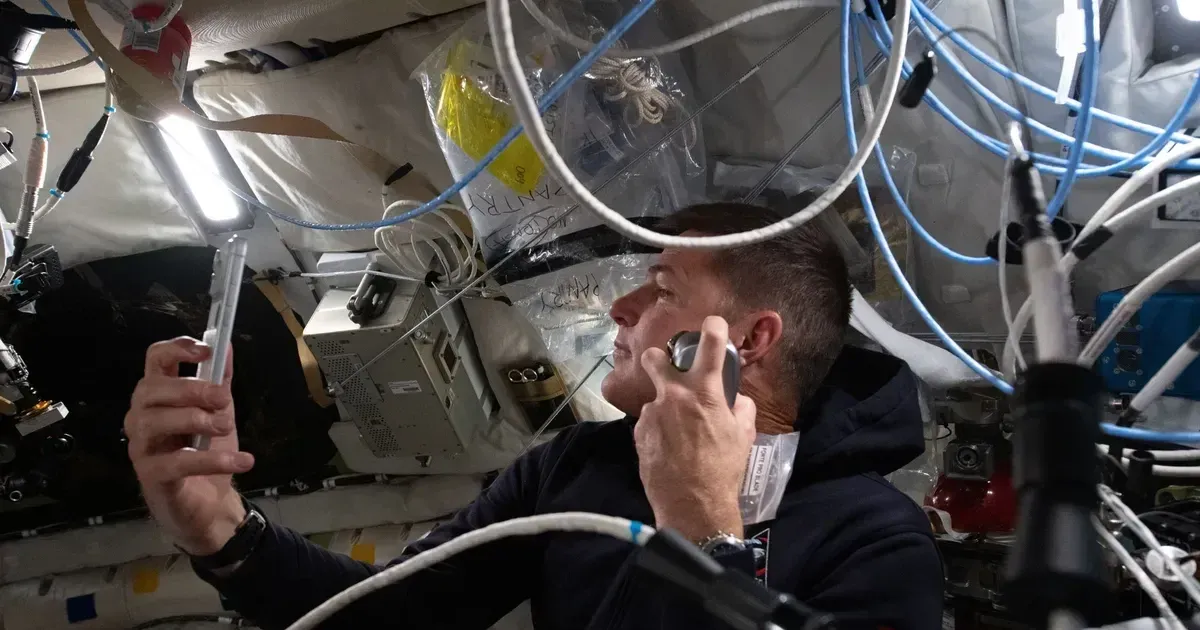
Astronauts on this mission carry a suite of consumer electronics that differ sharply from the specialized gear used in the 1970s. Reid Wiseman and his crew brought four iPhone 17 Pro Max devices to document their daily lives in microgravity. These smartphones remain disconnected from cellular networks and Bluetooth to avoid interference with critical flight systems. They function primarily as high-end cameras and personal logs. Christina Koch used one such device to capture a selfie with the Earth visible through a small cabin window on the second day of the flight.
Integrating consumer hardware into a multibillion-dollar mission reflects a shift in agency philosophy. Mission Specialist Jeremy Hansen noted that the accessibility of these devices helps humanize the experience for a global audience. Photo and video files are transferred to NASA computers and then beamed back to Earth using the Deep Space Network. The process allows for near-real-time social media updates from deep space. The agency expects this transparency to strengthen public support for the escalating costs of the Artemis program.
The goal of Artemis is to create a sustainable presence near the Moon, instead of just sending humans to plant flags and make footprints, according to a NASA official.
Spaceflight history changed at 1:56 PM ET when the spacecraft surpassed the previous human distance record from Earth. Jim Lovell, Fred Haise, and Jack Swigert set the prior milestone of 248,655 miles during the emergency return of Apollo 13 in 1970. Artemis II reached a maximum distance of 252,757 miles as it swung around the lunar far side. This specific trajectory ensures the capsule uses the gravity of the moon to slingshot back toward a splashdown on Earth. NASA officials confirmed that all life support systems maintained nominal levels during the record-breaking leg of the journey.
Records fell as the spacecraft entered the lunar shadow.
Jeremy Hansen and Victor Glover monitored the consoles while the craft lost contact with ground stations for several minutes. The period of radio silence occurs whenever a spacecraft passes behind the lunar mass. Data gathered during this window is stored locally for later transmission. The crew used this time to observe the lunar surface from an altitude of several thousand miles. These observations help determine landing sites for future missions scheduled later this decade.
Budgetary concerns persist despite the technical success of the lunar flyby. The Artemis program has encountered years of delays and development hurdles that have cost taxpayers billions of dollars. Critics often point to the $4 billion cost per launch as a primary obstacle to sustainability. NASA officials maintain that the current mission is the only way to test the integration of the SLS rocket and Orion capsule with a human crew. Success today is a requirement for the Artemis IV mission, which aims to land humans on the surface in 2028.
Artemis Cost and Credibility
Do we actually care about the science, or are we just paying for the most expensive Netflix documentary in human history? NASA has clearly mastered the art of the brand pivot, transforming a decades-long budgetary mess into a slick, social-media-friendly spectacle. By putting iPhone 17 Pro Max devices into the hands of astronauts and partnering with streaming giants, the agency is acknowledging that scientific merit alone no longer secures federal funding. They have successfully traded the stoic, silent professional of the Apollo era for the relatable influencer-astronaut, and the public is buying it.
Skepticism is warranted regarding the timeline for a sustainable lunar presence. While breaking the Apollo 13 record is a striking data point, it does not solve the fundamental problem of the $4 billion launch price tag. We are essentially watching a very expensive victory lap for a program that has yet to prove it can land humans on the surface and bring them home within a reasonable budget. The agency's focus on the first woman and the first person of color on the moon is a necessary evolution, yet these milestones risk being overshadowed by the sheer inertia of the SLS program's inefficiency.