Victor Glover and three fellow astronauts began their long-awaited slingshot around the moon on April 4, 2026, as part of the most meaningful NASA flight in two generations. The crew of the Orion spacecraft moved into a high elliptical orbit, preparing for the trans-lunar injection that will carry them further from Earth than any human since the conclusion of the Apollo program. Public interest surged as live feeds from the capsule provided a visceral look at life inside the pressurized cabin, showing a mix of rigorous scientific procedure and the mundane realities of human biology in microgravity. The flight connected the current crew with the post-Apollo return.
Hygiene in deep space became an unexpected focal point of the mission during a routine rest period. Cameras captured Glover, the mission pilot, attempting a sponge bath after a particularly intense session on the resistance exercise device. Floating droplets of water escaped his cleaning kit, drifting toward the control panels before he could snatch them from the air with a towel. Mission Control in Houston watched the exchange with amusement, noting the contrast between the high-stakes navigation and the simple necessity of scrubbing away sweat in a vacuum.
Cleanup routines like these highlight the physical toll of life in a small capsule. Every action, from drinking water to changing clothes, requires a different set of physics when gravity is absent. Glover later joked with flight controllers that even a simple cleanup requires the focus of a docking maneuver. This footage quickly circulated on social media, garnering millions of views as the public latched onto the human side of a mission that many still view through the lens of cold engineering and orbital mechanics.
Victor Glover and the Orion Experience
Life inside the Orion capsule is cramped compared to the International Space Station, forcing the four crew members to coordinate their movements with extreme precision. Commander Reid Wiseman, Mission Specialist Christina Koch, and Mission Specialist Jeremy Hansen have spent years training for the proximity of this ten-day journey. Their objective is not a landing, but a test of the systems that will eventually ferry humans to the lunar south pole. Every gallon of water and every pound of oxygen must be recycled with near-perfect efficiency to sustain them as they pass the far side of the moon.
"Artemis II was like nothing I've ever experienced, despite having watched nearly 100 rocket launches from the Florida coast over my career," one veteran reporter at Kennedy Space Center said.
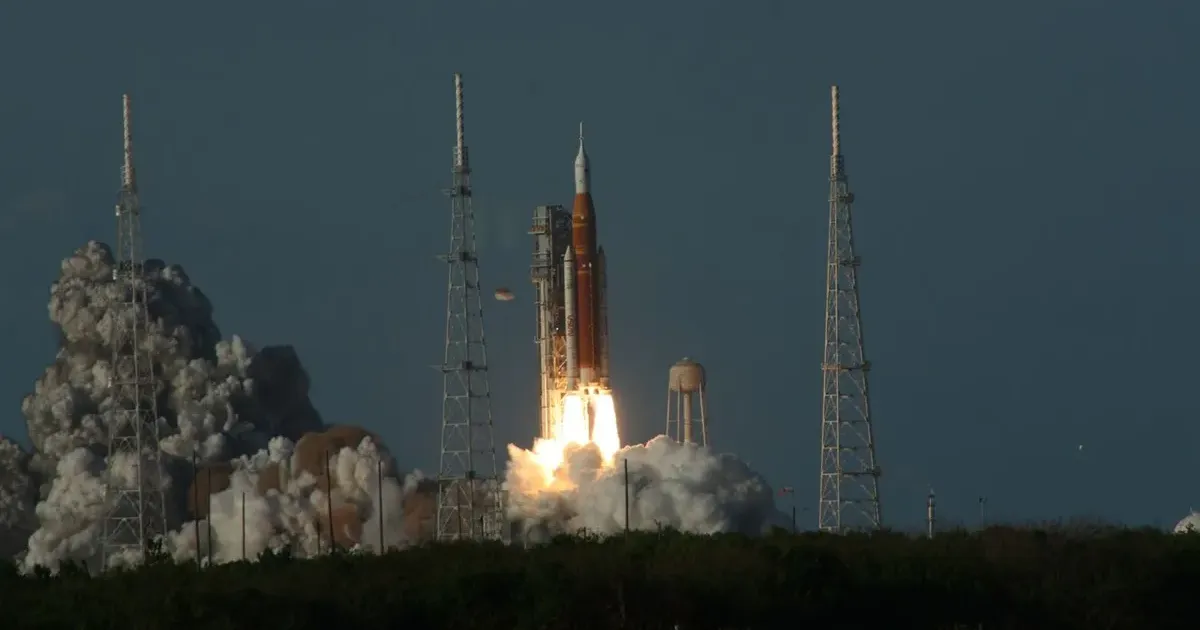
Veteran reporters at the Kennedy Space Center described the atmosphere during the ascent as uniquely heavy. Ground vibrations felt during the Space Launch System ignition were recorded several miles from the pad, shaking the press gantry with a violence typically reserved for the Saturn V. While the Apollo launches were fueled by the existential pressure of a Cold War rivalry, the Artemis mission moves under the weight of a multi-decade hiatus and a much more complex geopolitical landscape of international partnerships and commercial contractors.
Technical Barriers and Global Politics
Fifty-four years have passed since the final human steps were taken on the lunar surface in 1972. Critics often ask why it has taken more than half a century for the United States to return to its closest neighbor. The answer lies in a combination of shifting political priorities and the sheer difficulty of maintaining a deep-space infrastructure on a fluctuating budget. Following the moon landings, the federal government pivoted toward the Space Shuttle, a vehicle designed for low-Earth orbit rather than interplanetary travel.
Space exploration persists as a secondary priority for many administrations, leading to the cancellation of programs like Constellation and the slow development of the Orion hardware. Congressional funding for the Artemis program has been inconsistent, forcing NASA to rely on a patchwork of legacy systems and new private-sector innovations. Developing the heavy-lift capacity needed for lunar flight is a different challenge than servicing a space station located only 250 miles above the planet. The moon remains nearly 240,000 miles away, offering no quick return if something goes wrong.
Safety protocols today are considerably more stringent than those of the 1960s. Every weld on the Space Launch System must undergo rigorous testing, and the heat shield of the Orion capsule is designed to withstand temperatures of 5,000 degrees Fahrenheit during reentry. Redundancy is built into every computer system, reflecting a modern risk-aversion that did not exist during the original space race. These factors, while necessary for the survival of the crew, have contributed to the timeline extensions that kept humans on the ground for five decades.
Rocketry on this scale requires an extensive logistical tail. Liquid hydrogen and liquid oxygen tanks at the pad were filled hours before the sun rose over the Florida coast. Ground crews monitored the pressure levels as the engines cooled to cryogenic temperatures. When the countdown hit zero, the four RS-25 engines and two solid rocket boosters produced 8.8 million pounds of thrust. The resulting light was so intense that it momentarily washed out the morning sky, turning the horizon into a wall of incandescent white heat.
Sound waves from the launch traveled across the marshlands, rattling windows in Titusville and Cocoa Beach. Observers described a low-frequency rumble that could be felt in the chest, a physical sensation that lingers long after the vehicle has cleared the tower. Pressure waves from the solid rocket boosters created a crackling sound that reporters compared to the tearing of giant sheets of metal. These mechanical forces are the price of escaping the Earth's gravity well with a crewed capsule.
Vibrations eventually smoothed out as the vehicle broke the sound barrier and moved into the thinner layers of the upper atmosphere. The boosters were jettisoned two minutes into the flight, falling into the Atlantic Ocean as the core stage continued its climb. Reaching orbit was only the first hurdle. The crew then had to perform a series of burns to raise their apogee, ensuring they had the necessary velocity to leave Earth's orbit entirely. Artemis II is now a self-contained habitat traveling at thousands of miles per hour through the void.
Moonflight Return Turns History Into Operations
The Artemis flight matters because it turns a historic return into a live operating test. The crew is not only repeating Apollo symbolism; it is checking whether modern lunar systems can support the next phase.