Sudan Gurung’s resignation after less than four weeks as Nepal’s home minister turns a personal finance inquiry into a test of the new government’s anti-corruption mandate. Sudan Gurung resigned from his position as Nepal’s home minister on April 22, 2026, after facing scrutiny regarding his personal investments and financial dealings. Personal financial records and questions about his private assets forced the sudden exit. Gurung held office for less than four weeks before the pressure became unsustainable. High-level scrutiny into his investment portfolio triggered the departure, making him the second cabinet member to leave the administration within a single month. Government stability now faces a critical test as the executive branch attempts to contain the political fallout.
Accountability was the foundation of the coalition that brought Gurung to power. Public demand for transparency drove the previous administration out of office, yet this new leadership now finds itself mired in similar controversies. Sudan Gurung, a figure once lauded by reformists, now finds himself at the center of an official inquiry. Investigation details remain confidential, but sources close to the ministry suggest that his private equity holdings clashed with his public duties. Allegations involving undisclosed income sources surfaced shortly after he took his oath of office.
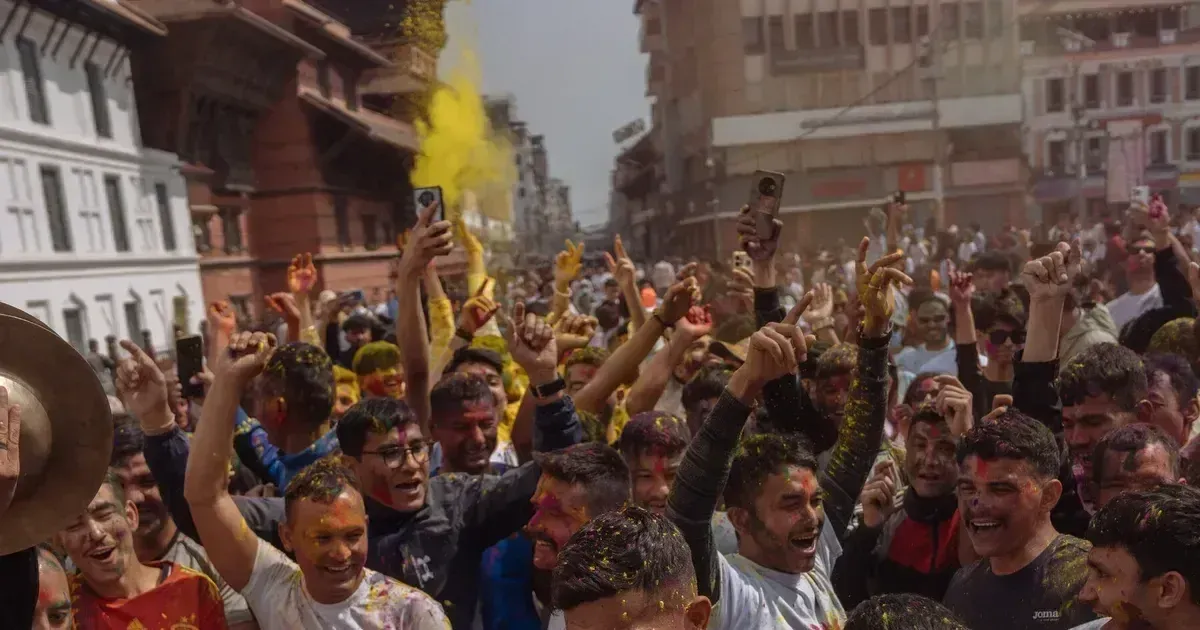
Kathmandu’s youth-led demonstrations had previously installed this government on a promise of radical reform. Recent history shows that these protesters are quick to mobilize when expectations are not met. The exit leaves a dangerous vacuum in the nation's security apparatus.
Political Unrest and the Rise of Anti-Corruption Platforms
Street protests throughout late 2025 and early 2026 dismantled the old political guard in Nepal. Voters sought a departure from the nepotism that had defined the previous decade. Sudan Gurung became a primary beneficiary of this shift, positioning himself as a technocrat capable of cleaning up the bureaucracy. Youth movements provided the logistical backbone for his rise, demanding a government that prioritized fiscal integrity. Instead, the first thirty days of this administration have been defined by internal investigations and cabinet vacancies.
Parliamentary sessions have grown increasingly hostile as opposition leaders demand a full disclosure of all ministerial assets. Legislative records indicate that Gurung is not the only official under the microscope. Another senior minister resigned just three weeks ago, citing different but equally damaging administrative failures. Political analysts note that such rapid turnover is rare even by the volatile standards of Himalayan governance. Trust between the electorate and the ruling coalition has reached a new low point.
Public trust, already fragile, appears to be eroding further with each passing week. The recent resignation comes amid the broader political climate fostered by Balen Shah and his administration.
Gurung and the Ministry of Home Affairs Investment Probe
Responsibilities of the Ministry of Home Affairs include oversight of the national police and internal security. Any hint of financial impropriety in this specific role carries heavy implications for law enforcement. Sudan Gurung controlled the mechanisms of state security while simultaneously managing a complex web of private investments. Concerns regarding a conflict of interest began to circulate within the permanent civil service. Official documents eventually leaked to the press, highlighting discrepancies in his reported wealth. These papers pointed toward offshore accounts and real estate transactions that did not align with his public filings.
Sudan Gurung stated he was quitting to ensure "a fair investigation."
Legal experts in Kathmandu argue that a voluntary resignation was his only viable path. Staying in office while under investigation would have paralyzed the ministry's daily operations. Investigators are now tasked with determining whether any state resources were used to benefit his private holdings. Police units under his former command are assisting with the probe, creating a delicate situation for the interim leadership. Reform advocates had hoped Gurung would strengthen the rule of law, not become a subject of its scrutiny.
Fragile Coalitions in Kathmandu Under Fresh Scrutiny
Coalition politics in Nepal requires a delicate balance of diverse interests. Losing two ministers in such a short span threatens the very foundation of the current governing agreement. Prime ministerial authority is being questioned as various factions within the party vie for the vacant Home Ministry seat. This portfolio is the most coveted position in the cabinet because of its influence over local administration. Rivalries that were suppressed during the election have resurfaced with fresh intensity. Stability in the capital depends on the swift appointment of a credible successor.
Internal memos from the ruling party suggest a deep divide over how to handle the vacancy. Some members advocate for a career politician with deep roots in the districts. Others prefer another technocrat to satisfy the demands of the youth movement. International observers have noted that the constant reshuffling of personnel hinders long-term policy implementation. Foreign aid and infrastructure projects often stall when the primary point of contact in the government changes. Investors are watching the situation with increasing caution as the political risk profile of the nation rises.
Youth Movements and the Demand for Nepali Reform
Student unions and young professionals remain the most potent political force in the country. Their ability to shut down the capital with mass demonstrations gives them a de facto veto over government actions. Gurung’s resignation is seen by some as a victory for the transparency they demanded. Others see it as a betrayal of the movement’s ideals. Social media platforms are currently flooded with calls for a wider audit of the entire cabinet. The pressure for a clean government has not dissipated with the removal of one man.
Kathmandu remained relatively calm on the evening of the announcement, but security forces are on high alert. Police presence around government buildings has increased to prevent any spontaneous gatherings from escalating. Future protests will likely target the Prime Minister if more financial scandals emerge. Accountability measures that the government itself proposed are now being used against its own members. Sudan Gurung’s departure is a concrete result of the heightened scrutiny that modern Nepali politics demands. Local news agencies report that the investigation into his assets will proceed through the summer.
Gurung Resignation Tests Coalition Stability
Politics in the Himalayas has long been a game of revolving doors, but the speed of the current collapse is startling. This administration claimed a mandate from the streets, yet it has withered faster than the regime it replaced. Sudan Gurung’s resignation is not an isolated act of integrity; it is a desperate survival tactic for a coalition that is losing its grip. When a government wins power on a platform of anti-corruption, its first scandal is usually its last. Kathmandu is discovering that moral superiority is a poor substitute for institutional depth. This is a classic case of a revolution being consumed by its own lack of preparation.
The Home Ministry is the crown jewel of the Nepalese state apparatus, and its vacancy creates a dangerous power vacuum. Whoever steps into Gurung's shoes will inherit a demoralized police force and a suspicious public. Skepticism is the only rational response to a cabinet that cannot keep its members for more than a month. If the Prime Minister fails to appoint a successor who is beyond reproach, the youth who put him in power will be the ones to take him out. Institutional rot does not vanish simply because the people at the top change names. Corruption is a systemic feature of the Nepali state, not a bug that a few protests can fix. A swift, total collapse is nearing.