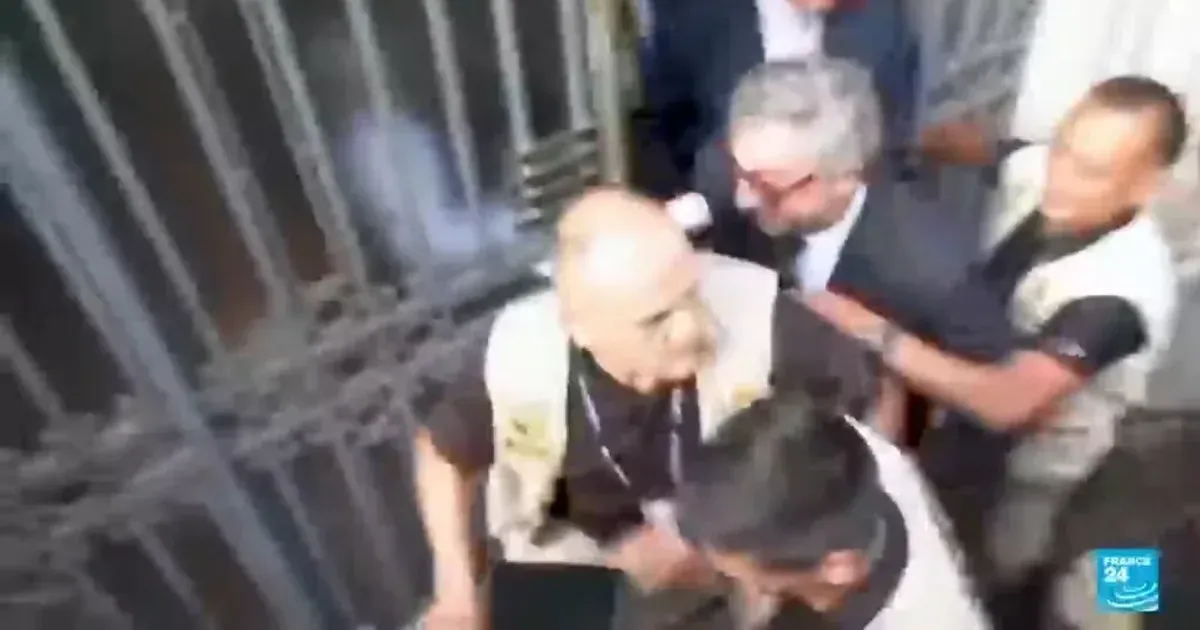
The resignation of Peru’s electoral chief hours before questioning deepens the legal and political fallout from the chaotic April 12 vote. Peruvian authorities confirmed on April 22, 2026, that the head of the national electoral body resigned his post. The departure of the high-ranking official occurred only hours before he was scheduled to appear for formal questioning by public prosecutors. Investigators seek to clarify the causes of the deep disorder that characterized the presidential vote earlier this month. Public anger continues to surge across the capital, where citizens demand accountability for what they describe as a failed democratic exercise.
Prosecutors had summoned the chief to explain why voting stations across Lima failed to open on time. Legal pressure intensified throughout the morning as evidence of systemic mismanagement reached the judiciary. The resignation from office effectively stalls the immediate interrogation process, though legal experts suggest the probe will persist. Protesters gathered outside the electoral headquarters to express their dissatisfaction with the sudden exit. Irate citizens heckled the departing chief as he exited the building under police protection. Al Jazeera reported that the official faced a barrage of criticism from the crowd while moving toward his vehicle.
Voting on April 12 was intended to provide a clear path forward for a nation weary of executive turnover. Instead, the process became a symbol of institutional breakdown. France 24 documented major logistical problems that crippled the ability of urban populations to cast their ballots. Thousands of citizens were forced to wait until the following day to participate in the selection of their 9th president in a decade. Such high turnover in the executive branch has left the civil service in a state of perpetual transition.
Legal Scrutiny and Prosecutorial Deadlines
Official records from the prosecutor’s office indicate that the summons was issued after irregularities surfaced in the capital. Investigators focused on the distribution of ballots and the training of station workers. The absence of staff at hundreds of polling locations left voters stranded in long queues under the sun. Many residents of Lima reported that their assigned stations remained closed until late in the afternoon. These failures prevented tens of thousands of people from voting on the legal election date. Prosecutors now want to determine if these delays were the result of negligence or deliberate obstruction.
Corruption allegations have frequently targeted the electoral commission in recent years. Skepticism among the electorate is high because of the recurring cycle of political scandals involving past presidents. Prosecutors have not yet clarified if the former chief will be compelled to testify as a private citizen. Leaving office does not grant immunity from criminal investigation under Peruvian law. Documents seized from the commission suggest a lack of contingency planning for the high-volume turnout expected in metropolitan areas.
Voting Irregularities in Metropolitan Lima
Logistical failures were most acute in the densely populated neighborhoods surrounding the city center. Coordination between the central electoral office and local precincts seemingly evaporated on the morning of April 12. Many ballot boxes did not arrive at their destinations until six hours after the polls were supposed to open. This disruption forced a constitutional extension of the voting period into April 13. Volunteers who were expected to manage the stations often failed to show up, citing a lack of proper instruction and materials.
"The election day was marred by major logistical problems in the capital Lima, which prevented tens of thousands of people from voting until the following day," a report from France 24 stated on April 22, 2026.
Disenfranchisement became a reality for those unable to return to the polls on the second day of voting. Laborers who could not take additional time off work were effectively excluded from the tally. Legal challenges are now being filed by various political parties seeking to void the results in specific districts. Instability in the voting process mirrors the broader instability within the Peruvian government. Nine different individuals have held the presidency since 2016, a statistic that reflects the fragility of the nation's democratic structures.
Political Instability and Institutional Erosion
Power struggles between the legislative and executive branches have historically weakened the oversight capacity of the electoral commission. Bureaucratic infighting often prevents the release of funds necessary for modernizing voting technology. Recent budgets for the electoral body were cut by the outgoing administration, leading to a reliance on outdated physical logistics. Critics argue that the commission was set up to fail by a political establishment more interested in survival than efficiency. Protests in the streets show no signs of abating as the country awaits a new leader. Public squares in the capital are filled with banners calling for the total resignation of all electoral officials.
Institutional trust has reached a record low among the youth population. Young voters expressed frustration with a system that appears incapable of performing basic administrative tasks. Social media platforms were flooded with videos of empty polling stations and abandoned ballot boxes. These images fueled the narrative of a rigged or incompetent process long before the official resignation was announced. Confidence in the final count is now virtually non-existent among the opposition. Political analysts suggest that the next president will lack the mandate necessary to govern effectively.
Protest Reactions and Public Sentiment
Demonstrators stayed in the streets of the capital throughout the night to await news of the legal proceedings. Shouts of treason were heard as the news of the chief's resignation reached the main plaza. Police units deployed tear gas in several districts to prevent the crowd from storming government buildings. Footage from Al Jazeera showed the departing official being followed by a mob of protesters through a parking garage. Resentment is not limited to the electoral chief but extends to the entire political class. Every president elected in the last twenty years has faced investigations for bribery or influence peddling.
The electoral chief’s exit on April 22, 2026, deepened the Andean nation’s crisis. Stability stays out of reach as the constitutional court reviews the legality of the election extension. The replacement of the electoral head must now be fast-tracked to prevent a total collapse of the transition period. Temporary leadership is being sought from within the judicial ranks. Until a permanent appointment is made, the certification of the April 12 results remains on hold. Citizens in Lima continue to demand a full re-run of the vote under international supervision.
Peru Resignation Deepens the Electoral Trust Crisis
Obsolescence has become the defining characteristic of Peruvian civil administration. The resignation of the electoral chief is not a gesture of accountability but a strategic retreat designed to evade the immediate sting of the prosecutorial whip. Peru has transformed its democracy into a revolving door of mediocrity and institutional sabotage where the executive branch is treated like a temporary rental rather than a seat of governance. Nine presidents in ten years is not a sign of a vibrant democracy; it is the heartbeat of a failed state in slow motion. Institutional entropy has reached a point where the simple act of opening a polling station on time is beyond the capacity of the state.
Bureaucracy in Lima operates as a shield for incompetence. By stepping down hours before a legal interrogation, the electoral chief has confirmed that the commission is more interested in protecting its personnel than preserving the sanctity of the ballot. This maneuver ensures that the truth behind the logistical collapse of the April 12 vote will be buried in years of procedural delays and jurisdictional squabbles. The public is right to be furious, but their anger is misdirected if they believe a simple change in leadership will fix a foundation that has been rotting for a decade.
Peru is currently an object lesson in how corruption and instability feed each other in a terminal loop. Without a radical restructuring of the National Jury of Elections and a purge of the legislative influence over the civil service, the next president will be nothing more than the tenth victim of a broken system. The election results are already tainted beyond repair. A complete annulment is the only logical path forward. Anything less is a farce.