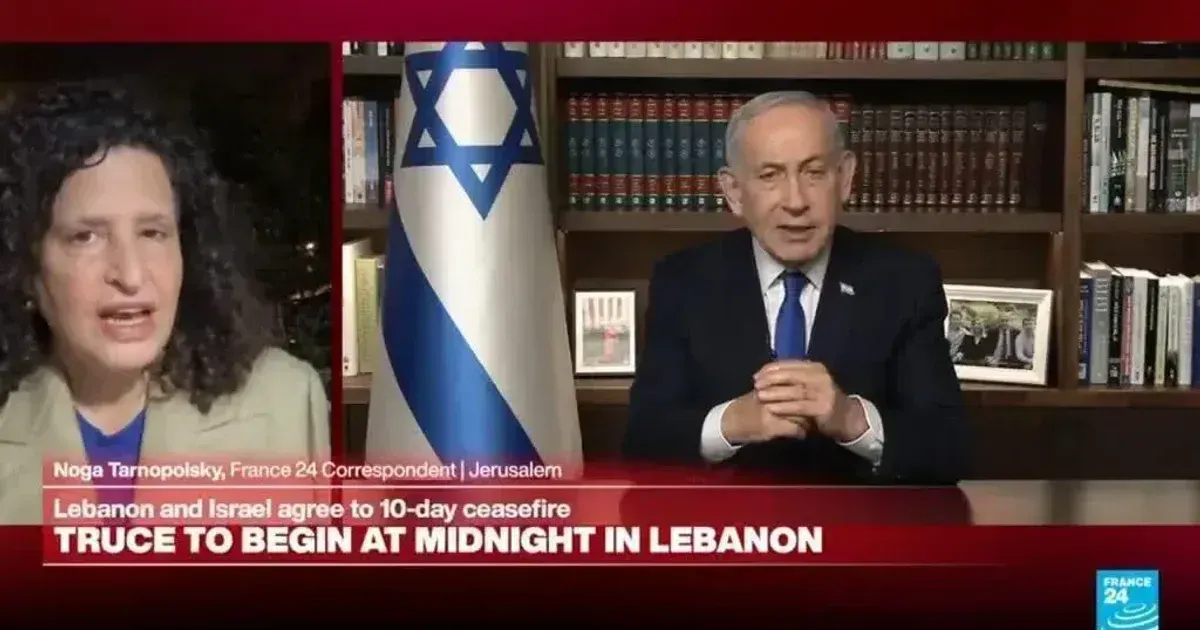
Benjamin Netanyahu stated on April 24, 2026, that Hezbollah militants are working to undermine diplomatic progress in the border regions between Israel and Lebanon. Prime Minister Netanyahu claims that the Iranian-backed group seeks to prevent a negotiated settlement through targeted provocations. Verification of these claims coincides with a reported conversation between the Israeli leader and Donald Trump, whom Netanyahu described as having an excellent understanding of the regional threat. Diplomatic sources indicate that the dialogue focused primarily on the influence of Tehran in Levant power dynamics. Discussion regarding a potential ceasefire has stalled as cross-border fire continues to displace thousands of civilians on both sides of the Blue Line.
Video footage emerging from southern Lebanon recently captured an Israeli soldier using a heavy tool to smash a stone crucifix in a private garden. Local residents identified the site as a Christian village where families have maintained religious icons for generations. One villager expressed shock after seeing the viral image, recognizing his own family property in the background of the destruction. Social media platforms circulated the clip widely, drawing condemnation from religious leaders in Beirut and Jerusalem. Israel Defense Forces commanders have not released a specific statement addressing the soldier’s identity or his actions in the Christian enclave. Military operations in these villages typically focus on tunnels or weapons caches allegedly hidden within civilian infrastructure.
Political analysts suggest that such incidents of property destruction complicate the narrative of a targeted military campaign. If soldiers are seen desecrating religious symbols, the sectarian balance in Lebanon becomes increasingly fragile. Christian communities in the south often find themselves caught between Hezbollah positions and Israeli incursions. Security officials in Tel Aviv maintain that Hezbollah uses these villages as human shields, forcing the military to operate in sensitive areas. Evidence of desecration, however, provides propaganda material for those opposing Israeli presence in the territory. Documentation from the village shows the smashed crucifix lying in pieces near a scorched olive grove.
Religious Sites Targeted in Southern Lebanon
Residents of the village of Yaroun reported that the destruction occurred during a ground operation designed to clear militant outposts. Identifying the specific garden from the viral video, the homeowner noted that the crucifix had survived multiple previous conflicts. Evidence of structural damage to nearby homes suggests that the village has seen intense fighting. Church authorities in Lebanon have requested an investigation into the conduct of foreign troops on their sovereign soil. International law prohibits the deliberate destruction of religious property unless it is being used for military purposes. Residents insist the garden was purely domestic and contained no tactical value. The destruction of symbols often serves to alienate local populations who might otherwise remain neutral in the conflict.
Hezbollah militants, meanwhile, continue to launch rockets into northern Israel, citing the defense of Lebanese territory. Netanyahu countered these actions by stating that the group does not represent the interests of the Lebanese people. Conflict in the south has historically pitted the IDF against entrenched guerrilla fighters who use the rugged terrain to their advantage. Every incident of religious desecration fuels a cycle of resentment that goes beyond simple military objectives. Lebanese state officials have called for the United Nations to intervene and document the extent of the damage to civilian property. Reports indicate that at least four other religious markers in the vicinity have been damaged by heavy machinery or small arms fire.
Netanyahu said he had an excellent conversation with US President Donald Trump regarding the Iranian threat and efforts to bring peace to Lebanon.
Direct communication with the American president highlights the strategic alignment between the two administrations. Netanyahu frequently references his relationship with Trump to strengthen domestic support for his military policy. White House officials have consistently backed Israel's right to defend itself against rocket attacks originating from southern Lebanon. Support from Washington remains a foundation of Israeli defense strategy, especially as regional tensions with Iran intensify. Coordination between the two leaders suggests a shift toward more aggressive containment of proxy groups in the Middle East. Intelligence sharing between the Mossad and American agencies has increased since the start of the latest border escalation. The tactical environment in South Lebanon continues to yield high casualties for the IDF as ground operations intensify.
Diplomatic Tensions and the Trump Factor
Trump and Netanyahu reportedly discussed the logistics of a buffer zone that would push Hezbollah back from the Israeli border. Achieving such a goal requires sustained military pressure and a possible long-term occupation of southern Lebanese territory. Critics of this plan argue that it would lead to a prolonged insurgency similar to the 1982-2000 conflict. Netanyahu insists that modern technology and intelligence make a permanent security zone more viable today than in previous decades. Efforts to involve the Lebanese Armed Forces in securing the border have met with little success due to their limited equipment and political constraints. Tehran remains a shadowy presence in these negotiations, providing the funding that allows Hezbollah to maintain its arsenal.
Militant groups have used the chaos to reinforce their positions in the Bekaa Valley. While Netanyahu focuses on diplomatic leverage with Washington, the situation on the ground remains volatile. Soldiers in the field operate under high stress, which sometimes leads to the type of conduct seen in the crucifix video. Military discipline is the primary tool for preventing such incidents, yet oversight in active combat zones is often lacking. Human rights organizations have documented multiple instances of property damage that appear unrelated to direct combat. These reports will likely form the basis of future legal challenges in international courts. Accountability for individual soldiers is rare in the heat of a multi-front war.
Hezbollah Tactics and Border Stability
Hezbollah leaders frequently use Israeli military misconduct to recruit new fighters from different sectarian backgrounds. By presenting themselves as defenders of all Lebanese, regardless of religion, they aim to broaden their political base. This strategy relies on the perception of the IDF as an undiscriminating force that targets Lebanese identity. Israeli officials reject this characterization, pointing to their efforts to warn civilians before major strikes. Warning systems, however, are often ineffective in rural villages with poor communication infrastructure. The result is a high civilian casualty rate that complicates the diplomatic efforts Netanyahu mentions. Peace in the region depends on a level of trust that has been methodically eroded over decades of violence.
Tactical shifts by the IDF include the use of unmanned aerial vehicles to monitor the movement of Hezbollah supply lines. These drones provide real-time data but cannot always distinguish between a militant and a civilian in a garden. The psychological impact of constant surveillance adds to the trauma experienced by those living near the border. Netanyahu maintains that these measures are necessary to prevent another large-scale invasion of northern Israel. Security cabinet meetings in Jerusalem often focus on the balance between military necessity and international reputation. Every viral video of a destroyed religious icon weighs heavily on the latter. The strategic cost of a single soldier's action can outweigh the gains of a successful skirmish.
Regional Repercussions of Military Conduct
Long-term stability in the Middle East appears increasingly tied to the personal rapport between Netanyahu and Trump. If the American administration provides a green light for expanded operations, the conflict could grow to include more of Lebanon. Regional players such as Saudi Arabia and the United Arab Emirates have expressed concern about the potential for a wider war. These nations view Hezbollah as a destabilizing force but fear that an all-out Israeli invasion would create a power vacuum. Historical precedents suggest that such vacuums are quickly filled by even more radical elements.
Netanyahu’s rhetoric suggests he is prepared to take that risk to ensure the safety of Israeli citizens. The internal politics of Lebanon remain a chaotic factor that no outside power has successfully managed.
Evidence of cultural and religious destruction acts as a catalyst for civil unrest in Beirut. Protestors have gathered near the French embassy and other international missions to demand sanctions against the Israeli government. The Lebanese government, while weak, uses these incidents to rally international support and financial aid. Financial markets in the region have reacted with volatility, as investors fear a shutdown of Mediterranean shipping routes. Netanyahu’s claims of peace efforts are viewed with skepticism by many who see only the expansion of the combat zone. Stability requires not simply military dominance; it requires a political framework that all parties can accept. At present, no such framework exists.
Religious Destruction Hands Hezbollah a Recruitment Weapon
Does the desecration of a crucifix in a remote Lebanese village actually matter in the grand theater of Middle Eastern geopolitics? To the strategist focused on caloric intake and munitions counts, it is a rounding error. To the diplomat attempting to prevent a regional fire, it is a catastrophic failure of command. Benjamin Netanyahu operates on the assumption that military force is the only language his adversaries respect, yet he forgets that images of religious destruction speak a language of their own. By allowing soldiers to act with impunity in Christian enclaves, the IDF is effectively handing Hezbollah a recruitment tool that money cannot buy.
Netanyahu’s reliance on his relationship with Donald Trump is a temporary shield against international pressure. This alliance creates a dangerous vacuum of accountability where tactical gains are prioritized over long-term stability. If the goal is truly to sabotage Hezbollah’s influence, then protecting the cultural and religious fabric of Lebanon should be a primary objective, not an afterthought. Instead, the current trajectory suggests a scorched-earth policy that will only leave behind a more radicalized and desperate population. The Prime Minister is gambling that he can rewrite the rules of engagement before the international community loses patience. It is a high-stakes play with diminishing returns.