Tropical Resilience and the Brazilian Breakthrough

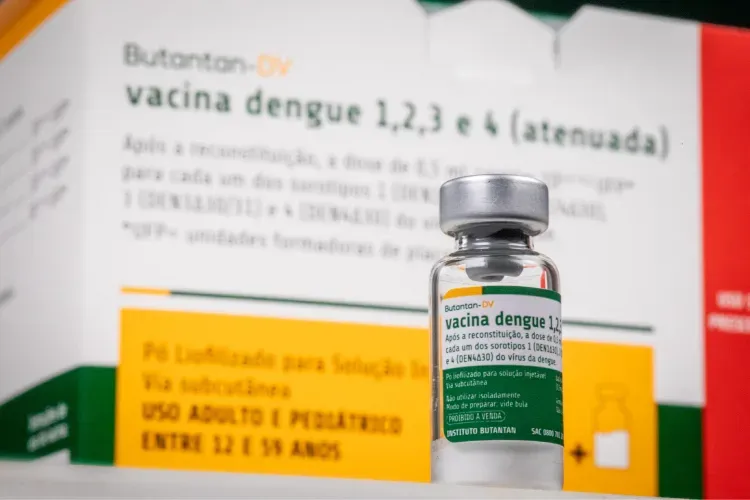
Sao Paulo researchers have delivered a rare victory in the global fight against mosquito-borne illness, providing evidence that a locally developed vaccine provides durable protection against the most dangerous forms of dengue fever. Data released by the Butantan Institute reveals that its tetravalent vaccine candidate maintained an 80.5 percent efficacy rate against severe cases over a five-year observation period. Published in Nature Medicine, these results offer a potential turning of the tide for regions where the virus has long overwhelmed public health systems. Unlike previous candidates that required complex dosing schedules or offered uneven protection across different viral strains, this single-dose solution appears to hold its ground against the warning signs that typically precede hospitalization. Success in Brazil is blueprint for other nations grappling with the sudden expansion of mosquito habitats into previously temperate zones.

Climate shifts and urban density have allowed Aedes aegypti mosquitoes to thrive, making the five-year stability of this vaccine particularly key. Most clinical trials struggle to maintain participant engagement or demonstrate efficacy beyond the first 24 months. By documenting sustained immune responses over half a decade, the Butantan Institute has addressed a primary concern of health ministers: the need for long-term immunity without frequent boosters. This durability is essential in rural or impoverished areas where logistical chains are fragile and secondary medical visits are difficult to secure.

Doctors see this as a departure from the volatility of earlier immunization efforts.

While the Brazilian results offer hope for the future, medical professionals in North America are looking back at previous crises to refine immediate emergency responses. Researchers at the University of Calgary recently completed an exhaustive analysis of a 2023 Shiga toxin-producing Escherichia coli (STEC) outbreak that devastated several daycare centers. Their findings, published after years of tracking the recovery of hundreds of children, suggest that simple diagnostic interventions can prevent the most catastrophic outcomes of bacterial infection. Specifically, the implementation of daily blood tests for infected children allowed clinicians to identify early markers of kidney failure before symptoms became irreversible. One in five children infected with this specific E. coli strain faces life-threatening complications, yet the Calgary data shows that aggressive, early monitoring sharply reduces the need for invasive dialysis.

Refining the Response to Bacterial Threats

Calgary’s 2023 disaster involved 358 confirmed cases, making it one of the largest outbreaks of its kind in Canadian history. University of Calgary scientists discovered that the window for intervention is narrower than previously believed. By the time a child presents with visible signs of Hemolytic Uremic Syndrome, the damage to the renal system is often already profound. Daily blood monitoring provides a granular view of platelet counts and creatinine levels, giving doctors a 24-hour head start on treatment protocols. This research informed a new standard of care that prioritizes data-driven vigilance over the traditional wait-and-see approach to gastrointestinal distress. It transformed a chaotic public health emergency into a manageable clinical process, proving that technical precision can compensate for the lack of a universal E. coli vaccine.

Contradictions emerge when comparing these successes to the deteriorating situation in the American Northeast, where ecological shifts are outpacing medical countermeasures. While the Butantan vaccine and the Calgary blood tests represent progress in treating known pathogens, researchers at the Cary Institute of Ecosystem Studies have uncovered a more complex threat hiding in the underbrush. Their latest analysis in the journal Ecosphere reports a significant rise in ticks carrying more than one pathogen simultaneously. This phenomenon, known as co-infection, complicates diagnosis and treatment because the symptoms of one disease can mask or exacerbate the symptoms of another. A patient might test positive for Lyme disease while a secondary, undetected infection like Anaplasmosis or Babesiosis continues to wreak havoc on their immune system.

Tick populations in states like New York and Connecticut no longer follow the predictable patterns seen in previous decades.

The Complexity of Multiple Pathogens

Data from the SUNY Center for Vector-Borne Diseases at Upstate Medical University highlights a disturbing trend where a single tick bite delivers a cocktail of bacteria and parasites. Traditional diagnostic panels often look for the most common culprit, Borrelia burgdorferi, the agent behind Lyme disease. If a doctor stops there, they may miss the presence of secondary pathogens that require different antibiotic courses or specialized care. The Cary Institute study suggests that the ecological factors driving this change include a warming climate and the fragmentation of forests, which brings mice, deer, and humans into closer contact. These overlapping habitats create a perfect laboratory for ticks to pick up a variety of diseases from different animal hosts before passing them to people.

Lyme disease remains the primary concern for most residents, but the rise of co-infections suggests that the old playbook is becoming obsolete. Medical schools are being forced to update their curricula to emphasize the necessity of broad-spectrum testing for any patient presenting with tick-related symptoms. The reality on the ground is that the simplicity of a single-disease diagnosis is fading. Specialists now argue that the public health community must treat the environment itself as a patient, monitoring the health of wildlife and tick populations to predict where the next multi-pathogen hotspot will emerge. Still, the funding for such large-scale ecological monitoring remains scarce, leaving many rural clinics to rely on outdated diagnostic tools.

Infrastructure for infectious disease management is currently pulled in two different directions. On one side, high-tech solutions like the Butantan dengue vaccine offer a way to immunize entire populations against specific, well-known threats. On the other, the Calgary E. coli study and the Northeast tick research show that we are increasingly reliant on meticulous, daily monitoring and sophisticated diagnostic panels to catch the nuances of evolving infections. One approach seeks to prevent the disease entirely, while the other acknowledges that our environment is becoming more hazardous and focuses on mitigating the damage. Both strategies require a level of investment and coordination that many government agencies have yet to fully embrace.

Health outcomes in 2026 depend entirely on the speed at which these laboratory findings are integrated into local clinic policies. A vaccine that is 80.5 percent effective is a miracle of science, but it only works if it reaches the people living in the high-risk zones of the Global South. Similarly, the knowledge that daily blood tests save lives during an E. coli outbreak is useless if local hospitals lack the laboratory capacity to process those tests in real-time. The gap between what we know and what we do remains the greatest vulnerability in our global health defense. As pathogens continue to migrate and mutate, the margin for error shrinks for every community from the Amazon to the Adirondacks.

The Elite Tribune Perspective

Why do we persist in treating infectious outbreaks as isolated surprises rather than the predictable consequences of our own environmental negligence? The medical community celebrates an 80 percent effective vaccine as if it were a total victory, yet they ignore the reality that the remaining 20 percent of patients still face a grueling, potentially fatal ordeal. We are effectively betting the lives of millions on the hope that individual scientific breakthroughs can outrun the systemic collapse of our ecological boundaries. The surge in multi-pathogen ticks in the Northeast is not just a biological anomaly; it is a loud, clear signal that we have broken the natural systems that once kept these threats in check. We have created a world where a single insect bite is no longer a nuisance but a complex diagnostic riddle that our current healthcare system is ill-equipped to solve. Relying on daily blood tests to save children from E. coli is a noble endeavor, but it is also a confession of failure regarding food safety and urban sanitation. True public health leadership requires not merely reactive technology. It demands a confrontational approach to the habitat destruction and industrial farming practices that bring these pathogens into our daycares and backyards in the first place.