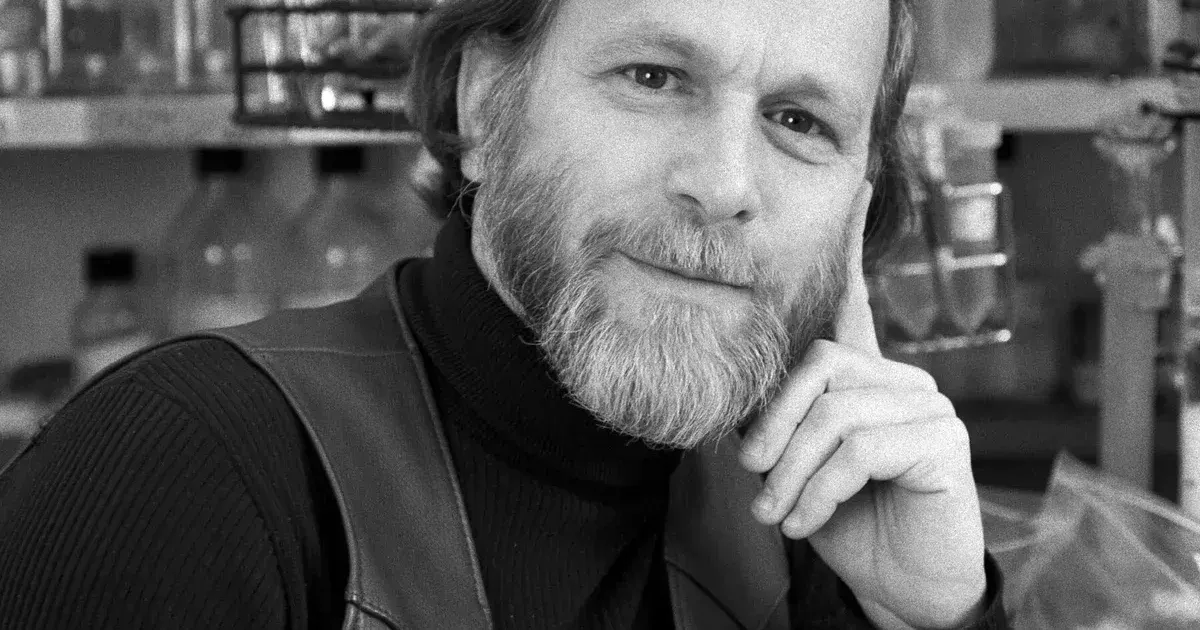
Michael Bishop helped move cancer research from a search for outside invaders to a study of the body's own damaged genetic machinery. His work with Harold Varmus showed that normal genes could become engines of malignancy, a discovery that reshaped oncology. It also gave later generations of researchers a clearer target for precision medicine.
Bishop died at age 90 in San Francisco, where much of his scientific and institutional life unfolded. The University of California, San Francisco confirmed his death and described a career that joined laboratory discovery with administrative ambition. By March 27, 2026, tributes from scientists focused on both parts of that legacy.
His best-known research centered on oncogenes, the genes that can push cells toward uncontrolled growth when altered or misregulated. Before that work, cancer was often framed through viruses, toxins or tissue damage. Bishop and Varmus made the genome itself the central scene of the disease.
A Discovery That Reframed Cancer
The key insight came from studying the Rous sarcoma virus and its cancer-causing src gene. Bishop and Varmus found that the viral gene had a normal cellular counterpart, meaning the trigger for cancer was not simply foreign. It could arise from a distorted version of ordinary biological instruction.
That finding introduced the idea of proto-oncogenes, genes that help regulate normal growth but can become dangerous when mutated, amplified or misplaced. The concept gave researchers a framework for connecting molecular biology with the clinical behavior of tumors. It also opened the door to therapies aimed at particular genetic faults rather than all dividing cells.
The Nobel Prize in Physiology or Medicine followed in 1989. The award recognized not only a major laboratory result but a change in scientific imagination. Cancer was no longer just a mass to cut, poison or irradiate. It was a set of molecular errors that could be identified, classified and, in some cases, blocked.
From Laboratory Authority to UCSF Builder
Bishop's second public role came as a university leader. As chancellor of UCSF, he helped guide the development of the Mission Bay campus, turning former industrial land into a major life sciences district. The project required fundraising, political negotiation and confidence that biomedical research would keep expanding.
Mission Bay changed the geography of San Francisco science. It placed academic laboratories, hospitals, startups and pharmaceutical partners closer together, encouraging the kind of collaboration that modern biomedical work often demands. Bishop's scientific stature gave the project credibility when its scale invited skepticism.
He remained, however, a scientist by temperament. Colleagues often described his ability to move from molecular detail to institutional strategy without treating either as secondary. That range is increasingly rare in an academic world divided between grant writing, administration and narrow specialization.
Why His Work Still Matters
The modern cancer clinic carries Bishop's influence even when his name is not spoken. Tumor sequencing, targeted drugs and mutation-specific trials all rest on the premise that cancer's behavior can be read in genes. His work did not solve cancer, but it gave medicine a more exact language for pursuing it.
His death also highlights a broader question for public research universities. Bishop belonged to an era when a scientist could become both a field-defining investigator and a builder of institutional capacity. Reproducing that model now will require universities to protect basic research while still finding the money and space that ambitious science requires.
J. Michael Bishop leaves a legacy measured in papers, buildings and patients who benefited from a genetic view of cancer. The most durable part may be the idea that the causes of disease are often hidden inside normal biology, waiting for someone patient enough to see them differently. That lesson still guides young investigators who move between basic biology and patient-facing questions. Bishop's career shows why curiosity-driven research can have practical consequences long after the first experiment. No grant committee could have guaranteed that a viral gene study would eventually shape targeted oncology, yet that is exactly what happened. His administrative work at Mission Bay carried the same belief in long horizons. Build the laboratories, protect the talent, and the clinical applications will follow in ways that cannot be fully predicted at the start. His influence also reaches the culture of biomedical leadership. Bishop argued through his career that scientific institutions should be ambitious in public, not apologetic about the cost of discovery. That stance is harder now, when universities face political pressure, expensive facilities and fierce competition for talent. His example does not offer an easy formula, but it does show that discovery and institution-building are connected. A laboratory breakthrough needs a place to grow, a university willing to defend it and leaders able to explain why basic science deserves patience. That is the enduring standard his career sets: follow the mechanism deeply, then build institutions large enough to let the next mechanism be found.