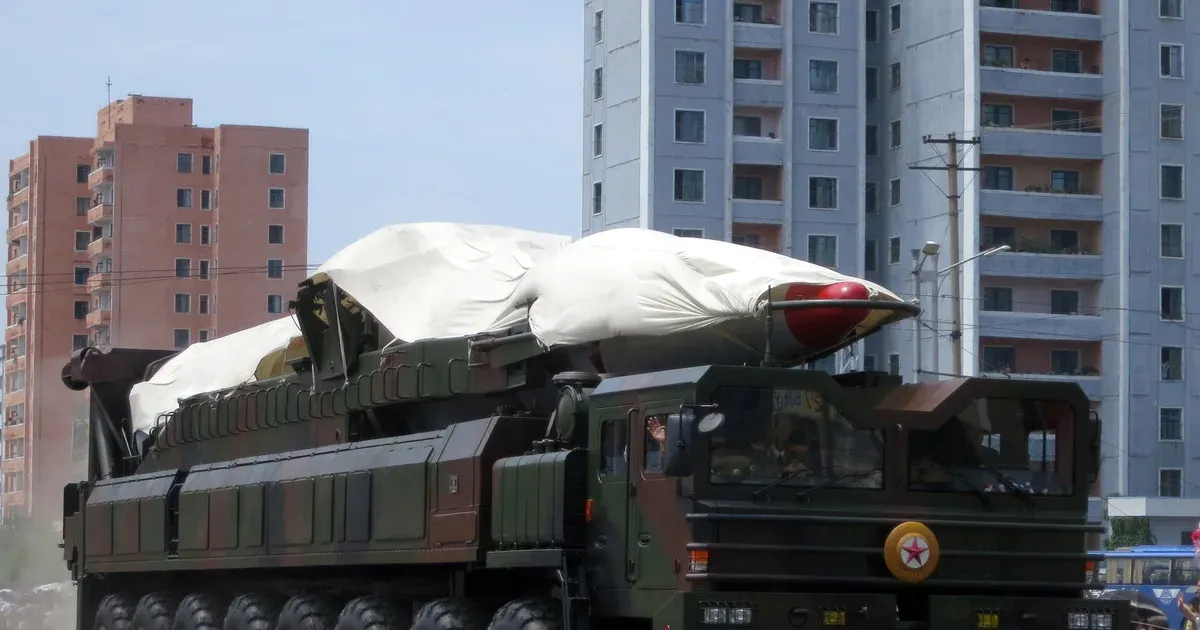
North Korea's second missile launch event in two days signals more than short-term anger at Seoul. Repeated ballistic tests suggest Pyongyang is normalizing a higher tempo of tactical readiness around the peninsula. The pattern matters because repetition turns a provocation into a training cycle. The latest launches were detected on April 8, 2026, with missiles flying toward eastern waters between the Korean Peninsula and Japan. South Korean, Japanese and U.S. monitoring systems tracked the projectiles in real time.
Pyongyang Intensifies Short-Range Missile Drills
Successive launch windows allow North Korean engineers to gather telemetry data on multiple airframes simultaneously. This methodology accelerates the development of terminal maneuverability, a feature intended to bypass regional missile defense batteries like THAAD and Patriot systems. Observers at the Pentagon noted that the April 8, 2026, tests followed a similar trajectory to the salvos fired less than 24 hours earlier. Such repetition serves to validate the reliability of mass-produced ordnance intended for frontline units.
Flight distances recorded by the Japanese Coast Guard placed the impact zones outside of Japan's Exclusive Economic Zone. Despite the lack of direct territorial violation, the psychological impact on regional shipping lanes remain a primary concern for maritime authorities. North Korean authorities did not issue a standard Notice to Airmen or mariners before initiating the fire mission. Lack of communication increases the risk of accidental encounters with commercial vessels operating in the busy East Sea corridors.
South Korea's military says it detected North Korea firing several ballistic missiles toward its eastern regional seas in its second launch event in two days, according to a report from ABC News International.
South Korea Military Monitors Eastern Sea Paths
The Joint Chiefs of Staff in Seoul maintained constant communication with their American counterparts throughout the engagement. Cooperation between the two nations involves the sharing of real-time link data from early warning satellites and Missile-defense-equipped destroyers. This coordinated response ensures that any deviation from the predicted flight path can be addressed immediately by interception assets. 2026 has seen a marked increase in the speed of these information exchanges due to updated software protocols.
Coastal monitoring stations reported no immediate damage to fishing fleets or infrastructure following the splashdown. Local residents on the eastern islands of South Korea reported seeing contrails during the early morning hours. Civil defense sirens remained silent as the paths indicated no threat to inhabited landmasses. Public anxiety in border towns persists as the frequency of these events continues to climb throughout the spring season.
Diplomatic Breakdown and the Rejection of Seoul
Kim Jong Un recently declared that South Korea is the North's primary foe, effectively ending decades of nominal pursuit of reunification. The policy shift transformed the border from a temporary line of separation into a permanent frontier between hostile states. Government offices in Pyongyang have dismantled bureaus previously dedicated to inter-Korean trade and cultural exchange. Political rhetoric now focuses exclusively on the preparation for a potential conventional conflict.
Seoul's ministry of unification continues to offer humanitarian aid, though these gestures are met with public ridicule from the North. Diplomatic stagnation creates a vacuum often filled by military posturing. Analysts argue that the North uses these launches to test the resolve of the current administration in the South. Each missile is a physical manifestation of the shattered 2018 peace agreements. Domestic pressure in the South for a nuclear armament program of its own has increased in direct response to these provocations.
Military commanders in the North have reportedly received instructions to prioritize the modernization of tactical nuclear delivery vehicles. Directives from the central committee emphasize the necessity of a credible second-strike capability that does not rely on larger, more vulnerable intercontinental ballistic missiles. Recent factory expansions in the Hamhung region suggest an increase in the production of solid-state rocket motors. Storage facilities for these components have doubled in size since early 2025. This policy pivot follows aggressive rhetoric from Kim Yo Jong and other regime figures regarding the South.
Japanese prime minister's office issued a formal protest through diplomatic channels in Beijing. Since the two Koreas lack a direct line of communication, third-party intermediaries are the only remaining avenue for grievance. Tokyo has called for an emergency meeting of the United Nations Security Council to discuss the violation of existing sanctions. Past resolutions have done little to deter the procurement of specialized alloys and electronics required for these missile programs.
Economic indicators show that the North continues to bypass global trade restrictions through illicit ship-to-ship transfers. Revenue from these activities funds the very missile programs currently under observation. Despite the sanctions, the quality of North Korean guidance systems has improved visibly over the last three years. The use of commercial-grade chips in military hardware allows for steady technological progression despite technological embargoes. Current estimates place the cost of these two-day launches at several million dollars. Pyongyang prioritizes these expenditures over the welfare of its rural populations, which face ongoing food insecurity. State television broadcasts images of the launches to strengthen nationalistic sentiment among the urban elite. Internal stability relies heavily on the perception of a powerful, modern military capable of defying global powers.
Routine Launches Are the Warning
The danger is not only one missile landing in the sea. The danger is that repeated launches become routine enough to dull political reaction while improving North Korean readiness. That is why the pattern matters. Each test provides data, trains crews and pressures Seoul to respond without turning every launch into a crisis.