New York Times puzzle enthusiasts encountered a fresh set of logic and trivia hurdles on April 2, 2026, as the publication updated its digital gaming suite. Logic-based challenges and word-association grids now dominate the morning routines of millions across the United Kingdom and the United States. Pips, the most recent addition to the digital portfolio, continues to gain traction alongside the specialized sports version of the popular Connections game. These daily updates are part of a broader expansion strategy that the New York Times initiated years ago to diversify its digital subscription value.

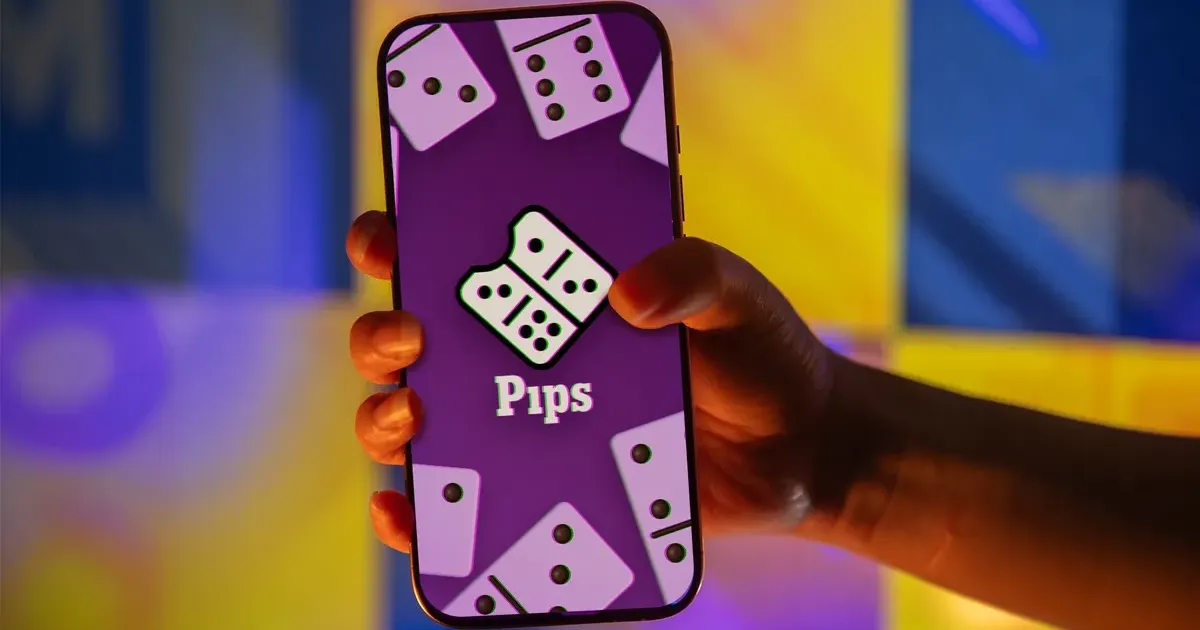
Pips arrived in the game catalogue in August 2025 as a single-player variation of traditional dominoes. It tasks users with placing rectangular tiles on a board while adhering to specific color-coded constraints. Unlike classic dominoes where matching numbers must touch, this digital version utilizes mathematical conditions to dictate placement. Users must navigate sections that require tiles to sum to a specific number or maintain inequality with adjacent pieces. The complexity of these puzzles increases daily, reflecting the same difficulty scaling found in older staples like the crossword or Wordle.

New York Times Pips Rules and Dominoes Mechanics

Pips mechanics require a deep understanding of spatial logic and basic arithmetic. Each tile features two halves, and their orientation can be either vertical or horizontal. Color-coded areas on the board impose rules such as Equal, Not Equal, Greater Than, or Less Than. If a section is marked with a specific number, all pips within that space must add up to that total exactly. These zones often intersect with only one half of a domino, forcing players to think several moves ahead to avoid blocking the board.

"The touching tiles don't necessarily have to match."

Every difficulty level presents a unique grid configuration. Currently, the interface does not offer a hint system that reveals single moves or corrects individual errors. Players who find themselves stuck are faced with the choice of revealing the entire solution or starting the level over. Data from user forums suggests that the Not Equal condition is frequently the most difficult for new players to master. This specific rule requires that every domino half in the designated space must contain a unique number of pips.

Logic dictates that players should address the most restrictive zones first. If a small space requires a high sum, the number of viable tile combinations decreases sharply. Most puzzles incorporate areas without any color coding at all. These neutral spaces provide the necessary flexibility to connect the more rigid, rule-bound sections of the board. The April 2 puzzle specifically emphasizes the use of empty spaces to buffer the Greater Than and Less Than requirements.

Sports Connections Puzzle Structure and The Athletic Integration

Connections Sports Edition is a collaborative effort between the main puzzle department and The Athletic, which handles the newspaper's sports reporting. Today's puzzle specifically targets fans of New York franchises, requiring a high-level of niche knowledge. Similar to the standard version, players are presented with 16 words that must be sorted into four distinct categories. Each group shares a hidden theme that ranges from team nicknames to historical stadium locations.

The Athletic provides the editorial expertise necessary to craft categories that are both challenging and accurate. While some words may appear to fit into multiple groups, the game is designed with only one perfect solution. Players are granted a total of four mistakes before the session terminates. This creates a high-stakes environment for users who attempt to guess through the more obscure sports trivia. The board includes a shuffle feature to help players visualize new word combinations when they reach a mental deadlock.

Categories are organized by difficulty using a color-coding system that mirrors the original game. Yellow indicates the most straightforward connection, while purple means the most abstract or difficult link. The April 2 puzzle includes several red herrings that could plausibly belong to famous baseball or basketball lineages. Successful completion requires the player to isolate the most specific group before tackling the more general themes. Reporters at Mashable noted that today's sports edition is particularly aimed at residents of the Tri-State area.

Daily Logic Challenges and Puzzle Subscription Growth

Digital gaming has become a primary driver for subscription retention at the Times. The transition from a news-only platform to a lifestyle and gaming hub accelerated sharply after the acquisition of Wordle in 2022. Games like Pips and Connections Sports Edition ensure that users interact with the application daily, regardless of the news cycle. Internal metrics often show that puzzle engagement remains high even during periods of low breaking news volume. One single session can last from five minutes to an hour depending on the puzzle's difficulty.

Market analysts observe that the gamification of the news bundle creates a unique competitive advantage. By integrating specialized content from properties like The Athletic, the publication can capture specific demographics such as sports bettors and trivia enthusiasts. Every new game release is tested for its ability to foster a social sharing habit. The grid results from Connections, consisting of colored squares, are frequently shared across social media platforms to stimulate friendly competition. Pips is following a similar trajectory as players share their board solutions in digital communities.

Connections Sports Edition Difficulty and Categories

Difficulty scaling in Connections Sports Edition is often tied to how broad or specific the categories are. A category might focus on something as simple as team colors or as complex as players who have won championships in three different decades. Today's grid features a mix of player names and historical venues that require familiarity with the 1970s and 1980s eras of New York sports. Errors often occur when players assume a word has only one meaning, failing to consider its sports-specific context. The game requires a blend of vocabulary skills and deep athletic history.

Traditional crossword puzzles rely on clues, but Connections relies on the absence of them. Players must generate their own hypotheses and test them against the 16 words provided. If a group of four is identified correctly, those words are removed from the screen, simplifying the remaining task. The April 2 grid includes terms that could refer to either the New York Giants or the New York Jets, creating a classic overlap trap. Players have exactly four attempts before the grid locks.

The Elite Tribune Strategic Analysis

Can a legacy newspaper survive by becoming a digital playground for the bored and distracted? The New York Times is no longer a news organization that happens to have a crossword; it is a gaming conglomerate that happens to employ investigative reporters. By flooding its platform with titles like Pips and Connections Sports Edition, the Gray Lady is executing a cynical but effective pivot toward the dopamine-driven economy of the smartphone era. The partnership with The Athletic is the ultimate proof of this transformation, as serious sports journalism is reduced to the raw material for a sixteen-word trivia grid.

Critics might argue that these puzzles foster community, but they primarily serve as a digital fence designed to trap subscribers within an ecosystem of trivialities. When the primary reason for opening a news app is to arrange dominoes or sort athlete names, the gravity of the headlines on the front page inevitably diminishes. The publication is trading its historical authority for daily active user metrics. This strategy ensures financial survival at the cost of intellectual prestige. Revenue, it seems, beats reporting.