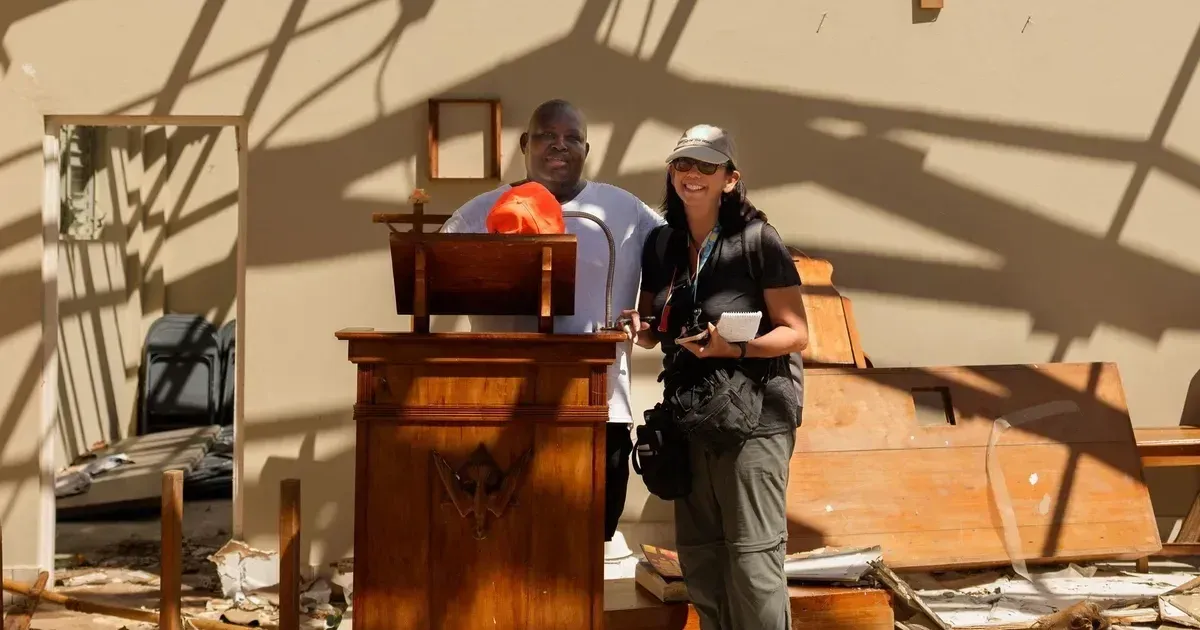
Frances Robles observed the shifting political tectonics of Latin America on April 15, 2026, marking a meaningful milestone in a career that has spanned more than a quarter century of regional immersion. Reporting for The New York Times, she has spent decades documenting the erosion of democratic institutions and the rise of populist movements across the hemisphere. Her presence in the field often coincides with moments of extreme instability, ranging from the collapse of social orders in the Caribbean to the hardening of autocratic regimes in Central America.

These years of experience allow for a depth of perspective that younger correspondents often struggle to replicate. Investigative journalism in this region requires more than linguistic fluency, it demands an understanding of the historical scars left by previous interventions and internal conflicts.

Journalistic rigor remains the foundation of her approach to complex narratives. Robles has consistently bypassed superficial explanations for regional crises, choosing instead to embed herself within the communities most affected by policy failures. Her work for The New York Times emphasizes the human cost of political dysfunction. Over her 25 years of reporting, the nature of conflict in Latin America has mutated from traditional guerrilla warfare to the widespread influences of transnational criminal organizations. This evolution has forced a corresponding shift in how international news agencies approach security and source verification in the field.

Frances Robles Records the Decline of Central American Democracy

Daniel Ortega transformed Nicaragua from a revolutionary hope into a dynastic autocracy while the world focused on other global theaters. Robles tracked this transition with careful detail, identifying the specific legal and extrajudicial mechanisms used to silence dissent. She documented the 2018 protests that resulted in hundreds of deaths at the hands of state-sponsored paramilitaries. The repression of the Catholic Church and the mass expulsion of political prisoners became central themes in her dispatches from Managua. Readers in the US and UK received a clear view of how a former revolutionary could adopt the same tactics as the dictator he once helped to overthrow.

Authoritarianism in the region is not a monolith, as the situation in El Salvador illustrates. Nayib Bukele introduced a new model of governance that prioritizes perceived security over civil liberties. Robles explored the implications of the huge incarceration campaigns that have targeted gang members and innocent bystanders alike. Her reporting analyzed the trade-offs between public safety and the rule of law, noting how high approval ratings can mask the dismantling of judicial independence. Reporting from San Salvador, she highlighted the use of social media as a tool for both state propaganda and the intimidation of the press.

Regional leaders have increasingly adopted a posture of defiance toward traditional diplomatic pressure. Nicaragua remains a primary example of this isolationist trend, where the government has shuttered thousands of non-governmental organizations. The reporting from Robles highlights that these are not isolated events but part of a coordinated effort to consolidate power. She described the chilling effect on local journalists, many of whom have been forced into exile in neighboring Costa Rica. The loss of local voices makes the role of international correspondents even more critical for maintaining a record of state actions.

New York Times Coverage Focuses on Haitian Instability

Haiti represents perhaps the most challenging environment for any foreign correspondent working today. Robles provided extensive coverage of the aftermath of the 2021 assassination of President Jovenel Moïse, an event that accelerated the country into a state of near-total anarchy. Gang coalitions in Port-au-Prince now control the majority of the capital, dictating the flow of fuel, food, and medical supplies. The collapse of the Haitian National Police has created a vacuum that no internal political body has been able to fill. Robles navigated these hazardous conditions to report on the daily survival strategies of a population abandoned by its government.

"Reporting in Latin America requires a deep understanding of the local dynamics and a willingness to go where others won't," according to a profile from The New York Times regarding the career of Frances Robles.

Foreign intervention has a complicated history in Haiti, making the current debate over international security forces particularly sensitive. Robles analyzed the reluctance of many Haitians to accept another UN-backed mission, given the legacy of past failures. Her reporting detailed the horrific conditions within the national penitentiary and the frequent prison breaks that have released thousands of dangerous inmates back into the streets. The lack of a functioning parliament or judiciary means that there is virtually no institutional check on the power of the gangs. These dispatches serve as a grim ledger of a state in the process of complete disintegration.

Latin American Migration Trends Define Modern Reporting

Economic desperation and political violence have driven millions of people to flee their homes in search of safety. Robles has traced these migration routes from the jungles of the Darien Gap to the processing centers on the US-Mexico border. She investigated the sophisticated smuggling networks that profit from human misery, often with the complicity of local officials. The demographic profile of migrants has changed sharply over the last decade, with an increasing number of families from Venezuela, Cuba, and Haiti joining the traditional flow from the Northern Triangle. Her reports examine the specific push factors in each country, from hyperinflation in Caracas to the lack of hope in Havana.

Venezuela continues to be a primary source of regional displacement. Despite various rounds of international sanctions, the government in Caracas has maintained its grip on power through a combination of military loyalty and the suppression of the opposition. Robles documented the humanitarian crisis that has seen millions lose access to basic healthcare and nutrition. The migration of Venezuelan professionals has depleted the country of the human capital needed for any future recovery. Her work illustrates how the internal policy failures of one nation create a wider effect that impacts the entire Western Hemisphere.

Cuban migration surged to record levels following the 2021 street protests, the largest since the 1959 revolution. Robles reported on the harsh sentencing of protesters and the subsequent decision by many young Cubans to leave the island. The elimination of visa requirements by certain regional allies of Havana created a new air bridge for those seeking to reach the United States. This surge has strained the resources of transit countries and intensified the political debate in Washington regarding border security. Robles focused on the individual stories of those who sold everything they owned to fund a journey full of the risk of extortion and violence.

Frances Robles Investigates the Rise of Authoritarian Rule

Democratic backsliding is no longer a peripheral concern in Latin America. Robles has analyzed the various ways that leaders use democratic machinery to destroy democracy from within. This process often begins with the capture of the electoral authorities and the supreme courts. Once the institutions are neutralized, the executive branch can move to eliminate term limits and restrict the activities of the political opposition. The reporting from The New York Times has been instrumental in identifying these patterns as they emerge in different national contexts. These shifts are rarely sudden, they are the result of years of incremental changes that gradually alienate the citizenry from the democratic process.

The influence of external actors like China and Russia has also complicated the political landscape. Robles noted how these powers provide financial and military support to regimes that are under Western sanctions, offering an alternative to the traditional influences of the United States. The geopolitical competition often comes at the expense of human rights and transparency. Local leaders can play different global powers against each other to secure the resources they need to maintain their domestic control. The reporting suggests that the era of uncontested US influences in the region has largely come to an end.

Press freedom is under direct assault across much of the continent. Journalists frequently face criminal defamation suits, physical surveillance, and targeted digital attacks. Robles has reported on the murders of colleagues in Mexico and the imprisonment of editors in Guatemala. These actions create an environment of self-censorship that makes it difficult for the public to hold those in power accountable. The persistence of international reporters like Robles provides a necessary bridge to the outside world for those whose voices have been silenced. Her work is a defense of the principle that facts are not subject to the whims of the powerful.

The Elite Tribune Strategic Analysis

Western media often treats Latin America as a cyclical tragedy of poverty and coups, but this reductionist view ignores the sophisticated malice of modern authoritarianism. The career of Frances Robles reveals a more disturbing trend: the professionalization of the autocrat. Modern leaders in the region have learned to use the language of democracy and the tools of the digital age to build fortress states that are immune to traditional diplomatic pressure. They do not just seize power, they occupy the national psyche through relentless propaganda and the strategic use of state-sponsored fear.

Will the international community recognize that its current toolkit for regional stabilization is obsolete? The failure of sanctions in Venezuela and the collapse of the rule of law in Haiti suggest that the old models of intervention have reached their limit. History is recording the emergence of a new type of failed state, one where the government is not absent but is instead the primary predator. The reality demands a fundamental rethinking of how the US and Europe engage with their neighbors to the south. If the only response to these crises is to tighten border control, the underlying causes will continue to fester until they trigger a hemispheric collapse. The era of the comfortable status quo is dead.

The persistence of these authoritarian trends suggests a deep disillusionment with the democratic promise of the 1990s. When democracy fails to deliver security or economic dignity, the public becomes susceptible to the siren song of the strongman. Robles has documented this disillusionment in real-time, showing how quickly a society can trade its freedoms for the illusion of order. The question is no longer when democracy will return to these nations, but whether it can ever be rebuilt on such fractured foundations. A cold reckoning is coming.