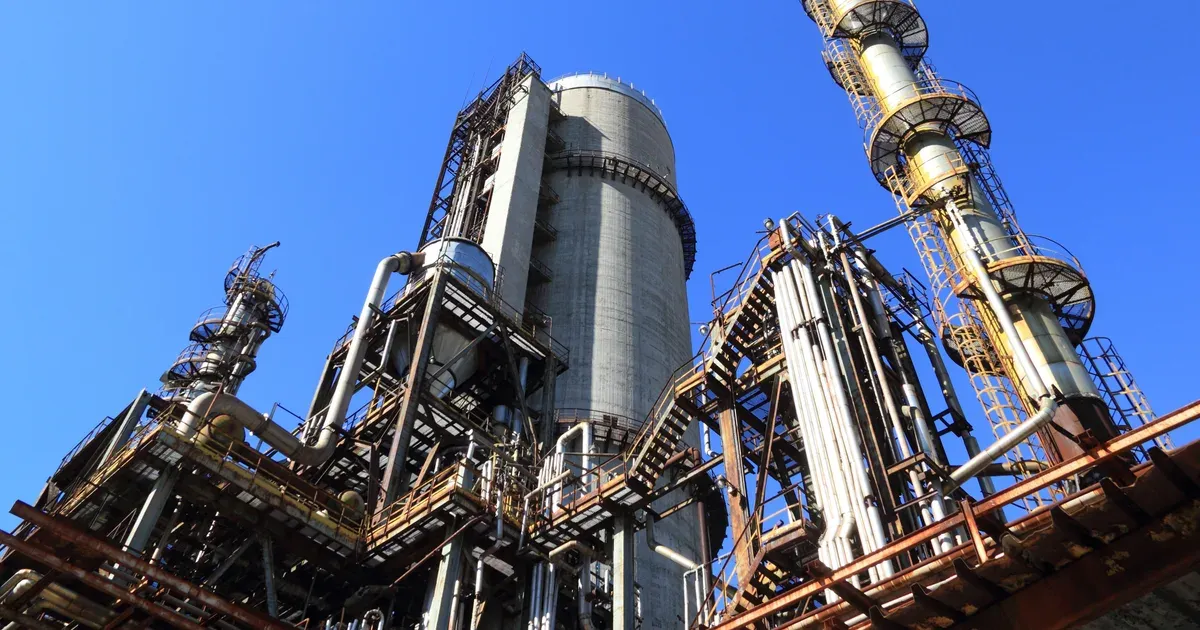
Maracaibo's skyline, once a silhouette of gleaming derricks and frantic commerce, is now a backdrop for the return of private aviation. Executives from global energy firms are landing at La Chinita International Airport to negotiate the revival of Venezuela's stagnant oil production. These visitors represent a wave of interest from the United States, Europe, and Asia, all drawn by the prospect of tapping the world's largest proven crude reserves during a period of global supply instability. Most of these arrivals bypass the crumbling residential sectors where blackouts remain a daily reality, heading instead for guarded compounds and fortified hotels. Crude prices have climbed to levels that make the high-risk environment of the Zulia state increasingly attractive to foreign capital. Decades of underinvestment and political isolation turned this region into a graveyard of industrial equipment. Rusting pump jacks stand motionless in Lake Maracaibo, while oil slicks shimmer on the water's surface, evidence of a pipeline network that has not seen serious maintenance in a decade. But the scent of profit is overriding the stench of decay as the global energy market seeks heavy crude alternatives to offset disruptions elsewhere. Negotiations now focus on service contracts and joint venture structures that allow foreign partners more operational control. This shift follows years of state-dominated mismanagement that saw output collapse from 3 million barrels per day in the late 1990s to less than 800,000 barrels in recent years.
Oil Executives Return to Maracaibo
Entering Maracaibo requires managing a field of contradictions where modern luxury SUVs share the road with horse-drawn carts used for scrap metal collection. The local electrical grid, crippled by lack of spare parts and skilled personnel, frequently fails, leaving entire neighborhoods in darkness for 12 hours at a time. High-end hotels catering to oil executives have installed their own industrial-grade generators and water filtration systems to maintain a veneer of normalcy. These island-like pockets of functionality highlight the immense gap between the visiting corporate class and the local population. Repairing the physical infrastructure of the oil industry will require an estimated $100 billion over the next decade. Pipelines beneath Lake Maracaibo are so corroded that they frequently rupture, leaking thousands of barrels of oil into the system. Divers once employed by the state to maintain these lines have largely fled the country, part of a major brain drain that saw PDVSA lose over 20,000 skilled workers since 2003. Private companies are now looking to fly in their own technical teams to begin the arduous process of assessment and repair. But labor remains a complex hurdle for any returning enterprise.
The state of the infrastructure is worse than the satellite imagery suggests, with entire pumping stations stripped of copper wiring and essential components.
Foreign engineers who have toured the facilities describe a scene of systematic cannibalization. In some cases, essential machinery was dismantled to keep other units running, a desperate measure that has now left the entire network in a state of terminal decline. Rebuilding these facilities will involve shipping specialized equipment from Houston or Rotterdam, a logistical challenge complicated by remaining port restrictions. The task is a race against time and further environmental degradation.
Venezuela Infrastructure Needs Heavy Repair
Global energy demand has shifted the calculus for companies that previously avoided the Venezuelan market. Heavy sour crude, which Venezuela produces in abundance, is highly sought after by complex refineries on the U.S. Gulf Coast. These refineries were specifically designed to process the thick, sulfurous oil found in the Zulia and Orinoco regions. Without a steady supply of this grade, many of these facilities operate at reduced efficiency, driving up the cost of diesel and gasoline globally. Market forces are effectively forcing a re-evaluation of political stances.
The environmental costs of this revival cannot be ignored by shareholders in the West. Decades of spills have turned Lake Maracaibo into a toxic basin, affecting the livelihoods of thousands of fishermen who once harvested shrimp and crab from its waters. Investors are now being pressured to include environmental remediation as part of their entry deals. This creates a friction point between the need for rapid production and the long-term necessity of ecological cleanup. Any new contract will likely include stringent clauses regarding spill prevention and waste management.
PDVSA Talks Shape the Risk
State-owned oil company PDVSA remains the gatekeeper to all Venezuelan energy projects. Caracas has shown a surprising willingness to compromise on operational control in exchange for immediate cash flow. The government faces a severe liquidity crisis and needs oil revenue to stabilize a currency that has suffered through cycles of hyperinflation. The international firms are playing a longer game, securing rights to reserves that will be valuable for decades. The tension between short-term desperation and long-term strategy defines every meeting in the executive suites of Maracaibo. The state has allowed private contractors to take over the day-to-day management of certain aging wells.
Transparency remains the primary concern for the U.S. Treasury and other regulatory bodies monitoring these deals. Previous iterations of Venezuelan oil wealth were marred by allegations of systemic corruption and the diversion of funds. New contracts are expected to include rigorous auditing requirements and third-party oversight of revenue streams. Even the complexity of the Venezuelan bureaucracy makes it difficult to ensure that every dollar reaches its intended destination. These meetings often take place in the shadow of historical failures.
Success in the oil fields is inextricably linked to the survival of the current political order. Without a major increase in crude exports, the government cannot fund the social programs or the security apparatus that maintain its hold on power. The reality has forced a pragmatic shift in language, moving away from the anti-imperialist slogans of the past toward a more business-friendly posture. Official state media has begun highlighting the role of foreign investment as a patriotic necessity for national recovery.
Regional competitors like Guyana have surged ahead in production, adding a layer of urgency to the Venezuelan efforts. Guyana's offshore discoveries have attracted billions in investment that might have otherwise gone to Venezuela. The competitive pressure is a driving factor behind the new openness to Western oil majors. The administration knows that if it does not act now, its infrastructure may degrade beyond the point of any possible recovery. The window for a meaningful industrial rebirth is closing as the world moves toward an energy transition.
Inflation and the collapse of the bolivar have forced a de facto dollarization of the local economy in Maracaibo. Most transactions in the city, from hotel bills to street food, are now conducted in U.S. dollars. The shift has created a two-tier society: those with access to the greenback and those who rely on the near-worthless local currency. The return of the oil industry promises to inject more dollars into the system, but it also threatens to widen this wealth gap. The economic reality is the most visible sign of the country's risky path forward.
Reserves Mean Little Without Infrastructure
Should the world be surprised that the same corporate titans who decried Venezuelan authoritarianism are now salivating over its oil? History suggests that moral clarity is the first casualty of an 80-dollar barrel. The return of private jets to Maracaibo is not a sign of democratic progress or human rights improvements; it is a cold, calculated bet on the endurance of the status quo. For years, the West used sanctions as a blunt instrument to demand change, yet as soon as global supply chains tightened, those principles were traded for the heavy sour crude that keeps American refineries profitable.
The pivot exposes the hypocrisy inherent in global energy policy. We are watching the rehabilitation of a regime, funded by the very capital that once sought its collapse. If executives believe that a few signatures on a service contract will erase decades of institutional rot and legal instability, they are delusional. The infrastructure is a rusted shell, the workforce has fled, and the environmental damage is a generational catastrophe. Entering Venezuela now is a desperate play by companies that have run out of easier options.
They are not saving the Venezuelan people; they are financing a stay of execution for a failed economic model while hoping to extract a few more billion before the next nationalization cycle begins.