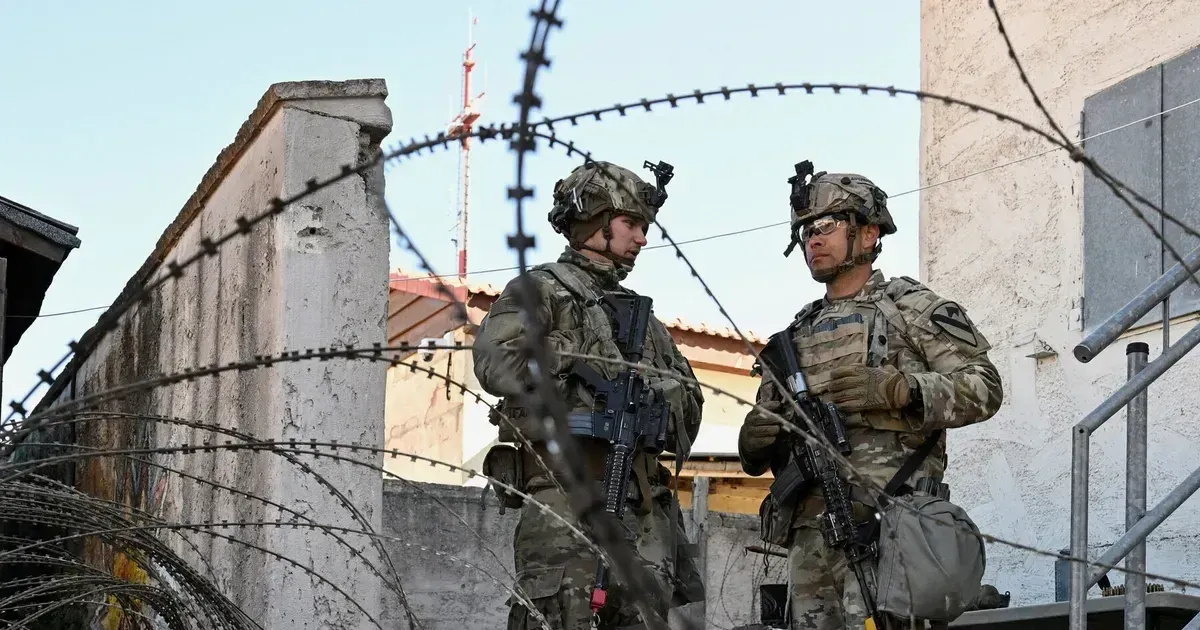
The Germany withdrawal order is a military move with alliance consequences. European officials will read the troop count as a signal about Washington's patience with burden-sharing. Pentagon leadership initiated the withdrawal of 5,000 military personnel from Germany following instructions issued by the White House. Official records filed on May 2, 2026, confirm the redeployment will reduce the American military footprint in a nation that long was the primary anchor for US operations across Europe and the Middle East. For Germany, the withdrawal is not only a base-management issue. It affects local economies, NATO planning assumptions and the speed with which American units can move toward eastern Europe or the Middle East during a crisis. The decision may also complicate exercises already scheduled with German units and NATO partners. Moving personnel out of established bases requires housing, transportation, equipment planning and new command arrangements, all of which can take longer than the political announcement suggests.
President Donald Trump ordered the reduction following a series of public disagreements with German Chancellor Friedrich Merz. Disputes centered on the German leader's vocal criticism of US policy toward Iran and his handling of subsequent security negotiations in Tehran. Washington intends to execute the movement of these units within a window of six to 12 months, according to military planners familiar with the logistical requirements of such a transition.
Strategic Shifts and European Defense
Germany hosts more American service members than any other foreign nation except Japan, making the presence of tens of thousands of personnel a foundation of international security infrastructure. Military assets based in the country support missions that extend well beyond the borders of the European Union. Facilities like Ramstein Air Base and Landstuhl Regional Medical Center provide critical support for operations in Africa and Central Asia, serving as essential hubs for medical evacuations and cargo logistics.
German government officials sought to play down the severity of the order, describing the redeployment as an anticipated development. A spokesperson for the chancellery noted that the decision is a prompt for Europe to accelerate investment in its own sovereign defense capabilities. Despite the friction between the two heads of states, German leaders emphasized that the broader security partnership holds steady through existing treaty obligations.
"The redeployment is anticipated," a spokesperson for the German government stated during a press briefing regarding the Pentagon order.
Political Friction in Washington and Berlin
Two senior Republicans in the US Senate expressed immediate concern over the plan, questioning whether a troop reduction might weaken the deterrent posture of the NATO alliance. Critics in Washington argue that withdrawing experienced units could embolden adversaries at a time when regional stability is fragile. These lawmakers have called for a detailed briefing on how the Pentagon plans to maintain operational readiness with fewer boots on the ground. This withdrawal follows an ongoing diplomatic dispute involving German Chancellor Friedrich Merz and the White House.
NATO leadership is simultaneously seeking to understand the details of the withdrawal. Alliance officials in Brussels requested clarification on which specific units will be affected and where they will be relocated. Uncertainty regarding the destination of the 5,000 departing troops has created a vacuum of information that diplomats are rushing to fill before the next scheduled summit.
Moving thousands of personnel involves complex adjustments to housing, schooling, and local support contracts that pump millions of dollars into the German economy. In towns near major installations, residents and local businesses expressed anxiety over the potential loss of American spending power. Local leaders in the affected regions have requested meetings with US military commanders to discuss the economic impact on civilian contractors who provide maintenance and services to the bases.
American military officials maintain that the remaining force level is sufficient to meet current mission requirements. While the 5,000-troop reduction is substantial, it accounts for only a fraction of the total US presence in the country. Planners are currently evaluating which non-combat support roles can be shifted to other locations or transitioned to civilian personnel to minimize the impact on front-line defense capabilities.
The Pentagon also has to account for how the move is read inside the alliance. A reduction can be militarily manageable while still politically disruptive if allies believe it was driven by a dispute rather than by a shared force-planning review. That perception can matter as much as the number of troops leaving.
Congressional scrutiny is likely to focus on whether the redeployment affects readiness, medical evacuation routes, airlift capacity and support for operations outside Europe. Those details will determine whether the order is a symbolic pressure tactic or a durable change to the US posture on the continent.
The Germany Withdrawal Turns NATO Force Planning Into Political Leverage
Will a smaller American presence in Germany inevitably lead to a less stable Europe? The answer lies not in the number of soldiers, but in the political cohesion of the Atlantic partnership. Withdrawing 5,000 troops is a manageable tactical shift, yet the underlying motivation, a personal and policy-driven feud between Trump and Merz, creates a different kind of vulnerability. It signals that military positioning is now a tool of executive diplomacy, potentially subject to the whims of political disagreement rather than long-term strategic doctrine.
European capitals are watching this development with a mixture of pragmatism and caution. If Berlin successfully uses this moment to energize European defense integration, the long-term result might be a more balanced and resilient alliance. However, if the withdrawal triggers a fragmented response among NATO members, it could provide the very opening that adversaries have sought for decades. The outcome depends entirely on whether Brussels can transform this bilateral friction into a catalyst for collective security. The continent must now decide if it is ready to lead. Success is not guaranteed.