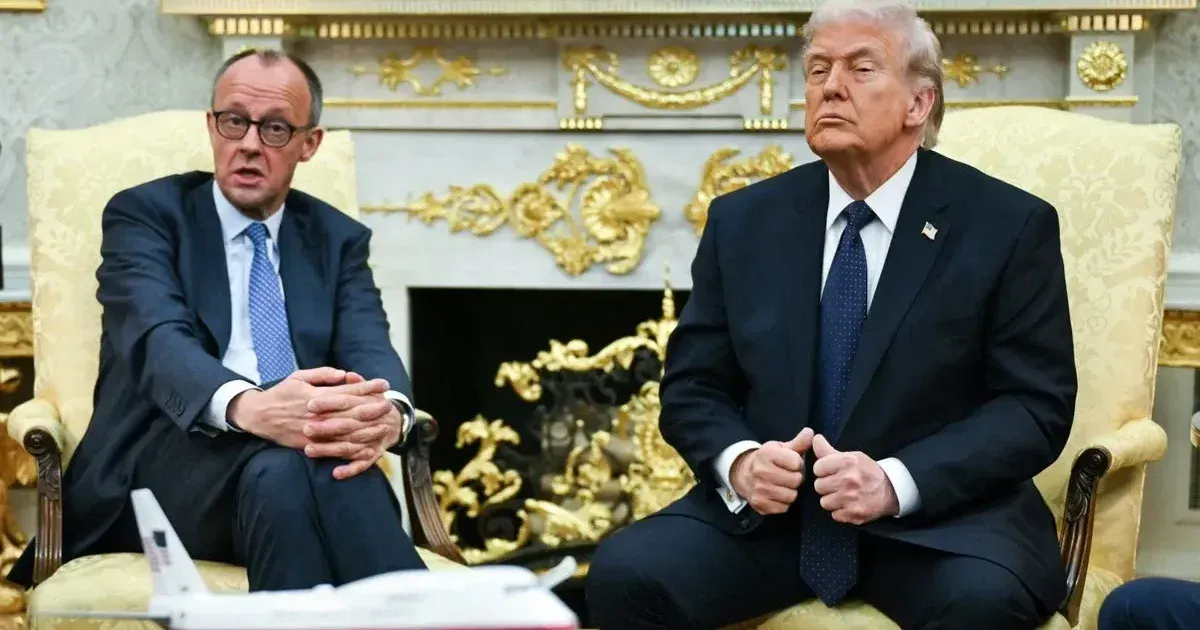
Germany has become the center of a new argument over how long US forces should remain in Europe. The troop question is no longer separate from Trump's dispute with Friedrich Merz over Iran policy. Berlin is reading the review as both a security issue and an alliance signal. Donald Trump signaled a potential withdrawal of American forces from Germany in a social media post. Tensions between the two allies reached a new high on April 29, 2026, when German Chancellor Friedrich Merz suggested the American leadership faced humiliation in the current Iran war. The public rebuke prompted an immediate review of the military presence that has anchored European defense since the late 1940s.
Germany is the most critical logistical hub for American operations across Europe and the Middle East. Chancellor Merz criticized the ongoing U.S. military involvement in Iran just days before Trump's troop review. He argued that the American strategy has failed to contain Tehran and left Western allies vulnerable to regional retaliation. German dissent regarding the war has sharpened since Merz took office, reflecting a broader European fatigue with protracted conflicts in the Persian Gulf.
Merz assumed a more confrontational stance than his predecessors, directly challenging the efficacy of the Pentagon's regional objectives. Sources in Berlin indicate that the Chancellor's comments were intended to distance Germany from a conflict that has strained domestic budgets and energy supplies.
Merz Challenges US Military Strategy in Iran
Officials in Washington indicated that the review of troop levels remains in an exploratory phase. Washington currently maintains approximately 35,000 active-duty personnel in Germany, spread across several high-value installations. Ramstein Air Base operates as the nerve center for American drone operations and casualty evacuations from Middle Eastern conflict zones.
It acts as the primary gateway for cargo and personnel moving into theater, making any reduction a major logistical hurdle. The White House indicated that the review would evaluate whether these forces could be more effectively deployed to the Indo-Pacific or returned to the United States. Any reduction in force strength would require Congressional notification and a lengthy decommissioning process for existing infrastructure.
Defense analysts suggest that the President is using the troop presence as a bargaining tool to force German compliance with U.S. foreign policy. While Bloomberg reports suggest the Pentagon is resistant to the move, the President has often expressed frustration with NATO members that he perceives as under-contributing to collective security costs.
This friction between Berlin and Washington comes as the Iran war enters a new and more volatile phase. Merz appears unwilling to commit German resources to a campaign that he views as strategically flawed. If Berlin refuses to support the mission, the White House may see little value in maintaining such a large footprint in the country. A potential US troop withdrawal is part of a wider reassessment of the alliance's presence across Europe.
Logistical Risks of European Base Closures
The potential closure of bases in Germany would affect more than local economies. Moving tens of thousands of personnel requires a large reallocation of transport assets and a renegotiation of basing agreements with alternative host nations like Poland or Romania.
American strategic interests rely on the Landstuhl Regional Medical Center, which is the only Level I trauma center outside the United States. Removing personnel from these sites complicates medical evacuations for wounded service members.
Questions regarding the future of the NATO alliance have resurfaced following this latest dispute. Military planners in Brussels expressed concern that a unilateral American withdrawal would embolden adversaries and weaken the deterrence posture on the alliance's eastern flank. Trump frequently questioned the value of the transatlantic partnership during his campaign and has continued that rhetoric while in office.
"The US was being 'humiliated' by Iran's leadership," said German Chancellor Friedrich Merz.
Pentagon sources confirm that no formal orders have been issued to begin a drawdown. Previous threats to reduce forces in 2020 resulted in a partial plan that was later paused by subsequent administrations. The logistics of a full-scale withdrawal involve billions of dollars in infrastructure that cannot be easily replicated elsewhere in Europe.
Strategic Shift in NATO Transatlantic Relations
It would take years to relocate the command-and-control capabilities currently housed in Stuttgart. Removing personnel without a clear transition plan risks creating a vacuum in regional security management. Security analysts, however, warn that the political damage to the alliance is already occurring regardless of whether the troops actually leave.
Experts suggest that the verbal escalation between Trump and Merz reflects a fundamental disagreement over the world order. Relations between the two capitals have not been this strained since the invasion of Iraq in 2003. Merz remains firm in his assessment that the U.S. must change its approach to Iran if it expects continued European cooperation. Potential reductions may also impact intelligence-sharing agreements that rely on German-based monitoring stations. Coordination between the CIA and German intelligence agencies has historically been a foundation of counter-terrorism efforts in Western Europe.
Trump’s Troop Threat Turns Ramstein Into Leverage Against Berlin
Berlin and Washington now face a deep test of the post-war security architecture. The dispute is a symptom of a larger divergence in how the two powers view the necessity of military intervention in the Middle East. If the President proceeds with the reduction, the shift would force Germany to accelerate its own military modernization and seek a more independent security policy within the European Union.
National sovereignty and fiscal independence are increasingly driving Merz's decision-making process. He is betting that the European public will support a leader who stands up to American pressure, even if it risks losing the protective umbrella of U.S. forces. By contrast, Washington is betting that the threat of withdrawal will eventually force Berlin back into the fold. Neither side appears ready to blink, which suggests that the uncertainty surrounding the U.S. presence in Germany will persist through the current fiscal cycle.