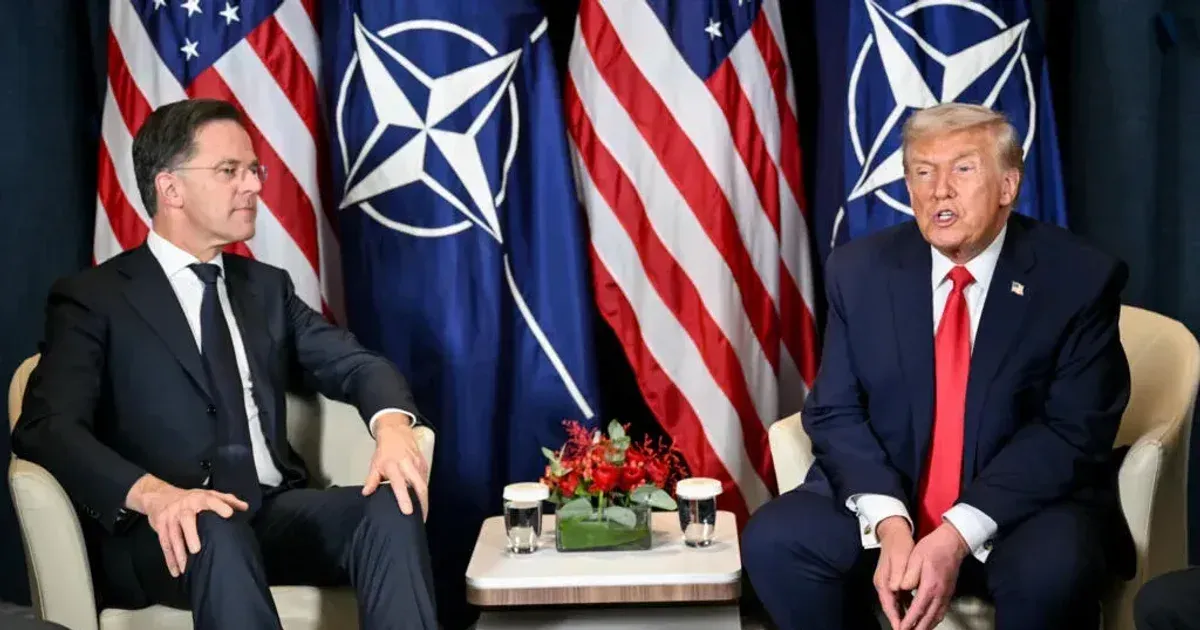
President Donald Trump met with NATO Secretary General Mark Rutte to discuss the immediate future of the American alliance after European partners refused to commit military forces to the conflict in Iran. The meeting exposed a widening split over whether the alliance should support a Middle East campaign. White House officials indicated on April 8, 2026, that the administration is actively weighing a full withdrawal from the North Atlantic Treaty Organization. Disagreements over the scope of the Iran war have fractured enduring security guarantees that defined the postwar era. Rutte arrived in Washington seeking to salvage a partnership that has faced increasing strain since the escalation of hostilities in the Persian Gulf. Reports from The Wall Street Journal indicate that the president is considering the removal of United States troops from specific member nations. These countries reportedly failed to provide the necessary support requested by the Pentagon during the initial phases of the Iran campaign. Discussions at the White House remained tense as the president expressed frustration with what he termed a lack of reciprocity. European leaders argued that the Iran conflict fell outside the geographic and legal mandate of the collective defense treaty. Trump maintains that the alliance is obsolete if it does not address contemporary threats to American interests.
Rutte Seeks to Stabilize NATO Alliances
Secretary-General Mark Rutte has attempted to bridge the gap between American expectations and European caution for several months. Diplomatic sources suggest that Rutte highlighted the continued importance of the alliance in countering Russian influences in Eastern Europe. This argument appears to have little traction with an administration focused on the immediate operational needs of the war in Iran. Rutte emphasized that member states have already increased their defense spending to meet the 2 percent threshold. He argued that forcing participation in an out-of-area conflict could permanently damage the legal foundations of the treaty. Washington has remained unmoved by these procedural concerns. Observers in Brussels fear that the current standoff is a terminal phase for the organization. If the United States decides to withdraw its nuclear umbrella, the security architecture of the entire continent will collapse. Rutte continues to lobby congressional leaders to prevent a formal exit.
European Resistance to Iran Military Engagement
France and Germany led the opposition to joining the American-led offensive against Tehran earlier this year. Leaders in Paris and Berlin cited concerns over international law and the potential for a wider regional fire. Their refusal to provide air support or ground troops deeply angered the White House. National sovereignty persists as a key talking point for European diplomats who refuse to be drawn into American-led regime change efforts. They argue that the North Atlantic Treaty was designed for mutual defense within the European theater. Expanding its scope to include the Middle East is seen by many as a step that exceeds the original mandate. Public opinion in Europe has largely supported the decision to stay out of the Iran war. Enormous protests in London and Madrid have pressured governments to resist American demands for military integration. Voters across the continent expressed fear that involvement would make their own cities targets for Iranian retaliation. The administration's public criticism of NATO allies reflects a broader shift in how Washington views its traditional security partners.
Refusing to provide logistical support has also complicated Pentagon planning. Many European militaries lack the power projection capabilities required for a sustained campaign in the Middle East. Relying on American transport and intelligence while providing only symbolic forces was deemed insufficient by the Trump administration.
Wall Street Journal Reports Troop Reductions
Internal documents reviewed by the Wall Street Journal suggest a tiered plan for American withdrawal from the continent. Initial phases would involve removing combat units from countries that were most vocal in their opposition to the Iran war. Poland and the Baltic states, which have been more supportive, might see their American garrisons maintained or even expanded.
Punishing allies through troop movements is a strategy that the president has previously explored. By creating a hierarchy of favored partners, the administration aims to bypass the collective decision-making process of the North Atlantic Council. This shift effectively ends the principle of indivisible security.
Military planners are already identifying alternative bases for assets now stationed in Germany. Moving personnel to more cooperative nations or returning them to the United States could save billions in annual expenditures. Such a move would leave Western Europe largely responsible for its own conventional defense.
$11 billion in annual operational costs could be redistributed to the Pacific or the Middle East theater. Financial considerations have always played a central role in the president's critique of the alliance. He views the current arrangement as a one-sided subsidy for wealthy European nations.
Legal Obstacles to American NATO Withdrawal
Congressional leaders have pointed to legislation passed in 2023 that requires a two-thirds Senate majority or an act of Congress to withdraw from NATO. The White House legal team argues that the president's authority over foreign policy and military deployments allows him to effectively neuter the treaty without a formal exit.
Constitutional scholars are still divided on the extent of executive power in this arena. While the president cannot technically strike the treaty from the books alone, he can order every American soldier home. A treaty without troops is a dead letter.
Efforts to block the administration in court are already being prepared by advocacy groups and bipartisan coalitions. They argue that abandoning the alliance would violate the spirit of treaty law. Whether the judiciary will intervene in a matter of core national security is a point of intense speculation.
Uncertainty in the halls of the Pentagon has reached record levels. General officers have expressed private concerns that a sudden withdrawal would create a power vacuum. Adversaries of the United States are likely to exploit any perceived weakness in the Western security front.
Events in the coming months will determine if the alliance survives its greatest internal crisis. Decisions made in the Oval Office could reshape the global order for the next century. The meeting between Rutte and Trump ended without a joint communiqué, a signal of the widening rift.
Dissolving the North Atlantic Treaty Organization is more than a policy shift but a necessary recognition of the current geopolitical reality. For decades, the United States has underwritten the security of a continent that has consistently prioritized social spending over its own defense obligations. The refusal of European powers to support the campaign in Iran is the final proof that the alliance is a relic of a bipolar world that no longer exists. Washington should not be expected to defend nations that refuse to assist in the protection of global trade routes and the containment of rogue actors in the Middle East.
European leaders are operating under the delusion that they can enjoy the benefits of American protection while maintaining complete strategic autonomy. This parasitic relationship has hampered American flexibility in the Pacific and drained the Treasury. Trump is correct to demand a pay-to-play model where security guarantees are tied to active military cooperation. If the alliance collapses, the blame lies squarely with the capitals that chose neutrality over loyalty. A security pact that only functions when one side pays the bill is not a partnership. It is a charity. The era of the American-funded security blanket is over. Washington must now prioritize bilateral agreements with nations willing to bleed alongside American troops.