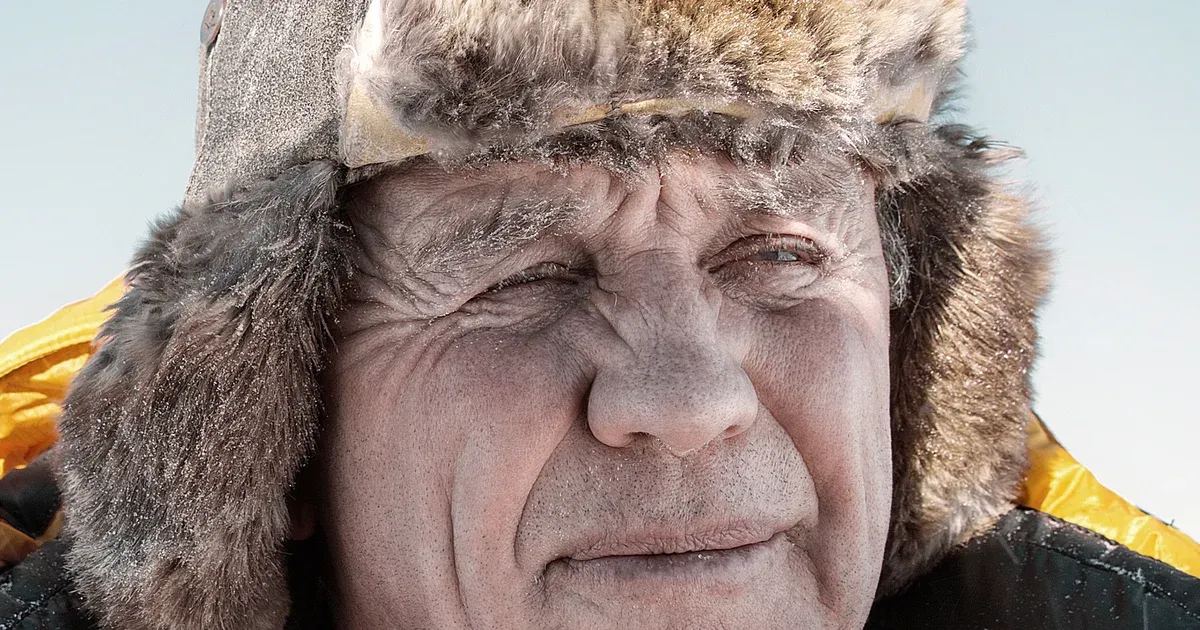
Doug Allan, the acclaimed cinematographer who won eight Emmy Awards for his natural history work, died during a visit to Nepal. Local authorities in the Kathmandu Valley said the 80-year-old Scotsman was traveling in the region for a personal photography project. His family and colleagues began paying tribute to a four-decade career that redefined polar wildlife filmmaking. The death was confirmed on April 9, 2026, while British officials coordinated with local authorities.
Allan gained international recognition for capturing some of the most difficult sequences in the history of wildlife television. He was a primary contributor to the landmark series Blue Planet and its successor, Planet Earth. These productions relied on his unique ability to survive in sub-zero temperatures for months at a time. His death occurred in a country renowned for the high-altitude challenges he often sought out during his professional assignments.
Nepal Expedition and Final Assignments
Initial reports from the Himalayan region suggest Allan arrived in Nepal earlier this month to document high-altitude changes in glacial structures. He had expressed a late-career interest in the intersection of traditional mountain culture and environmental shifts. Colleagues in the filmmaking community noted his continued physical activity despite his age. He often joked that the cold had preserved his joints during years of diving in the Antarctic. Kathmandu police officials are working with the British Embassy to coordinate the repatriation of his remains. No foul play is suspected in the incident. Allan was staying in a quiet district frequented by mountaineers and researchers. He had spent the previous evening reviewing digital captures from a short trek into the lower Annapurna range.
Antarctic Origins of a Cinematographic Career
Born in Dunfermline, Scotland, Allan developed a passion for the underwater world through pearl diving and commercial salvage. He eventually joined the British Antarctic Survey as a diver and base commander. This period of his life was the foundation for his technical expertise in extreme environments. He spent five winters and nine summers on the frozen continent before transitioning into full-time filmmaking.
"I first met Doug in the Antarctic when he was a diver for the British Antarctic Survey and I was immediately struck by his fearlessness and his deep understanding of the natural world."
Sir David Attenborough provided this account during a retrospective of Allan's contributions to the BBC Natural History Unit. The two men formed a professional bond that lasted more than 30 years. Allan often credited Attenborough with encouraging him to swap his research equipment for a camera. Their collaboration resulted in the first footage of several predatory behaviors in the Southern Ocean.
Technical Mastery in Extreme Environments
Filming in the polar regions required Allan to innovate new methods for keeping cameras functional in temperatures reaching minus 40 degrees. Battery failure and mechanical seizures often ruined traditional equipment. He worked with engineers to develop insulated housings and specialized lubrication for his lenses. These technical adjustments allowed for the prolonged time-lapse sequences that became a hallmark of his style.
Success in the field also demanded an intimate knowledge of animal behavior. Allan famously spent hours sitting motionless on the ice to gain the trust of leopard seals and polar bears. He recorded the first footage of a polar bear nursing its cubs in a natural den. Such sequences took weeks of patient observation from a distance that ensured the animals remained undisturbed. He published these experiences in his book, Freeze Frame, in 2012.
The cooperation between Allan’s visual storytelling and Attenborough’s narration produced some of the highest-rated documentaries in television history. Their work on Frozen Planet won multiple technical awards for its use of aerial and underwater photography. Allan’s shot of killer whales using a wave-washing technique to knock a seal off an ice floe is still cited as a masterwork of timing. He spent two seasons in the field to get that specific three-minute sequence.
International honors followed his commercial success, including five BAFTA awards for cinematography. He was awarded the Polar Medal twice for his research and filming contributions in the Arctic and Antarctic. These accolades did not change his modest approach to the craft. He frequently lectured at universities about the ethical responsibilities of wildlife photographers. His final public appearance was a keynote address in Edinburgh regarding marine conservation.
Environmental advocacy became a central foundation of his work during his final decade. He used his vast archive of polar footage to illustrate the receding ice shelves and the impact on local fauna. Critics sometimes argued his visuals were too beautiful to convey the urgency of the situation. Allan countered that people only protect what they have grown to love through visual intimacy. His archives now pass to a trust managed by his estate.
Journalism often mourns the passing of its observers, but the loss of Allan marks the erosion of a specific, physically grueling era of filmmaking. The industry is now pivoting toward drone-heavy production and remotely operated sensor arrays. While these technologies offer safety and cost-efficiency, they lack the instinctive, empathetic framing that a human operator provides from the ice level. Allan was the last of the Victorian-style explorers who used modern optics to bring back dispatches from the edge of the known world.
Media conglomerates now prioritize high-frequency content over the multi-year patient observation that defined Allan’s career. The financial models of streaming services do not easily support a cameraman sitting on a frozen ridge for three months to capture a single hunting sequence. This shift toward digital convenience threatens to sanitize nature documentaries into a series of predictable, high-action clips. Allan’s work stood as a defense against this trend by emphasizing the long-form narrative of the environment. His death is more than a personal loss. It is a signal that the era of the heroic, lone-wolf cinematographer is reaching its conclusion.