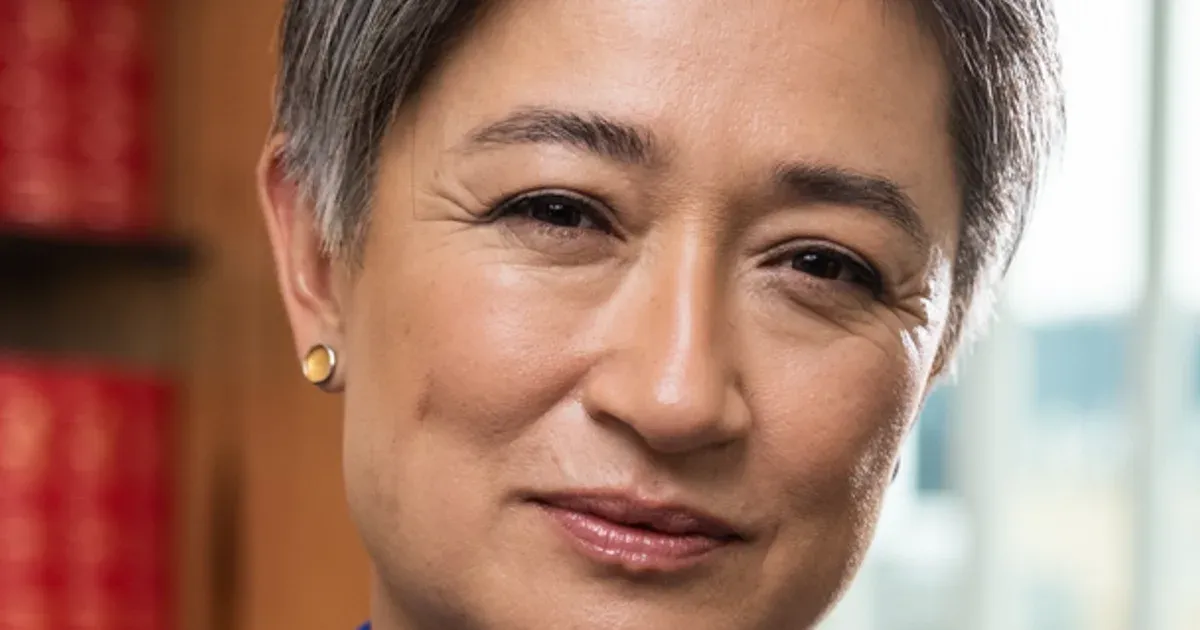
Foreign Affairs Minister Penny Wong said international efforts must urgently expand to include Lebanon in regional ceasefire agreements. Her intervention put Australia behind a broader diplomatic push to protect civilians and aid workers immediately. Canberra issued a joint statement on April 8, 2026, with a coalition of global partners expressing deep concern over the escalating violence across the border with Israel. Wong insisted that the protection of aid workers and civilians is an absolute legal and moral necessity. Australian diplomatic priorities have shifted toward stabilizing the northern front as military activity intensifies in southern Lebanon. International observers note that the current cessation of hostilities in Gaza has not yet translated to a reprieve for Lebanese citizens. Wong argued that leaving Lebanon out of the diplomatic framework risks creating a vacuum where conflict can metastasize. Australia joined several nations in calling for an immediate end to the bombardments that have displaced thousands of families. Security analysts in Canberra suggest this move coordinates with broader G7 efforts to prevent a regional fire. Wong cited the increasing risks faced by non-governmental organizations operating in high-risk zones. James Paterson, the Shadow Minister for Defence, expressed skepticism regarding the narrative surrounding Lebanon’s status in current negotiations. Paterson noted that conflicting reports from Tehran and Tel Aviv make it difficult to verify the scope of the recently announced truce. Iran claims that the ceasefire explicitly covers its allies in Lebanon, while Israeli and American officials contend the agreement is limited in geography. This disagreement creates a dangerous ambiguity for frontline humanitarian groups trying to deliver food and medicine.
Australian Foreign Policy Shifts Toward Humanitarian Protection
Canberra continues to emphasize the sanctity of international humanitarian law as a foundation of its Middle Eastern engagement. Wong stated that aid workers are not targets and must be granted safe passage to distribute essential supplies. Recent reports from the border show that infrastructure damage is hindering the movement of medical convoys. Australian funding for the region is tied to the guarantee of these safety protocols. Diplomacy often relies on the transparency of these operational corridors. Government officials highlighted the vulnerability of the $11 billion in international aid now pledged for regional reconstruction and relief. Wong maintains that without a formal inclusion of Lebanon in the ceasefire, these funds cannot be effectively deployed. Humanitarian agencies report that staff security is at an all-time low due to unpredictable airstrikes. Australia has a vested interest in ensuring that its citizens working for these agencies abroad are protected by enforceable international agreements.
Tensions within the Australian parliament reflect broader global schisms regarding Middle Eastern security.
Opposition members have questioned the wisdom of relying on diplomatic signals from certain regional actors. Paterson argued that Australia must remain clear-eyed about the motivations of state sponsors of proxy groups. He pointed to historical precedents where temporary truces were used as opportunities for military reorganization. Defense policy experts suggest that a ceasefire without verification mechanisms is only a pause in active combat. Paterson emphasized that Australian security interests are best served by verifying claims through independent intelligence rather than accepting diplomatic rhetoric at face value.
Political Friction Over Iranian Ceasefire Claims
Tehran maintains that its diplomatic efforts secured a broad agreement that includes all regional fronts. James Paterson challenged this assertion, citing the history of Iranian involvement in destabilizing activities. He reminded his colleagues of the complexities inherent in negotiating with regimes that have interests contrary to Western security objectives. Paterson believes that Australia should be reluctant to listen to Iranian officials on the specifics of Lebanese inclusion. Conflicting statements from Jerusalem suggest that the Israeli military has not yet received orders to halt operations in the north.
“I am personally reluctant to endorse claims made by a country which has sponsored terrorist attacks on Australian soil,” Paterson said.
James Paterson delivered this specific critique during a morning briefing on the security situation. His remarks highlight a growing divide in Canberra over how to interpret intelligence coming from the Middle East. While Wong focuses on the immediate humanitarian necessity of a ceasefire, Paterson remains focused on the long-term strategic risks of Iranian influence. One side prioritizes the cessation of civilian suffering while the other prioritizes the integrity of regional defense alliances. These perspectives reflect the difficult balancing act required by middle-power nations in global conflict management.
Regional Instability and Aid Worker Vulnerability
Conflict zones in southern Lebanon have become increasingly lethal for civilian relief teams. Wong noted that the resilience of the local aid networks is being tested by the absence of a formal truce. Reports indicate that several Australian citizens are now embedded with international groups in the area. Security protocols require a level of predictability that only a formal state-to-state agreement can provide. Wong mentioned that Lebanon is facing a historic economic crisis that compounds the effects of the military strikes.
Food security for nearly 2.4 million people in the border region depends on the continuous operation of supply lines. When ceasefires exclude specific regions, those areas often see an uptick in intensity as combatants shift their focus. Wong argued that a fragmented peace is no peace at all. Australian representatives at the United Nations have been instructed to lobby for a more thorough regional package. The goal is to move beyond temporary pauses toward a sustainable security framework for all neighboring states.
James Paterson Challenges Diplomatic Narratives
Paterson highlighted the specific dangers of accepting Iranian claims without physical evidence of a retreat from the Blue Line. He suggested that Iran uses diplomatic ambiguity to shield its proxies from the consequences of their actions. Shadow Defense Minister Paterson pointed to the disparity between what is said in diplomatic halls and what occurs on the ground. Intelligence suggests that rocket batteries remain in place despite the talk of a truce. Paterson insists that Australia should base its policy on the observable actions of the Israeli Defense Forces and regional militias.
Regional stability depends on whether Tehran or Tel Aviv controls the narrative of the ceasefire.
Evidence of continued shelling in the northern Galilee region supports Paterson’s cautious stance. Wong, however, believes that public diplomatic pressure can force the parties toward a more inclusive agreement. She pointed to the compassion of the Australian public, who are contributing to humanitarian appeals in record numbers. Australians recognize the depth of the crisis and expect their government to take a leading role in advocating for peace. The political debate in Canberra is a reflection of the high stakes involved for both regional security and international law.
Geopolitical patience often evaporates before the ink on a ceasefire agreement dries. Penny Wong’s insistence on including Lebanon in the current regional truce is a necessary humanitarian gesture, but it ignores the brutal reality of asymmetric warfare. Ceasefires are rarely the result of a sudden outburst of morality; they are the consequence of tactical exhaustion. When one party, in this case Iran, claims a truce includes a specific territory while the other party denies it, the agreement is functionally non-existent. Wong is attempting to use the weight of Australian diplomacy to bridge a gap that is being widened by active ballistic fire.
Security is not a product of joint statements. It is a product of enforceable boundaries.
James Paterson is correct to view Iranian assertions with a degree of visceral skepticism. Trusting the diplomatic output of a state that actively funds the destabilization of its neighbors is not a policy; it is a gamble with the lives of aid workers. The Australian government must decide if its role is to be a moral chorus or a strategic actor. A moral chorus calls for peace everywhere at once, but a strategic actor recognizes that a flawed ceasefire in one zone is often better than a total war across all zones.
Forcing Lebanon into a framework that Israel has not agreed to could inadvertently accelerate the very conflict Wong seeks to end. Canberra must move past rhetoric and demand specific, verifiable conditions before endorsing any regional truce as full.