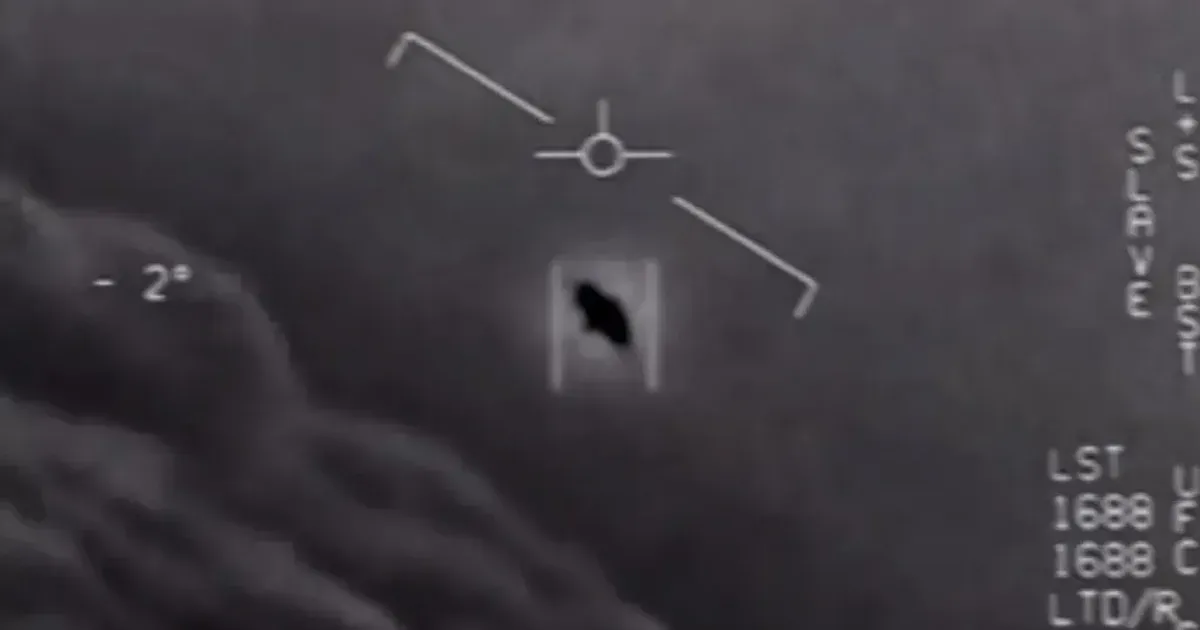
Defense Department officials unsealed the first major collection of declassified UFO dossiers in decades after years of mounting pressure from legislative committees and the public. The rolling release schedule began on Friday, May 8, 2026, with records previously held under strict security protocols at the highest levels of military intelligence. This initial tranche covers reported sightings of unidentified flying objects dating back to the late 1940s when postwar aerial surveillance became a national security priority. Many files detail encounters reported by military pilots during training exercises or combat patrols, providing a raw look at what the government now categorizes as unidentified anomalous phenomena. The release will attract both historians and UFO researchers, but the evidentiary standards are different. Cold War files can clarify surveillance programs without proving every popular claim attached to them.
President Trump issued the formal order for these disclosures in February 2026, directing the Department of Defense to organize and release findings that would allow citizens to make up their own minds. Critics within the capital quickly described the timing as a potential political distraction intended to shift focus from domestic policy debates. No specific evidence of extraterrestrial biology appears in this first batch of records, though the documentation of unexplained maneuvers and speed profiles remains extensive. Several hundred pages of testimony from naval aviators describe objects that appeared to move without traditional propulsion systems.
Historical Sightings and Apollo 11 Disclosures
Logs within the release offer an unexpected glimpse into the internal transcripts of famous lunar and deep-space missions. Records from the 1969 Apollo 11 mission contain specific mentions of anomalous sightings by the crew as they traveled toward the moon. Buzz Aldrin provided descriptions of unusual objects witnessed during the flight, prompting inquiries from ground control that were not fully explained in previous public versions of the mission logs.
Buzz Aldrin describes unusual things he saw on the Apollo 11 mission in newly released documents, providing context for sightings that have long fanned speculation.
NASA pilots frequently encountered objects that defied the immediate categorization of that era, particularly during the transition from terrestrial atmospheres to lunar orbits. Investigators at the time struggled to reconcile these visual accounts with the radar data available to ground control systems in Houston. Files confirm that such sightings persisted throughout the Cold War and into the modern age of digital sensor arrays. Reports from the late 1940s suggest that military surveillance focused heavily on potential Soviet aeronautical breakthroughs that might have explained these anomalies.
Defense Department records indicate a pattern of visual sightings that often lacked corresponding electronic signatures.
Archive Limits
Archives unsealed on Friday show that sightings in the Pacific theater and over strategic domestic facilities prompted high-level inquiries by the Air Force. These inquiries often ended without a definitive physical explanation for the reported maneuvers, leaving the cases open for decades. The declassification process forced the Pentagon to digitize handwritten notes and analog radar captures to preserve the integrity of the original reports.
Strategic Rolling Releases and Policy Shifts
Pentagon administrators confirmed the department will continue to share information about unidentified anomalous phenomena on a rolling basis. Security experts view this move as a major shift in how the military handles UAP data, moving away from a policy of reflexive secrecy. Transparency advocates have long campaigned for the removal of barriers surrounding historical sightings, particularly those involving commercial flight paths or civilian population centers. Legislative pressure from both sides of the political aisle eventually forced a reconsideration of the classification status of these ancient archives.
Public interest surged throughout the early 2020s, leading to the creation of formal reporting structures within the government to track current encounters. Officials maintain that national security concerns dictated the original decision to withhold certain sensor data during the height of the Cold War. The timing, however, remains a point of contention among Washington analysts who question the sudden shift in transparency protocols.
Future batches are expected to cover more recent sightings from the drone era.
Technical data from modern infrared cameras and radar systems stayed classified in this Friday release to protect current military capabilities. Defense analysts suggest the upcoming tranches might include more refined imagery from naval aviators operating in training ranges off the Atlantic coast. While some critics argue the release is incomplete, the volume of data provides a new baseline for civilian researchers and aerospace engineers seeking to understand these unexplained events.
The Pentagon Is Trading Historical Secrecy for Controlled Transparency
Cold War intelligence gathering often prioritized the unknown as a proxy for enemy innovation. The declassification of these dossiers suggests a recognition that the old framework of total secrecy may be more harmful to national security than transparency itself. By releasing data from the 1940s and the Apollo 11 mission, the Pentagon is effectively crowdsourcing the analysis of phenomena that its own investigators could not solve over an eighty-year period. This strategy shifts the burden of proof from the state to the scientific community, potentially defusing conspiracy theories that have flourished in the absence of primary documents.
Integration of historical visual reports with modern sensor signatures could reveal patterns previously invisible to siloed intelligence agencies. Surveillance technology has evolved to a point where historical anomalies can be re-evaluated through the lens of modern atmospheric physics and drone signatures. The Defense Department appears to be betting that a controlled release of old data will provide enough public satisfaction to protect the secrecy of current sensitive technologies. The transparency initiative functions as a strategic release valve for public pressure while maintaining a hard line on the classification of 21st century hardware. The result is a calculated balance between historical accountability and the protection of modern defense capabilities.