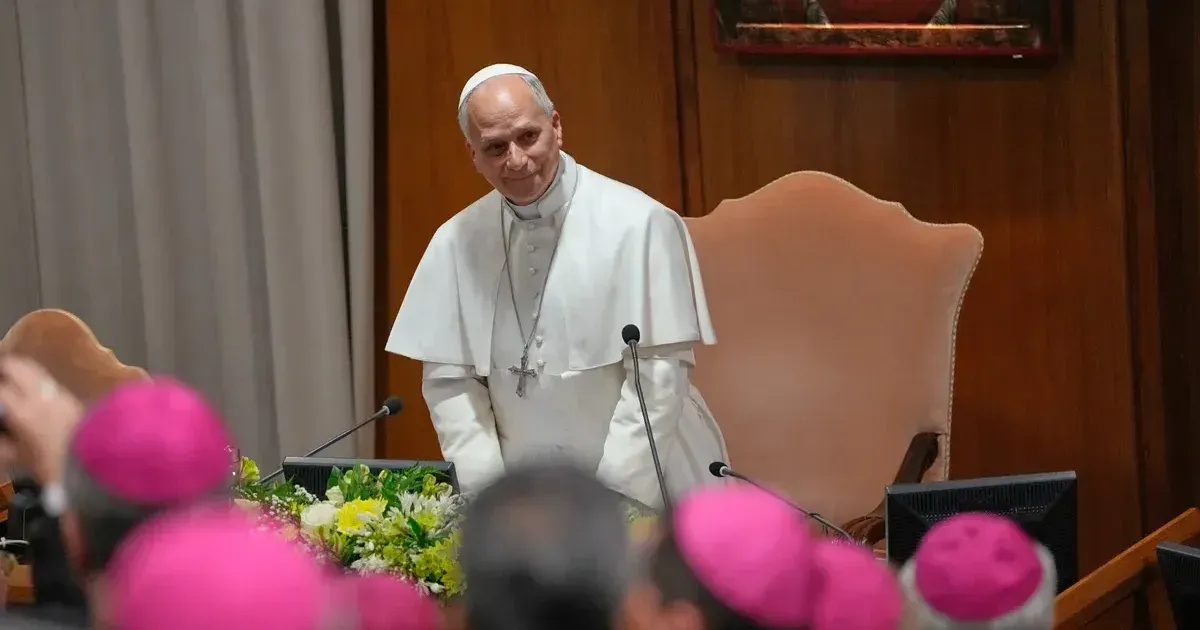
Vatican City officials released a major papal document addressing the rapid expansion of machine learning and its impact on global society. The Vatican document treats artificial intelligence as a moral test for institutions, not only a technical upgrade. Its language also gives bishops, schools and policymakers a framework they can cite as AI systems spread. This encyclical, titled Magnifica Humanitas, was made public on May 25, 2026. It marks the first time a sitting pontiff has dedicated an entire teaching document to the risks of Silicon Valley business models and the erosion of human dignity through automation.
Pope Leo argues in the 180-page text that algorithmic decision-making threatens the foundational rights of workers and the stability of democratic institutions. Unlike previous pastoral letters, this document provides a specific critique of data harvesting and the commodification of personal experience. It emphasizes that technological progress is not synonymous with human advancement. Ethical frameworks must be embedded into the development cycle of every new system rather than added as a superficial afterthought.
Economic structures face heavy pressure from generative systems that replace entry-level labor. The Pope notes that the pursuit of efficiency often ignores the psychological and spiritual needs of the individual. He calls for a global treaty to regulate the development of lethal autonomous weapons and the use of machine learning in mass surveillance. These systems, the document argues, can consolidate power in the hands of a few tech giants at the expense of local communities and sovereign nations.
The development of artificial intelligence must remain at the service of the human person and the common good of our global family, the document states.
Economic Disruption and Artificial Intelligence
Social cohesion is a primary concern addressed in the text. Digital platforms often amplify polarization through algorithmic curation, a process Pope Leo describes as a threat to the search for objective truth. By prioritizing user engagement over accuracy, these systems undermine the shared reality necessary for functional governance. The Vatican advocates for a return to human-centric design that rewards transparency and encourages genuine interpersonal connection.
Vatican leadership has previously engaged with tech firms through the Rome Call for AI Ethics. That earlier initiative sought voluntary commitments from companies like Microsoft and IBM. This new encyclical moves beyond voluntary ethics to demand legislative action from sovereign nations. National governments should establish clear boundaries for the use of biometric data and predictive policing to prevent the creation of a permanent underclass defined by proprietary data sets.
The document highlights a growing disparity between the tech-rich North and the tech-poor South. Silicon Valley executives have faced increasing scrutiny from religious and secular leaders regarding the environmental cost of large data centers. Papal guidance suggests that the current trajectory of AI development favors a small group of shareholders over the collective needs of humanity. It demands transparency in how training data is sourced and processed to ensure creators are fairly compensated for their intellectual property.
Political Stability and Global AI Policy
Political processes are vulnerable to deepfakes and automated misinformation campaigns. Pope Leo warns that the loss of trust in digital communication could lead to the collapse of civil discussion. He advocates for a human-in-the-loop requirement for all high-stakes decisions involving health, law, and credit. That rule would ensure that a moral actor is responsible for the consequences of a machine's output. Automation should assist human judgment, not replace it.
Labor markets are expected to shift as automation penetrates white-collar professions. Church officials suggest that universal basic income or similar social safety nets may become necessary as the demand for human labor fluctuates. Worker safety and dignity must take precedence over the rapid scaling of software services. Research into AI safety must prioritize the prevention of existential risks while the document acknowledges the potential for technology to solve medical and environmental crises.
Vatican leaders intend to use Magnifica Humanitas as a plan for future negotiations on international AI governance. It seeks a balance between technological sovereignty and global cooperation. Religious leaders from other traditions have expressed support for the general principles outlined in the text, agreeing that the moral implications of machine learning go beyond theological boundaries. A unified front against the dehumanization of technology is the primary goal of this intervention.
Vatican Demands Turn AI Ethics Into a Regulatory Fight
Rome's intervention marks a shift from moral suggestion to specific policy demands. By addressing Big Tech directly, Pope Leo is positioning the Catholic Church as a central arbiter in the debate over technological regulation. Pressure from the Vatican leverages a large global footprint to influence voters in regions where tech regulation is still in its infancy. The moral weight could force a reassessment of corporate priorities in boardrooms across the world.
Policymakers in the European Union and the United States will likely use the encyclical to strengthen existing efforts like the EU AI Act. The text provides a moral framework that can be used to justify stricter antitrust actions and data privacy laws. It creates a bridge between secular human rights and religious doctrine, making it harder for tech firms to frame regulation as a purely economic burden. Focusing on algorithmic ethics provides a common language for regulators and engineers to discuss the impact of their work.
Global policy shifts will likely follow as nations interpret these guidelines within their own legal frameworks. Silicon Valley may find it increasingly difficult to dismiss ethical concerns as red tape when they are presented as fundamental threats to human dignity. The document will stay at the center of the debate for years to come.