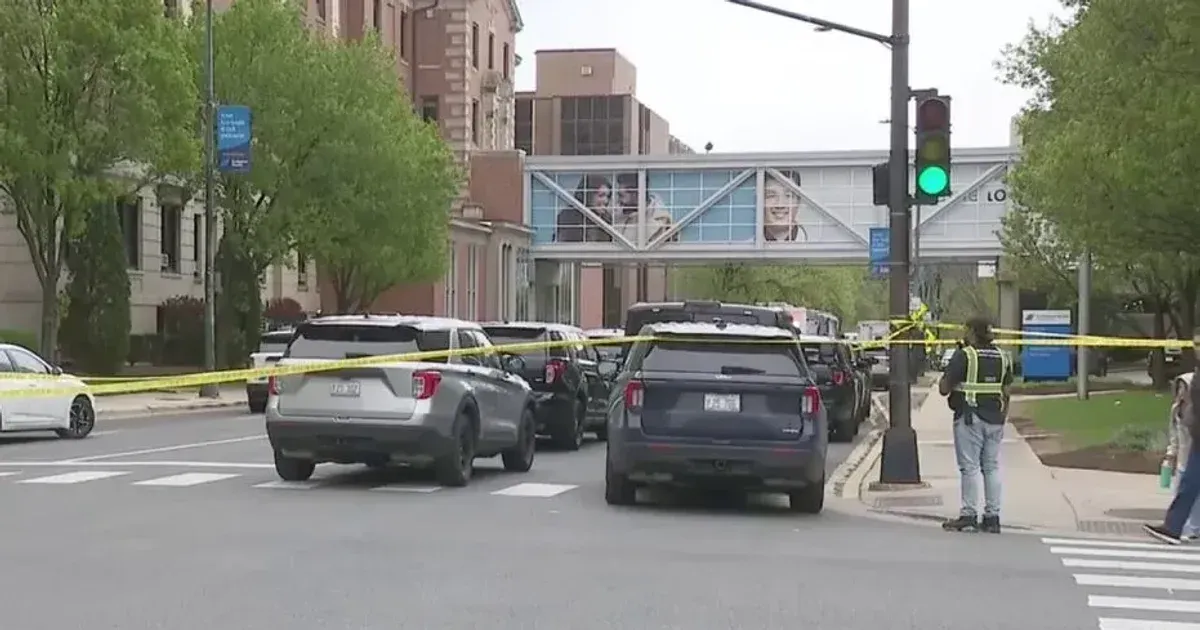
A hospital custody transfer in Chicago turned into a gunfire emergency that exposed the fragility of medical security protocols. The shooting left officers wounded inside a facility built for treatment rather than tactical containment. Swedish Hospital became the site of a violent encounter on April 25, 2026, when a prisoner undergoing medical treatment opened fire on two law enforcement officers. Gunfire erupted within the emergency department of the North Side facility, leaving one officer in critical condition and a second officer injured. Officials confirmed the suspect was in police custody at the time of the incident. Law enforcement sources indicate the gunman attempted to flee the building before being apprehended by responding units. The hospital review remains active.
Chaos replaced the morning routine of the medical staff at 9 a.m.
Security protocols failed to prevent the violence despite the suspect being wanded upon entry. A spokesperson for Endeavor Health stated that the individual arrived under constant law enforcement escort. Initial reports from Fox News suggest the prisoner managed to gain control of a weapon or had one concealed despite the detection screening. Questions about the efficacy of these public safety weapon detection protocols are now central to the investigation.
Security Protocols at Swedish Hospital Emergency Department
Endeavor Health maintains specific weapon detection procedures for all individuals entering the Swedish Hospital Emergency Department. These protocols include the use of electronic wands intended to identify metal objects and firearms. According to the hospital spokesperson, the suspect was wanded upon arrival as per standard procedure. This screening occurs at the threshold of the medical facility to ensure a safe environment for patients and healthcare providers.
Despite these measures, the suspect successfully discharged a firearm within the clinical area. The specific type of weapon and its origin stay under investigation by the Chicago Police Department. Hospital security teams work with local police to monitor high-risk individuals, yet this incident reveals a breach in the expected containment. Staff members reported a sudden escalation of force that occurred without warning during the prisoner's treatment.
"He was escorted by law enforcement at all times," the spokesperson said. "The individual later fired shots at the law enforcement officers and exited the hospital building."
No medical team members or patients sustained physical injuries during the shooting. This outcome is credited to the immediate reaction of the officers and the lockdown procedures initiated by the hospital staff. Patients in the emergency department were moved to secure locations while the gunman fled the building. The facility is still a focus of intense forensic investigation.
Law Enforcement Response and Prisoner Apprehension
Police units arrived within minutes of the initial distress call to secure the perimeter of the North Side campus. The suspect had already exited the main hospital building when additional officers converged on the scene. Tactical teams coordinated with hospital security to track the individual's movement across the parking facilities. Witnesses described a brief pursuit before the suspect was taken back into custody without further shots being fired.
Chicago Police Department officials have not yet released the identity of the shooter or the original charges for which he was being held. The prisoner was at the hospital specifically for medical care that could not be provided within a detention center. Such transfers are common in the municipal justice system but require strict adherence to security mandates. Investigators are now reviewing body camera footage to determine how the suspect gained access to a firearm.
Public safety remains a concern for the neighborhood surrounding the hospital. Patrols increased in the hours following the arrest to provide a visible presence for residents and staff. The suspect is currently held in a high-security wing of a separate facility. Evidence collection at the scene continued into the late afternoon.
Medical Transport Risks for Chicago Police Department
Custodial transports to civilian hospitals present unique challenges for the Chicago Police Department. Officers must balance the medical needs of the prisoner with the safety of the public and hospital staff. While most transports occur without incident, the proximity of a prisoner to the general public in an emergency room creates inherent risks. National data indicates that hospital-based shootings involving prisoners often occur during the transition between transport and treatment.
Standard operating procedures require at least two officers to accompany a high-risk prisoner during medical visits. Both officers involved in the April 25, 2026, shooting were performing these escort duties. The transition from a secure police vehicle to a clinical setting involves multiple handoffs and interactions with hospital personnel. Each point of contact is a potential vulnerability in the chain of custody.
One officer is still in critical condition at a nearby trauma center. The second officer sustained injuries that are reportedly non-life-threatening. Support services for the families of the wounded officers have been established through the police union. The department has not specified which hospital is providing care for the injured lawmen.
Conditions of Injured Officers at Endeavor Health Facility
Medical professionals are closely monitoring the officer who remains in critical condition. Surgical teams were mobilized immediately to address the gunshot wounds sustained during the struggle. The Chicago Police Department expects to provide a detailed briefing on the health of both members later this evening. Support from the local community has manifested in a heavy police presence at the hospital where the officers are being treated. Endeavor Health expressed deep compassion for the victims and their families. The hospital system is cooperating fully with the ongoing criminal investigation. Security at Swedish Hospital has been strengthened with additional armed personnel after the shooting. The emergency department resumed limited operations late Saturday.
Police recovered the weapon used in the attack near the hospital exit. Forensic analysts are tracing the firearm's serial number to determine its history. The suspect faces multiple counts of attempted murder of a police officer. Legal proceedings will start once the suspect is cleared by medical staff for transfer back to a jail facility.
Chicago Shooting Exposes a Broken Model for Prisoner Medical Care
Standard operating procedures for prisoner transport are functionally obsolete when they intersect with civilian healthcare infrastructure. The failure at Swedish Hospital demonstrates that electronic wanding and law enforcement escorts are insufficient when dealing with a determined or desperate individual in a high-stress clinical environment. Security theater cannot stop a desperate man. Healthcare facilities are designed for accessibility and healing, making them inherently soft targets for violence. When the state forces these institutions to double as temporary detention annexes, it effectively exports the volatility of the prison system into the civilian sector. The assumption that a simple metal detector wand provides a sufficient barrier against a custodial shooting is a dangerous fallacy that nearly cost two lives. Endeavor Health and the Chicago Police Department must acknowledge that the current model of integrated care for detainees is fundamentally broken.
Segregation is necessary. If the municipal government cannot provide secure, hardened medical facilities within its jail systems, it must invest in dedicated, separate wings at civilian hospitals that are physically isolated from the general public. Continuing to wheel shackled prisoners through the same hallways as expectant mothers and the elderly is an unacceptable risk. The blood on the emergency room floor is the price of bureaucratic inertia. Centralized containment is the only viable path forward.