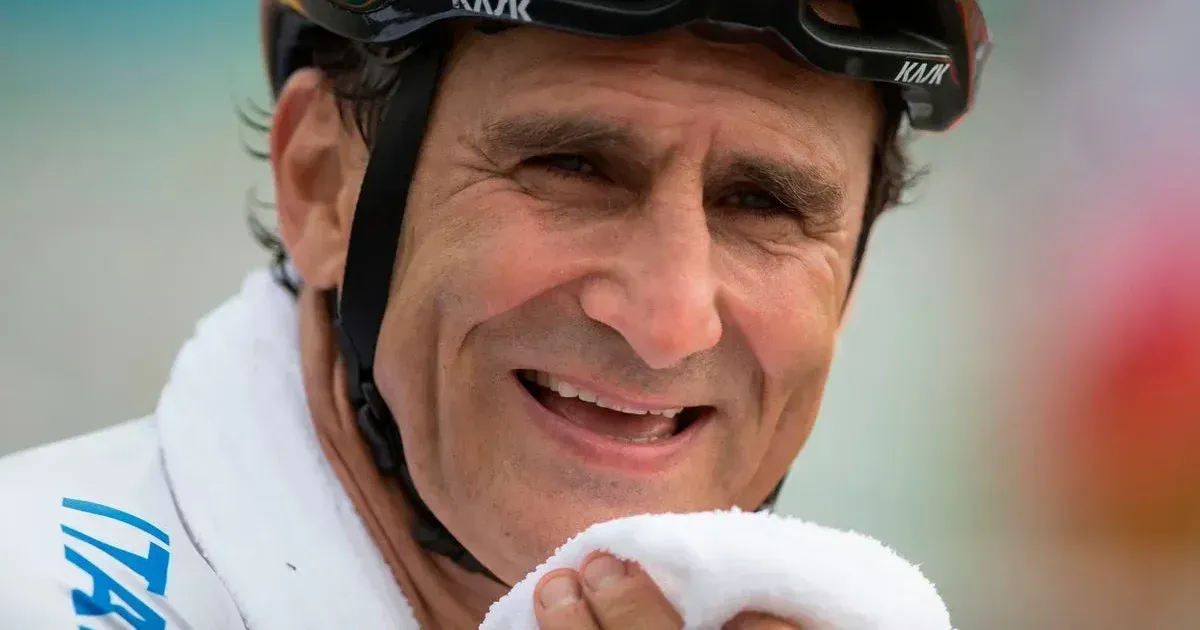
Alex Zanardi's death closes one of modern sport's most unusual comeback stories. Italian sports authorities confirmed the death of Alex Zanardi, the former Formula 1 driver and Paralympic champion, on Saturday. His family announced the death on May 2, 2026, saying he had died peacefully on Friday night, May 1. He was 59 years old. Many remember him first for his high-speed exploits in open-wheel racing, where he secured two consecutive CART titles during the late 1990s. His journey, however, took a decisive turn following a near-fatal accident that resulted in the loss of both legs.
Success in the United States defined his early legacy.
During his tenure with Chip Ganassi Racing, Zanardi became a household name for fans of North American open-wheel racing. He clinched championships in 1997 and 1998, famously performing celebratory donuts that became a signature of his victories. His return to Formula 1 in 1999 with Williams did not yield the same statistical results, yet his reputation as a fearless competitor stayed intact. Professionals in the paddock often cited his aggressive overtaking maneuvers and technical feedback as evidence of a premier talent.
A Second Career After Lausitzring
Life changed on September 15, 2001, at the Lausitzring circuit in Germany. While leading a race, Zanardi spun his car into the path of another vehicle traveling at nearly 200 miles per hour. The impact severed both of his legs and caused severe blood loss. Doctors at the scene performed emergency treatment that saved his life, though the recovery process required repeated surgeries and a long rehabilitation.
Survival alone seemed improbable given the severity of the trauma. Within two years of the crash, Zanardi returned to competitive driving in a specially modified BMW that used hand controls for acceleration and braking. This return to the cockpit demonstrated a drive that few in the industry expected. He eventually shifted his focus away from motorized vehicles toward the physical discipline of handcycling, a move that initiated his second phase of global athletic dominance.
"Alex Zanardi was a symbol of resilience for every Italian athlete," a spokesperson for the Italian Paralympic Committee stated in a preliminary tribute.
Handcycling offered a new path for his competitive energy. He entered the international para-cycling circuit in 2007 and quickly rose to the top of the rankings. His training regimen mirrored the intensity of his Formula 1 days, focusing on upper-body strength and endurance. This dedication led him to qualify for the London 2012 Paralympic Games, where he competed at the Brands Hatch motor racing circuit, a location where he had previously raced cars.
Results at the Games solidified his status as a multisport legend. Zanardi won two gold medals in London, including the individual H4 time trial. He repeated this performance four years later at the Rio 2016 Games, adding more hardware to a collection that eventually included four Paralympic golds and two silvers. These victories were more than athletic feats; they were events that drew huge television audiences in his home country. Italy watched as a man who nearly died in a racing car reached the pinnacle of a completely different sport.
Cultural shifts in Italy followed his rise as a Paralympic icon. Before his success, disability sports often received limited media coverage in the region. Zanardi used his platform to advocate for accessibility and to change how the general public viewed physical impairments. He frequently appeared on television to discuss the technological advancements in prosthetics and handcycles, making the equipment as much a point of interest as the athletes themselves. His presence helped normalize the sight of disabled individuals in high-performance environments.
Zanardi won his final Paralympic gold at the age of 49 in Rio de Janeiro.
A later handbike crash in Tuscany in 2020 brought another life-threatening setback, leaving him with severe facial and cranial injuries. That second accident shaped the final years of his life and became part of the reason tributes emphasized not only his medals, but also the repeated recoveries that defined his public image.
Zanardi Forced Italian Sport to Treat Para-Athletes as Elite Competitors
Few athletes bridge the gap between high-octane combustion engines and pure human power as effectively as the Italian driver. His career trajectory provides a clear look at how professional sports evolved to incorporate para-athletics into the mainstream consciousness. By achieving elite status in both Formula 1 and the Paralympics, he challenged the traditional hierarchy that often placed disabled sports in a secondary category. The influence extended beyond the track, affecting how sponsors and media outlets valued athletes with physical differences.
The economic impact of his transition was visible through the brands that followed him from the racing paddock to the cycling oval. Companies that once marketed motor oil and tires began promoting carbon-fiber handcycles and rehabilitation technology. The shift in commercial interest suggests that the market for adaptive sports equipment grew alongside his public profile. While his passing marks the end of an era, the infrastructure he helped build for Italian para-athletes remains a functional part of the national sports system. The integration of disabled athletes into major broadcasting schedules is a direct result of the curiosity and respect his individual journey commanded over three decades.