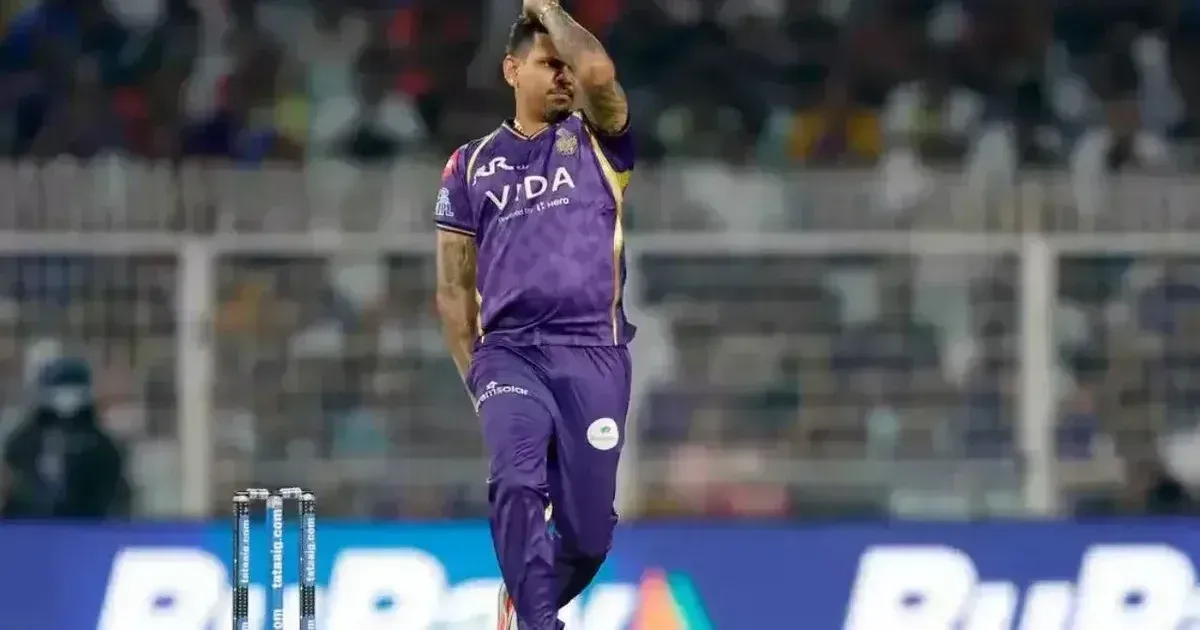
A rare field-obstruction call turned a cricket dismissal into a debate over judgment, intent and frustration. Angkrish Raghuvanshi’s reaction showed how quickly a technical ruling can overtake the match itself. The incident left Kolkata Knight Riders arguing over both the law and its application. For fans, the dismissal became the defining image of the contest. Angkrish Raghuvanshi walked back to the dressing room in a display of visible frustration on April 26, 2026, when a rare obstructing-the-field decision ended his innings against the Lucknow Super Giants. Match officials reached the verdict after a lengthy video review that suggested the young batsman intentionally altered his path to prevent a run-out. Tensions peaked immediately as Raghuvanshi, visibly stunned by the third umpire's ruling, struck his bat against the turf before exiting the field of play.
Such a dismissal is one of the most infrequent occurrences in professional cricket, creating a firestorm of debate among fans and analysts at the stadium. Local spectators watched as the Kolkata dugout reacted with a mix of confusion and anger while the opposition celebrated a technical victory.
Kolkata Knight Riders Face Setback Against Lucknow Super Giants
Events unfolded during a critical middle-over phase where the Kolkata Knight Riders attempted to stabilize their run rate against a disciplined Lucknow bowling attack. Raghuvanshi, who had been timing the ball with precision, played a delivery toward the inner ring and hesitated before committing to a single. Lucknow fielders moved with predatory speed, forcing the batsman to scramble back toward the safety of the crease. Replays indicated that Raghuvanshi appeared to shift his running line, placing his body or his equipment in the direct path of the incoming throw. Lucknow captain and bowlers appealed with immediate intensity, sensing a breach of the standard protocols governing player movement on the pitch.
Umpiring crews consulted the television official to determine if the movement was a natural attempt to reach the crease or a deliberate effort to shield the wickets. Law thirty-seven of the Marylebone Cricket Club (MCC) governs these specific interactions, stating that a batsman can be given out if they willfully obstruct the opposition by word or action. Modern cameras provide multiple angles that make it difficult for players to mask their intentions when deviating from a straight line. This technical scrutiny often leads to prolonged delays, though the decision in this instance was finalized within three minutes of the initial appeal. Raghuvanshi remained at the edge of the square, clutching his bat as the red lights flashed on the scoreboard.
Technical Violations and MCC Law Thirty-Seven Interpretations
Obstructing the field remains a high-threshold call because officials must distinguish between instinctive self-preservation and calculated interference. Critics often argue that a batsman running at full speed cannot always control their momentum when a ball is hurled toward them at high velocity. Match referees, however, look for specific cues such as looking back at the fielder or changing direction just as the ball is released. Raghuvanshi’s head turned toward the fielder twice during his sprint, a detail that likely influenced the third umpire's final judgment. The decision left the Kolkata batting lineup vulnerable during a period when they needed established players to maintain the strike.
Match reports described Raghuvanshi’s obstructing-the-field dismissal during the Kolkata Knight Riders match against Lucknow Super Giants as one of the IPL season’s most controversial moments.
Legal experts in sports regulation note that the burden of proof lies on the visual evidence showing a clear intent to disturb the play. Unlike a standard bowled or caught dismissal, obstructing the field carries a certain social stigma within the sport, often linked to the nebulous concept of the spirit of the game. Professional cricketers are trained to protect their wicket, but the line between protection and obstruction is frequently blurred in the heat of competition. Raghuvanshi’s reaction suggested he believed his movements were part of a natural sliding motion into the crease. The officiating crew disagreed, citing the lateral movement across the pitch as the primary cause for the wicket.
Raghuvanshi Joins Short List of Disciplined IPL Batsmen
Statistics reveal that Raghuvanshi is now only the fourth player in the nearly two-decade history of the league to be dismissed in this fashion. Yusuf Pathan was the first to enter this unwanted group in 2013, setting a precedent that shocked many veteran observers of the game. Pathan’s dismissal involved a foot movement that diverted the ball, a clear-cut case that left little room for interpretive error. Amit Mishra added his name to the list in 2019, highlighting that even bowlers who bat lower in the order are not immune to the complexities of the obstruction rule. These incidents are so rare that they often become the primary talking point of an entire season, overshadowing individual centuries or hat-tricks.
Ravindra Jadeja became the third player to suffer this fate in 2024, an event that sparked similar debates about the consistency of the third umpire's powers. Jadeja’s case was particularly scrutinized because of his reputation as one of the fastest and most aware runners between the wickets. Every instance on this list involves a high-pressure scenario where a single run could alter the trajectory of a playoff race or a championship standing. Raghuvanshi’s addition to this group at such a young age places him in the company of some of the most famous names in Indian cricket. It also ensures that his running technique will be under the microscope for the remainder of his professional career.
Legacy of Conflict Between Players and Match Officials
Player conduct after a dismissal is frequently monitored by the match referee to ensure that the game does not descend into open hostility. Raghuvanshi’s act of smashing his bat could result in a fine or a formal warning depending on the severity of the damage and the proximity to other players. Officials generally tolerate a brief moment of frustration, but physical outbursts that target equipment or the ground itself often trigger disciplinary hearings. The Kolkata management team will likely have to address this behavior in the post-match briefing to prevent further sanctions against the squad. Discipline on the field is a core foundation of the league's brand, and officials are under pressure to maintain order.
Lucknow Super Giants secured the wicket and immediately used the momentum to stifle the remaining Kolkata batsmen through a series of tactical bowling changes. The psychological impact of a rare dismissal can be more damaging than the loss of the runs themselves, as it introduces a sense of injustice into the dugout. Teammates often find it difficult to refocus when they feel a colleague has been unfairly penalized by a technicality. Raghuvanshi’s departure forced a lower-order resurgence that never quite materialized, leaving the target within reach for the Lucknow openers. The final scorecard will record the dismissal as a historical footnote, but the emotional scars from the incident may persist for several matches.
Video Forensics Turned a Natural Running Motion Into Intent
Raghuvanshi's dismissal is not a failure of sportsmanship but a failure of the current technological framework to account for human physics. Umpiring at the elite level has become an exercise in forensic video analysis where natural athletic instincts are treated as criminal intent. When a batsman is sprinting for his professional life, his path is dictated by balance and the angle of his slide, not a conspiratorial plot to block a leather ball. This ruling punishes the athlete for the very speed and agility that the league spends millions to market to a global audience. The third umpire functioned as a prosecutor rather than a neutral arbiter in this instance.
Sanitizing the game through rigid adherence to Law thirty-seven ignores the chaotic reality of high-stakes competition. If the IPL continues to reward fielders for baiting these technicalities, it risks turning a physical contest into a litigious stalemate. Raghuvanshi's smashed bat was the only honest moment in a sequence defined by clinical over-officiating. Fans do not pay for tickets to watch a man in a booth zoom in on a running stride; they pay for the raw emotion that the league seems determined to legislate out of existence. The ruling was technically correct and fundamentally wrong. Cricket loses its soul when the rulebook outweighs the reality of the pitch.