Assam’s campaign has turned sharply personal and legalistic.
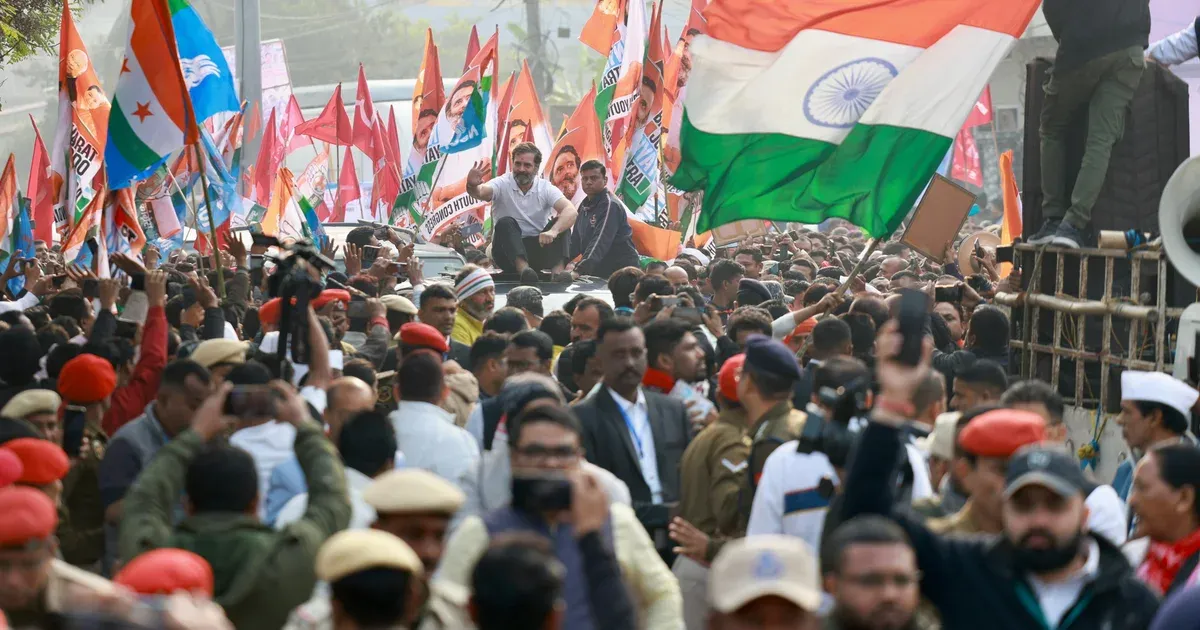
The Congress message is built around accountability and identity politics. Rahul Gandhi arrived in the Brahmaputra Valley on April 5, 2026, to deliver a scathing indictment of Chief Minister Himanta Biswa Sarma. Speaking before a densely packed crowd in Guwahati, the Congress leader characterized the state's leadership as a regime defined by financial impropriety and social division. Gandhi focused his rhetoric on the personal conduct of Sarma, whom he described as a designer of communal friction in a region known for its delicate ethnic mix. Witnesses at the event reported a heightened security presence as the Congress leader outlined a legal path for prosecuting the sitting Chief Minister. Lawsuits and investigations, Gandhi suggested, would follow a change in the state administration.
Corruption allegations took center stage during the hour-long address. Gandhi explicitly labeled his opponent as a figure who prioritizes personal enrichment over the welfare of the Assamese populace. Political observers note that such direct legal threats are becoming more common in Indian state elections. Gandhi appeared to be attempting to dismantle the populist image Sarma has cultivated through years of infrastructure projects and cultural outreach. Tension between the two leaders has existed for a decade, but the current tone suggests a refusal to engage in traditional political compromise. Legal teams from the Congress party reportedly began drafting dossiers on state contracts and land deals last month.
I am telling you, we will ensure that the most corrupt and hate-spreading CM in India faces the consequences of his actions behind bars.
Rahul Gandhi issued this statement while standing on a makeshift wooden platform overlooking thousands of supporters. Supporters cheered as he transitioned from legal threats to specific economic interventions. Financial assistance for women and wage increases for agricultural laborers formed the core of his alternative vision for the state. Congress officials believe these bread-and-butter issues can outweigh the cultural appeals used by the incumbent Bharatiya Janata Party (BJP). Internal polling suggests that economic anxiety remains high among the rural poor despite state-sponsored development statistics. Gandhi spent meaningful time detailing a plan for monthly cash transfers to female heads of households.
Gandhi Targets Sarma Directly
Assam voters are currently weighing these accusations against the visible presence of infrastructure development led by the BJP. Rahul Gandhi promised to grant Scheduled Caste (SC) and Scheduled Tribe (ST) status to six communities that have sought this designation for decades. These groups, including the Koch-Rajbongshi and the Tea Tribes, represent a huge electoral bloc in the northern districts. Previous administrations have struggled to balance these demands with the concerns of existing tribal groups who fear a dilution of their benefits. Gandhi argued that his party possesses the administrative will to navigate these bureaucratic hurdles. He also pledged a significant increase in the daily wages for tea plantation workers.
Laborers in the tea sector, numbering approximately 1.2 million, have long been a focal point of Assamese labor politics. Current daily rates have failed to keep pace with the rising costs of essential commodities. Congress leaders proposed a new minimum wage floor that would exceed the current state-mandated rates. This focus on the plantation economy aims to reclaim a demographic that shifted toward the BJP in recent election cycles. Sarma, however, has countered these promises by highlighting his own government's direct benefit transfer schemes. Political competition for the loyalty of the tea tribes often decides the outcome in nearly 40 assembly seats. Financial stability for these workers is a primary campaign pillar.
Financial transfers for women also occupy a central place in the Congress manifesto. Gandhi promised a monthly stipend intended to reduce the impact of inflation on household budgets. Supporters view this as a necessary safety net, while critics describe it as an unsustainable populist measure. Economists in the region are divided on how the state budget would accommodate such large-scale recurring expenditures. Gandhi insisted that closing loopholes in the current administration's spending would provide the necessary funds. He concluded this segment of his speech by emphasizing the dignity of the female workforce in Assam's rural economy.
Congress Builds a Welfare Pitch
Cultural flashpoints continue to spark across the state as polling dates approach. Chief Minister Himanta Biswa Sarma intensified his criticism of Kunki Choudhury, a Gen Z candidate for the opposition, following a dispute over dietary practices. Controversy erupted when social media posts regarding the consumption of beef began circulating among voters in Guwahati. Sarma used a rally in the city to frame the issue as a choice between traditional Assamese values and what he termed a disruptive modern ideology. Backlash against Choudhury was immediate, leading to protests outside her campaign office on Friday. The candidate has maintained that the attacks are a diversionary tactic designed to avoid discussing unemployment.
Younger voters are watching the Kunki Choudhury situation with particular interest. Choudhury is a new generation of political aspirants who prioritize individual rights and secularism. Her supporters argue that the Chief Minister is weaponizing cultural food habits to alienate minority voters and consolidate his base. Sarma has not backed down, repeatedly bringing up the beef row in his public addresses. Such rhetoric often leads to polarized neighborhoods in urban centers like Guwahati. Local police units have increased patrols in sensitive areas to prevent the heated rhetoric from devolving into physical altercations. The Gen Z candidate continues to hold town hall meetings despite the hostile environment.
Sarma chose to respond with a public dance.
Performing at a rally in Bongaigaon, the Chief Minister demonstrated his mastery of populist theater. He danced to a series of campaign songs produced specifically for this election cycle. Party workers wrote and composed the tracks to convey a vision of protection and development. Supporters in Bongaigaon responded with enthusiasm, joining the Chief Minister in the rhythmic celebration. This performative style of campaigning is a hallmark of Sarma's political identity. He uses music and dance to create a sense of accessibility that contrasts with the more formal approach of national leaders like Gandhi. The BJP's outreach strategy relies heavily on these emotional connections with the electorate.
Cultural Attacks Shape the Campaign
Bongaigaon was the backdrop for this display of political confidence. Sarma released three theme songs that focus on the theme of Assamese pride and the defense of indigenous rights. Legislative successes and road construction projects are woven into the lyrics of these compositions. Musicians involved in the project stated that the goal was to make the BJP's manifesto more digestible for a broad audience. Sarma believes that these cultural artifacts help bridge the gap between the government and the governed. Critics dismiss the music as a distraction from the serious allegations of corruption leveled by the Congress party. Nevertheless, the songs have gone viral on mobile messaging platforms throughout the state.
Development narratives remain the primary counter-argument to Gandhi's accusations. Sarma points to the expansion of medical colleges and bridges across the Brahmaputra as evidence of his effectiveness. Supporters in Bongaigaon cited the improvement in rural electrification as a reason for their continued loyalty. The Chief Minister often reminds voters that stability is a requirement for the progress they see around them. He frames the Congress party as a force of instability that would return the state to an era of ethnic insurgency and stagnant growth. Many voters appear to prioritize this real progress over the ethical concerns raised by the opposition. The physical transformation of the state's infrastructure is difficult for critics to ignore.
Election day will determine which of these two strategies connected more effectively with the 24 million eligible voters. Congress is betting on a combination of legal accountability and economic relief. The BJP is doubling down on cultural identity and visible infrastructure milestones. Polling booths will open across the state in three phases starting next month. Security forces have already begun conducting flag marches in the hill districts to ensure a peaceful voting process. Candidates from both sides are scheduled to continue their marathon of rallies until the mandatory silence period begins. Assam remains at the center of the national political conversation as these two heavyweights clash for control.