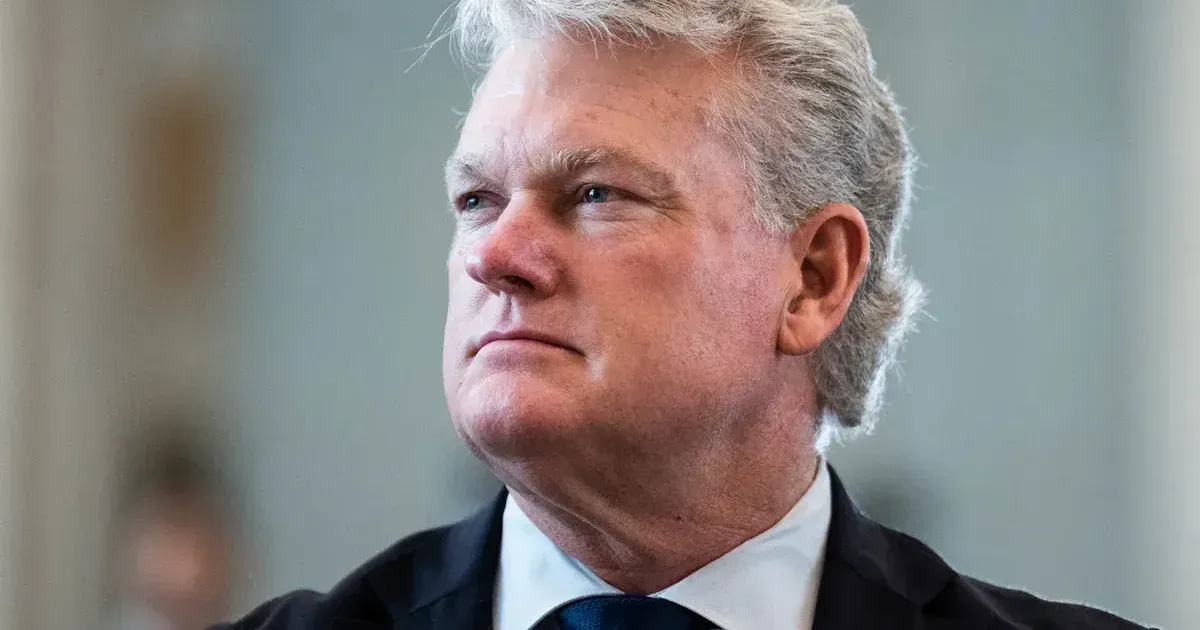
Rep. Mike Collins secured the Republican nomination for the United States Senate in a high-stakes runoff election. The race quickly became a test of whether Georgia Republicans wanted a combative House figure or a nominee with broader general-election appeal. National party officials also watched turnout patterns for signs of how motivated conservatives remain after a long primary calendar. Most projections finalized on June 17, 2026, confirmed his victory over a crowded field of primary challengers who sought to capture the conservative base in a critical swing state. This win positions Mike Collins as the Republican challenger to Democratic Senator Jon Ossoff in a race that could determine which party controls the upper chamber of Congress.
Voters across the state participated in the runoff after no candidate secured a majority in the initial primary. Republican national strategists viewed the contest as an essential step toward reclaiming a majority in Washington, focusing on the state as a top priority for the 2026 midterm cycle. Decision desks at NBC News and CBS News projected Collins as the winner shortly after polls closed and the initial wave of rural ballots arrived.
Georgia remains a competitive testing ground for party loyalty.
Donald Trump issued a late endorsement for the representative, providing a boost to his campaign in the final days of the runoff. Mike Collins leaned into his credentials as a reliable conservative while simultaneously broadening his appeal to suburban voters who have recently drifted away from the party. Analysts observed that the endorsement served to solidify the base without alienating the broader electorate needed for a general election victory.
Collins Bridges MAGA and Moderate Factions
Campaigning as a candidate who can unite disparate wings of the party, Collins emphasized his alignment with the populist movement while maintaining ties to traditional business interests. Success in the runoff suggests that his messaging connected with a coalition of voters seeking a candidate capable of defeating an incumbent Democrat. Primary rivals had attempted to paint Collins as either too moderate or too aligned with the establishment, yet those attacks failed to gain sufficient traction with the electorate.
The New York Times reported that Trump made a late endorsement for Collins, who campaigned as a MAGA candidate with an argument that he could still reach moderates.
National Republicans are now turning their attention to the structural challenges of unseating an incumbent who has proven to be a powerful fundraiser. Jon Ossoff maintains a substantial cash reserve, and his campaign has already begun framing the choice as one between steady leadership and a shift toward partisan gridlock. Polling suggests that the general election will be decided by narrow margins in the suburbs of Atlanta.
Voters delivered a subtle verdict on the influence of Donald Trump during this election cycle.
While Collins benefited from the president's backing, the gubernatorial runoff told a different story. In an upset, Georgia Republican voters rejected the preferred nominee for the open governor's race, according to NPR News. This divergence suggests that while the endorsement carries weight in federal legislative contests, it does not guarantee success across the entire statewide ticket. The split results indicate a sophisticated electorate that evaluates candidates on an individual basis rather than following a singular endorsement slate.
Georgia Control and the National Senate Balance
Control of the United States Senate likely hinges on the outcome of the battle between Collins and Ossoff this November. Georgia has seen several cycles of intense spending and national attention, a trend that persists as both parties view the state as an indicator for national political trends. Republican leadership intends to focus on economic issues and border security, while Democrats are expected to emphasize social protections and infrastructure investment.
Incumbent Senator Ossoff has already initiated a series of advertisements highlighting his bipartisan work on technology and job creation. By contrast, the Collins campaign intends to link the incumbent to the national Democratic platform, which they argue is out of step with the average Georgian. Early turnout data from the runoff indicates high engagement levels, suggesting that the general election could see record participation from both sides of the aisle.
Strategy for the next five months involves intensive outreach to independent voters in the fast-growing northern suburbs. Republican strategists believe that a unified party, combined with a candidate who can speak to both MAGA supporters and moderates, is the most viable path to victory. The race will now enter a period of rapid consolidation as both campaigns prepare for a relentless summer of television advertising and grassroots mobilization.
What Collins Must Prove
Mike Collins’s victory may offer a lasting blueprint for Republican success in battleground states. Results in Georgia demonstrate that a late-stage endorsement from Donald Trump can still act as a catalyst for federal candidates, but the simultaneous loss of his preferred gubernatorial pick proves that the MAGA label is not a universal shield. The selective application of loyalty by voters forces candidates to build multidimensional platforms that go beyond a single endorsement.
Collins has successfully navigated the primary terrain by presenting himself as a bridge between the party’s populist energy and its traditional moderate wing. To defeat Ossoff, he must maintain this balance without pivoting so far toward the center that he dampens base enthusiasm. The Democratic incumbent faces his own challenge in justifying the current administration's record to an electorate that remains sensitive to inflationary pressures and shifting demographics. Georgia is no longer a state where either party can rely on historical trends. It is a persistent conflict zone where every vote requires a specific, data-driven argument. The runoff was merely the prologue to one of the most expensive and scrutinized Senate battles in American history.