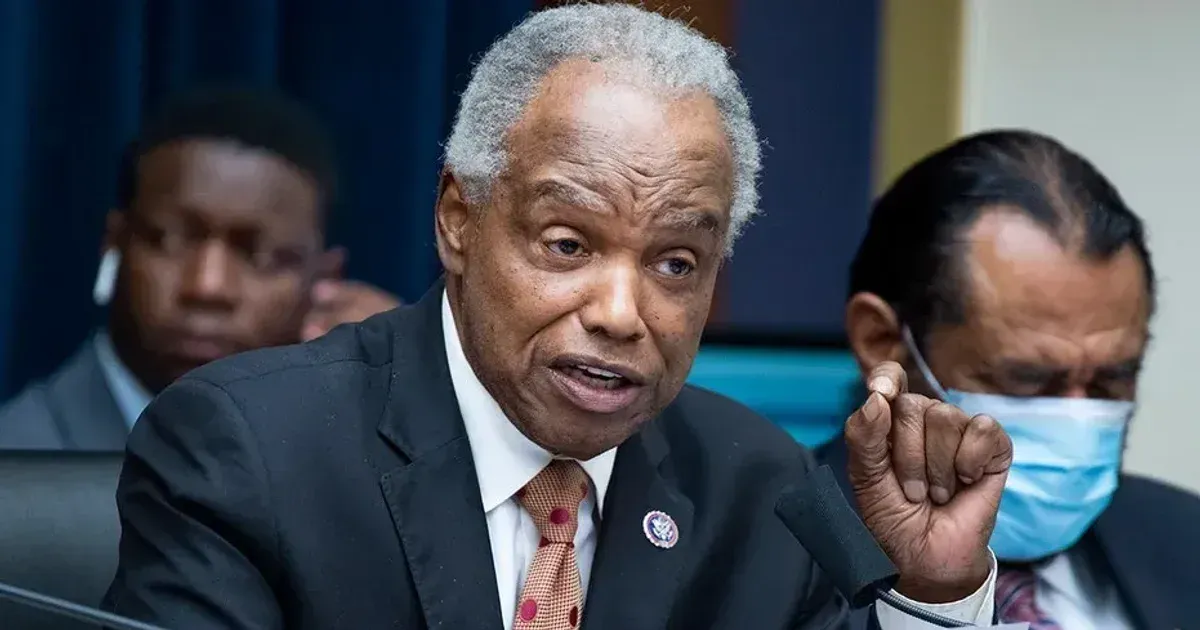
Representative David Scott’s death at 80 ends a half-century political career and creates another vacancy in a narrowly divided U.S. House. Representative David Scott of Georgia died on April 22, 2026, ending a legislative career that spanned more than half a century from the Georgia State Assembly to the United States House of Representatives. Scott, a leading Democrat who led the House Agriculture Committee, was 80. Multiple sources confirmed his passing on Wednesday afternoon, including high-ranking members of his own party and local officials in Atlanta. His office had previously faced questions regarding his declining health during the 119th Congress.
Representative Virginia Foxx, a North Carolina Republican, presided over the House of Representatives on Wednesday afternoon when she formally announced the death to the chamber. Foxx stated that the whole number of the House has adjusted to 430 following the loss of the Georgia statesman. Silent prayer followed the announcement, reflecting a brief moment of bipartisan acknowledgement in a frequently divided capital. Congressional records indicate Scott had served in the House since 2003, representing Georgia’s 13th district.
Congressional Leaders Announce Death of David Scott
Representative Gregory Meeks of New York first disclosed the news during a committee hearing earlier in the day. Other lawmakers quickly joined in offering tributes to a man who broke significant barriers in Southern politics. House Minority Leader Hakeem Jeffries described Scott as a trailblazer who represented his district with distinction. Jeffries noted the deep sadness felt across the Democratic caucus, where Scott was viewed as a stabilizing force in the moderate wing of the party. Scott held a senior position on the Financial Services Committee in addition to his agricultural leadership.
Angie Craig, the Ranking Member of the House Agriculture Committee, released a statement emphasizing Scott’s commitment to rural and urban farming interests. Craig highlighted his work for veterans and young people in the agricultural sector. She specifically pointed to his advocacy for the 1980s Scholarship Program, which provides funding for students at historically Black colleges and universities. Craig noted that the committee would remember his faith and dedication to American farmers.
“He was a strong voice for Georgia’s farmers, hungry veterans and young people, who he helped shape into the next generation of agricultural leaders through his fierce advocacy for the 1980s Scholarship Program at historically Black colleges and universities,” Angie Craig said.
Scott’s career began long before his arrival in Washington. He won election to the Georgia House of Representatives in 1974, serving there until 1982. He then spent twenty years in the Georgia State Senate, representing the 36th district. This long tenure in state politics provided him with a deep well of institutional knowledge that he brought to federal service. Scott was a member of the Blue Dog Coalition, a group of moderate Democrats focused on fiscal responsibility and centrist policy. His political identity remained rooted in the pragmatism of the New South. The loss of David Scott further complicates the legislative math for House Democrats in a narrowly divided chamber.
First Black Chair of House Agriculture Committee
History was made in 2020 when Scott became the first Black lawmaker to chair the House Agriculture Committee. This role gave him significant influence over the $1.5 trillion farm bill, a sweeping piece of legislation that governs everything from crop insurance to nutritional assistance programs. Scott used his platform to bridge the gap between large-scale industrial farmers and urban consumers who rely on the Supplemental Nutrition Assistance Program. He argued that food security was a matter of national security. Colleagues noted his ability to manage the competing interests of rural commodity groups and urban anti-hunger advocates.
Internal party dynamics, however, shifted as his health became a topic of public discussion. Some critics within the Democratic Party suggested that his physical condition hindered his ability to negotiate the complex details of the multi-year farm bill. These concerns persisted throughout the 2024 election cycle, yet Scott remained determined to seek a 13th term. He faced several primary challengers who argued that the 13th district needed more active representation in the halls of Congress. Jasmine Clark, a state representative, had become a powerful opponent, sharply outraising the incumbent in recent months.
Election Vacuum in Georgia Deep Blue District
Georgia Governor Brian Kemp now faces a 10-day window to call a special election to fill the vacancy in the 13th district. This suburban Atlanta seat is considered a Democratic stronghold, meaning the primary will likely determine the eventual successor. The district includes parts of Clayton, Cobb, Douglas, Fayette, Fulton, and Henry counties. Local political analysts expect a crowded field of candidates to emerge, given the rare opportunity of an open seat in a safe Democratic territory. Georgia election law requires the special election to occur within a specific timeframe to ensure the district does not remain unrepresented for long.
The current House math has become increasingly unstable for both parties. Scott’s death leaves the chamber with 218 Republicans and 212 Democrats. Five vacancies now define the chamber, complicating the path for any legislative agenda in a narrowly divided House. The Republican majority remains thin, but the reduction in Democratic votes impacts the ability of Minority Leader Jeffries to exert pressure on floor votes. Each vacancy increases the mathematical weight of individual members who may choose to defect from their party lines.
Historical Context of Five House Deaths
Deaths among sitting members of the 119th Congress have reached an unusual frequency. Scott is the fifth member to die since the current session began, following Doug LaMalfa of California, Raul Grijalva of Arizona, Sylvester Turner of Texas, and Gerry Connolly of Virginia. Such a sequence of losses has not been seen in recent decades, leading to discussions about the average age of the American legislature. Congressional scholars note that the seniority system often encourages members to stay in office well into their eighties to maintain committee chairmanships or ranking member status. The trend persists despite the physical demands of frequent travel and late-night voting sessions.
Legislative work on the farm bill will likely face delays as the Agriculture Committee reorganizes in Scott’s absence. While Angie Craig currently is the ranking member, the loss of Scott’s decades of experience in Georgia politics creates a void in Southern agricultural advocacy. The 13th district of Georgia has changed sharply since Scott first took office, transitioning from a more rural-suburban mix to a diverse, urbanized population center. Voters there will now decide whether to maintain the moderate tradition Scott established or move toward a more progressive legislative style. The special election will be the first major test of the post-Scott era in Atlanta politics.
Scott’s Death Deepens the Georgia Vacancy
Legislative longevity often masks the institutional decay that occurs when seniority outweighs physical capacity. The death of David Scott is more than a personal tragedy or a seat vacancy; it is an indictment of a political system that encourages octogenarians to cling to gavels until their final breath. Scott sat atop the Agriculture Committee while overseeing a $1.5 trillion farm bill, even as his own party members whispered about his inability to manage the grueling negotiation schedules. It is the price of a seniority-based promotion structure: it prioritizes time served over the essential energy required to govern a modern superpower.
Democratic leadership, led by Hakeem Jeffries, must confront the reality that their caucus is top-heavy with aging incumbents who block the ascent of younger, more dynamic leaders like Jasmine Clark. By shielding Scott from primary pressure and dismissing health concerns as ageism, the party hierarchy prioritized internal stability over the effective representation of the 13th district. Georgia is no longer the state it was in 2002, and the 13th district deserves a representative who can survive a committee hearing without a medical proxy. The 119th Congress is becoming a demographic graveyard. It is the ultimate proof that term limits are no longer a theory, but a biological necessity. Power should be a relay, not a marathon to the grave.