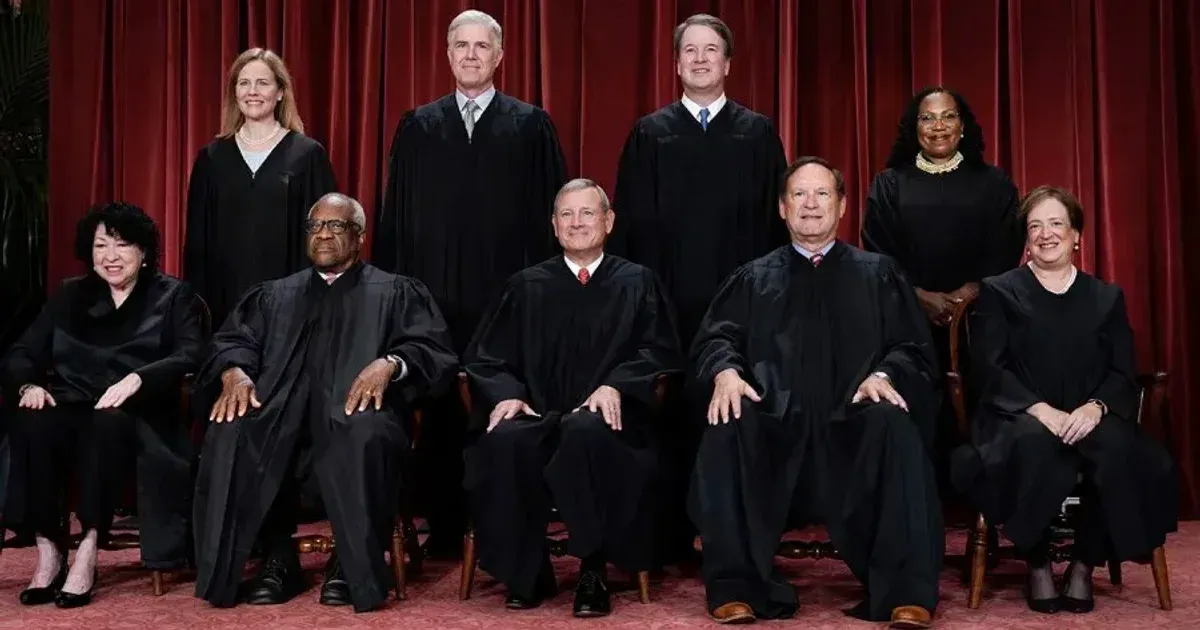
Trump’s attacks on conservative Supreme Court justices and the Wall Street Journal expose widening fractures between the White House and institutions on the political right. Donald Trump initiated a sharp digital campaign on April 22, 2026, targeting the ideological foundation of the Supreme Court and his own media critics. Truth Social posts published throughout the morning detailed his frustration with a series of judicial setbacks regarding birthright citizenship and international trade tariffs. Specific justices who were appointed during his administration faced direct accusations of incompetence and betrayal. Jurists on the highest court often face political pressure, but the scale of this rhetoric suggests a broadening rift between the executive vision and judicial interpretation.
Rulings regarding industrial tariffs became the primary catalyst for this latest confrontation. Legal experts noted that the court recently hindered the administration's ability to maintain high levies on imported goods without specific congressional approval. Donald Trump reacted by labeling these appointees as "weak, stupid, and bad" in their refusal to uphold his protectionist economic agenda. $11 billion in projected tariff revenue is now at risk due to these legislative hurdles. Judges who were expected to favor executive autonomy have instead prioritized a strict reading of the Commerce Clause.
Supreme Court Judicial Standards and Tariff Disputes
Constitutional scholars point to the 14th Amendment as the next major battleground between the president and the judiciary. Trump has long advocated for an executive order to terminate birthright citizenship for children of undocumented immigrants. Conservative justices expressed significant skepticism during oral arguments earlier this month, citing enduring precedents established in the late 19th century. Republicans often seek judicial restraint, yet the current administration demands a more activist approach to immigration reform. The court maintains a 6-3 conservative majority, but internal divisions on the bench are becoming more pronounced.
Liberal appointees consistently vote as a unified bloc on these constitutional questions. Conservative members, by contrast, frequently split along originalist and pragmatic lines. Trump lamented this lack of cohesion among his appointees, suggesting they do not "stick together" like their progressive counterparts. Records from the current term show that Justice Samuel Alito and Justice Clarence Thomas frequently find themselves in the minority on technical trade disputes. Legal observers at the Heritage Foundation suggest that the current friction stems from a disagreement over the limits of Article II powers. U.S. Customs and Border Protection data indicates that birthright citizenship remains a primary driver of migration patterns according to administration internal memos.
"Certain conservative justices on the Supreme Court have gone weak, stupid, and bad," wrote Donald Trump on his Truth Social platform while addressing recent legal setbacks.
Tariff policy remains a foundation of the populist platform. The administration argues that executive power should be absolute when addressing perceived imbalances in global trade. Domestic manufacturers in the Rust Belt have lobbied for the continuation of these protective measures despite judicial pushback. Steel production in Pennsylvania and Ohio increased by 4% following the initial implementation of the duties. This shift in the judicial mood could jeopardize those gains by allowing cheaper foreign products to flood the market.
Middle East Tensions and the Strait of Hormuz
National security strategy also faced scrutiny this week following a critical editorial from the Wall Street Journal. Editorial board members labeled the president a "sucker" for his handling of Iranian maritime aggression. Trump responded with a detailed defense of his military record in the Persian Gulf. Claims that the Iranian Navy has been effectively neutralized formed the core of his rebuttal. The Wall Street Journal editorial highlighted the continued partial closure of the Strait of Hormuz as evidence of a failed deterrence policy. Shipping insurance rates in the region have climbed 15% since the beginning of the year.
Military reports from the Pentagon suggest a more complex reality on the water. While the president claimed the Iranian Air Force and Navy are at the "bottom of the sea," recent satellite imagery shows active patrol craft near the Port of Bandar Abbas. Tehran continues to deploy asymmetric assets such as sea mines and fast-attack boats to harass commercial tankers. Energy markets remain volatile as traders weigh the possibility of a full blockade. Brent Crude prices fluctuated between $82 and $85 per barrel following the publication of the president's comments.
Global trade relies heavily on the stability of the Strait of Hormuz for oil transit. Roughly 20% of the world's daily petroleum liquid consumption passes through this narrow waterway. Trump maintains that his administration has done more to curb Iranian influence than any predecessor. Critics in the defense establishment argue that rhetorical victories do not equate to tactical control of the maritime lanes. Naval Command statistics show that 12 vessels were intercepted or harassed by Iranian forces in the last fiscal quarter. Total tonnage of intercepted cargo reached a three-year high in March.
Conservative Media Friction and the Wall Street Journal
Friction between the president and traditional conservative media outlets is reaching a historical peak. The Wall Street Journal editorial board has long championed a hawkish, interventionist foreign policy that clashes with the president's isolationist tendencies. These disagreements often center on the efficacy of economic sanctions versus military intervention. Trump argued that his critics in the media are "globalists" who do not understand the benefits of his transactional diplomacy. Readers of the Journal have traditionally represented the financial elite who favor predictable trade environments over volatile populist shifts.
This rhetoric serves to further isolate the president from the institutional wing of his own party. News outlets that once provided a reliable platform for the administration are now targets of public derision. Truth Social has become the primary mechanism for bypassing these traditional gatekeepers. The conflict highlights a fundamental disagreement over the future of the Republican Party's foreign policy doctrine. Voters in early primary states have shown a preference for the president's "America First" approach despite the concerns of the donor class. Recent polling suggests 62% of the base trusts the president's social media posts over traditional newspaper editorials.
Strategic analysts at the Brookings Institution observe that this infighting could have long-term consequences for the party's legislative agenda. Congressional leaders find themselves caught between the demands of the base and the critiques of the intellectual right. Support for the president among blue-collar workers continues to hold steady regardless of the judicial or editorial backlash. Every public dispute with the Supreme Court or the Wall Street Journal seems to solidify his standing among his most loyal supporters. Congress faces intense pressure to codify some of these executive actions before the next election cycle.
Economic policy remains the most volatile variable in this political equation. If the Supreme Court continues to strike down tariff orders, the administration may seek to declare a national emergency to bypass the judiciary. Such a move would trigger a constitutional crisis that could reshape the balance of power for decades. Legal scholars at Harvard Law School note that the International Emergency Economic Powers Act provides broad, but not unlimited, authority to the president. The Department of Commerce reported a 2% increase in the trade deficit last month.
Trump’s Attacks Deepen Conservative Friction
Donald Trump is engaged in a high-stakes gamble by attacking the very institutions intended to anchor his legacy. By castigating the Supreme Court justices he appointed, he is effectively admitting that his vetting process failed to produce the loyalists he envisioned. This is not a failure of the justices, but a failure of a president who expects the third branch of government to function as an extension of the executive. He is discovering that lifetime appointments grant a level of independence that cannot be revoked by a social media post. The Supreme Court is not a personal law firm, and treating it as such only serves to delegitimize the conservative legal movement in the eyes of the public.
The feud with the Wall Street Journal is equally revealing. It exposes the deep resentment Trump holds for any conservative entity that dares to demand tactical results over rhetorical bluster. Claiming the Iranian Navy is at the bottom of the sea while the Strait of Hormuz remains contested is a fantasy that no serious military analyst can support. If the administration cannot differentiate between a PR win and a strategic reality, the U.S. position in the Middle East will continue to erode. It is a presidency fueled by grievances, and when those grievances are turned inward on its own allies, the path to a coherent second term becomes increasingly narrow. A collision is coming.