Republicans in the United States Senate launched a procedural offensive on March 17 to force a floor vote on the SAVE America Act. Party leadership moved to advance the legislation despite acknowledging that they lack the 60 votes required to overcome a certain filibuster by Senate Democrats. Donald Trump and influential figures on the far right have maintained a steady stream of pressure on GOP lawmakers to bring the issue of election integrity to the forefront of the national discourse. Their primary objective involves creating a public record of opposition from the opposing party on a policy that maintains broad popularity across various demographics.

Proponents of the SAVE America Act argue that requiring a photo ID to cast a ballot is a common sense measure to protect the sanctity of the democratic process. Internal memos circulated within the Republican caucus suggest that the timing of this vote is intended to maximize political use before the upcoming election cycle. Senate Minority Leader Mitch McConnell indicated that while the math for passage remains difficult, the act of voting itself serves a clarifying purpose for the electorate. Republican strategists believe that forcing a debate on this specific provision will highlight a disconnect between congressional leadership and the average voter.

SAVE America Act Legislative Strategy

Proponents of the measure claim that existing federal laws are insufficient to prevent non-citizens from registering to vote. Critics within the Democratic caucus argue that the legislation targets a problem that does not exist in any statistically significant capacity. But the text of the bill specifically mandates that states must require proof of citizenship during the registration process. This requirement would overhaul the 1993 National Voter Registration Act, commonly known as the Motor Voter law, which allows applicants to register by simply attesting to their citizenship under penalty of perjury.

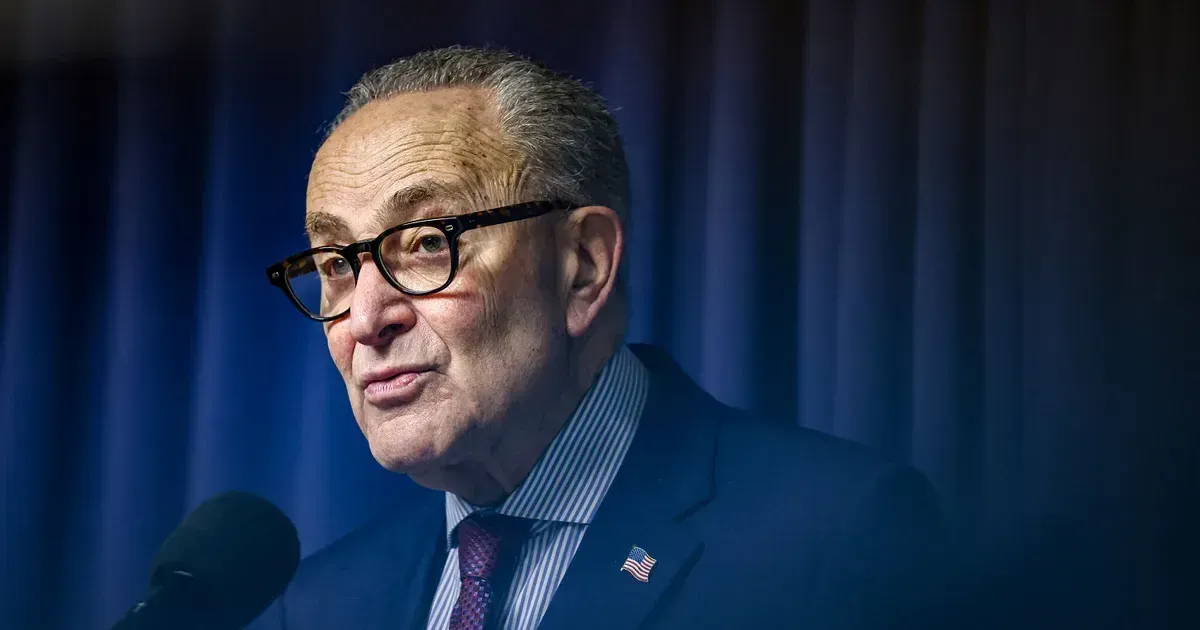
Senator Chuck Schumer has repeatedly characterized the bill as a thinly veiled attempt at voter suppression. To that end, the Democratic leadership has prepared a series of counter arguments focusing on the financial and logistical burdens such a mandate would place on elderly and low income citizens. Schumer maintains that the current systems are already secure and that the GOP proposal is a solution in search of a problem. Even so, the pressure to address perceived vulnerabilities in the electoral system continues to mount as several swing states consider similar measures at the local level.

Meanwhile, the political reality in the Senate suggests that the bill will stall after the initial procedural hurdles. Yet the strategic value for the GOP lies in the optics of the defeat. By forcing a vote, Republicans ensure that every member of the chamber must take a definitive stance on the issue. For instance, several moderate Democrats facing difficult reelection campaigns may find themselves in a precarious position if they choose to follow party lines. This specific legislative maneuver is designed to provide campaign material for the autumn months.

Public Sentiment on Photo ID Mandates

Public opinion data from NBC News reveals a significant gap between the preferences of the American public and the legislative priorities of the Democratic leadership. A recent survey indicated that 60% of Americans support a requirement for photo identification at polling places. This support crosses traditional party lines, with a substantial portion of independent voters favoring the measure. In fact, many voters view the requirement as a basic security protocol similar to those required for air travel or financial transactions.

Separately, civil rights organizations point to the disparate impact these laws have on minority communities. Organizations like the ACLU argue that millions of Americans lack the specific forms of identification required by the proposed legislation. They contend that the cost of obtaining the necessary documents, such as birth certificates or passports, acts as a modern day poll tax. At the same time, Republican lawmakers argue that the bill includes provisions to assist those without identification in obtaining a free state issued card.

The Republican leader said he could not overcome a filibuster but, under relentless pressure from the president and the far right, would put Democrats on the record against the restrictive voter I. D. bill.

By contrast, the debate over the SAVE America Act has become a proxy for a larger battle over federalism and the role of the central government in managing elections. Advocates for state rights argue that the Constitution grants the power to oversee elections to the individual states. They see a national mandate as an overreach that ignores the unique administrative challenges faced by different jurisdictions. Still, the push for a uniform national standard remains a foundation of the GOP platform.

Democratic Opposition and Filibuster Risks

Democrats have largely remained unified in their opposition to the bill, citing it as an attack on the foundational right to vote. They argue that the primary goal of the legislation is not security but the systematic disenfranchisement of specific voting blocs. In turn, they have proposed their own set of reforms aimed at expanding access, such as automatic voter registration and a federal holiday for election day. These competing visions for the American electoral system have led to a complete stalemate on the Senate floor.

At its core, the conflict centers on whether the primary goal of election law should be maximum participation or maximum security. Democrats argue that any barrier to voting, no matter how small, is a threat to the democratic ideal. Republicans maintain that without rigorous verification, public trust in the outcome of elections will continue to erode. For one, the memory of the 2020 and 2024 election cycles continues to influence how both parties approach the issue of ballot box security.

Schumer faces the difficult task of holding his caucus together against a policy that polls well with the general public. He has utilized the filibuster as a shield to prevent the bill from reaching a final vote. According to Senate aides, the Majority Leader is concerned that allowing a direct vote on the merits of the bill would expose deep divisions within his party. Despite the internal friction, the Democratic caucus remains publicly committed to blocking the legislation.

Election Integrity and Voter Access Data

Evidence regarding the actual impact of voter ID laws on turnout remains mixed among academic researchers. Some studies suggest that the implementation of strict photo ID requirements leads to a measurable decrease in turnout among minority groups. Other data sets indicate that the impact is negligible and that voters are largely able to adapt to the new requirements over time. In particular, a study from the University of California, San Diego, found that the turnout gap between white and nonwhite voters widened in states with strict ID laws.

States like Georgia and Texas have already implemented similar requirements, providing a real world laboratory for the effects of the policy. In these jurisdictions, voter turnout has remained high, though critics argue that this is due to increased mobilization efforts by community organizations rather than a lack of impact from the laws. If the SAVE America Act were to become federal law, it would effectively export these state level battles to the entire nation.

Data from the Brennan Center for Justice shows that approximately 11 percent of eligible voters do not have a government issued photo ID. For many of these individuals, the process of managing state bureaucracies to obtain the necessary documentation is a significant hurdle. The population is disproportionately comprised of students, the elderly, and low income urban residents. These groups traditionally lean toward the Democratic party, which explains the high stakes of the legislative battle.

The Elite Tribune Perspective

Can we finally drop the pretense that the SAVE America Act is a genuine attempt at legislative reform? The entire exercise in the Senate is a calculated piece of theater where the audience is not the American people, but the donor class and the primary base. Republicans are not aiming for a law; they are aiming for a 30-second campaign advertisement. They have discovered a policy that polls well and are using it as a blunt force instrument to beat their opponents into a corner of unpopularity. It is a tactical trap, and Chuck Schumer has no choice but to walk right into it.

Democrats find themselves in a prison of their own making. By reflexively opposing any security measure as "suppression," they have handed the GOP a permanent rhetorical victory. It is possible to believe in both election security and expanded access, yet the current political climate permits no such detail. If the left continues to ignore a majority of the public finds photo ID requirements reasonable, they will continue to lose ground on the broader issue of election administration.

We are watching an exercise in political cynicism where the actual integrity of the vote is a secondary concern to the scorekeeping in Washington. The Senate has become a place where popular ideas go to die in exchange for a fundraising email.