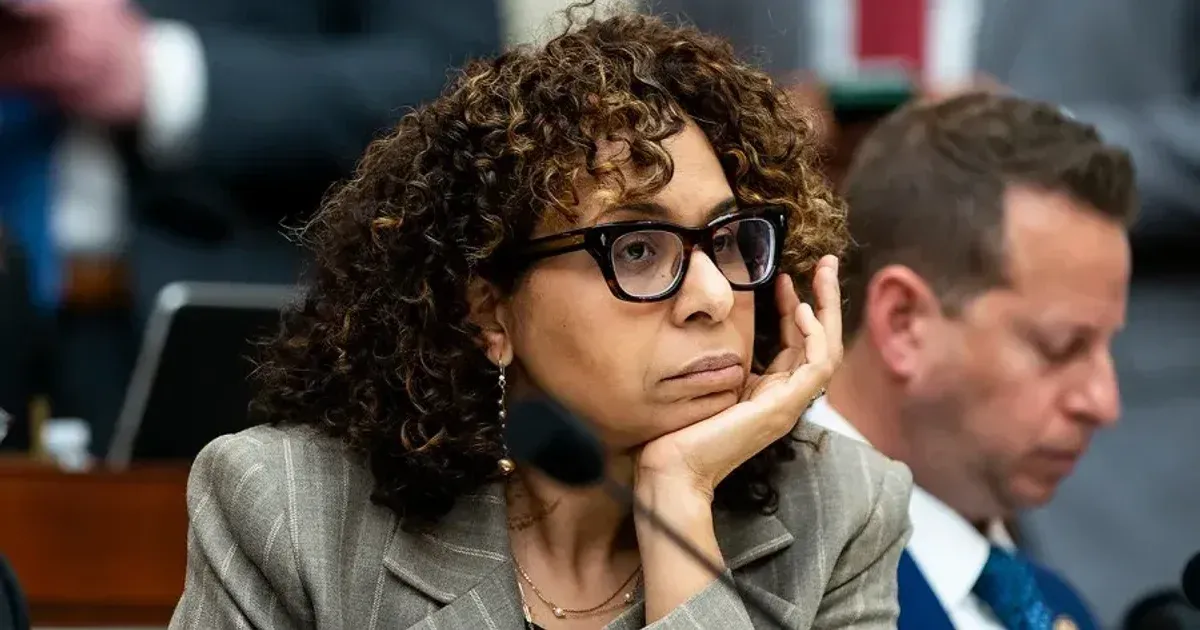
Sydney Kamlager-Dove, a top Democrat from California, condemned the financial and social toll of the escalating U.S.-Israeli military campaign in Iran. Kamlager-Dove made the remarks on April 17, 2026. Her remarks followed a period of intense public scrutiny regarding the administration’s long-term military objectives in the Middle East. Captured in a video by MeidasTouch reporter Pablo, the congresswoman referenced a controversial, previously deleted image of the president to emphasize her frustration with the domestic fallout of the conflict. This exchange highlights the deepening animosity within the House of Representatives as military expenditures continue to climb without a definitive conclusion in sight.
Economic repercussions of the war are visible at gas stations and grocery stores across the United States. While the White House initially promised a swift resolution to the hostilities, the protracted nature of the engagement has kept energy markets in a state of constant volatility. Crude oil and gasoline prices show little sign of returning to pre-war levels. Fertilizer costs, a critical input for American farmers, have also surged, threatening the stability of the domestic food supply and increasing the cost of living for millions. High inflation and supply-chain disruptions have become the primary drivers of political discontent in Washington.
Analysts suggest that the economic burden of the war is now overshadowing the initial national security arguments used to justify the intervention.
Capitol Hill Friction Over Iran Military Expenses
Republican senators are growing increasingly vocal about the lack of a clear exit strategy. John Thune, the Senate Majority Leader, signaled this week that future requests for war funding will face unprecedented resistance from within his own party. Republican lawmakers, once unified behind the president’s foreign policy, now fear that the ongoing conflict will jeopardize their prospects in the upcoming November elections. These senators are demanding a detailed plan that outlines the transition from active combat to regional stability.
Support for the war effort is no longer guaranteed, particularly as the fiscal requirements for the operation expand into tens of billions of dollars. Thune indicated that members of his caucus are specifically looking for a plan that explains how the United States will conclude its involvement without leaving a power vacuum. This shift in the GOP’s stance reflects a broader concern that the war has become an open-ended commitment with no measurable metrics for success.
Senate members are closely monitoring the 60-day threshold mandated by the War Powers Resolution. This legal framework requires the president to obtain congressional authorization for military action after two months of active hostilities. If the administration fails to articulate a plan or secure a formal Authorization for Use of Military Force, they could face a constitutional crisis by the end of April. Josh Hawley, a Republican from Missouri, explicitly warned that the clock is ticking on the current military operations.
He and several colleagues are pushing for an exit strategy that preserves security interests while easing the pressure on domestic energy prices. The prospect of a 30-day extension for national security reasons is being discussed within the White House, though such a move would likely incite further backlash from both sides of the aisle. Hawley emphasized that the American public is losing patience with the economic sacrifices required by the conflict.
"I hope that we are arriving at an exit strategy here to bring this to a close to preserve our security interests and bring down the cost of gasoline," Senator Josh Hawley said to reporters.
Republicans Seek Iran Exit Strategy as Energy Prices Rise
Senator Lisa Murkowski is currently leading a bipartisan group to draft a new authorization for the use of force. The document would establish strict parameters for when and how military power can be deployed in the Iranian theater. Murkowski believes that a formal legislative framework is necessary to ensure the executive branch remains accountable to Congress. Her efforts coincide with reports that the administration is preparing an enormous new spending request to replenish military stockpiles and support Israeli operations.
Without the support of senior Republicans like Murkowski and Thune, the White House may find itself unable to secure the necessary funds to continue the campaign. The tension between the executive branch and the Senate illustrates a significant breakdown in the traditional unity often seen during times of war. Lawmakers are no longer willing to provide a blank check for military engagements that lack a transparent endgame. Murkowski pointed to the 60-day deadline as the primary motivation for finalizing the legislative text before the end of the month.
Economic Pressures and the Strait of Hormuz Crisis
Oil markets reacted with cautious optimism on April 17, 2026, following news that the Strait of Hormuz might reopen. The essential maritime artery has been a central point of contention throughout the conflict, as its closure sent global energy prices skyrocketing. An agreement to resume shipping through the strait could provide immediate relief to international markets, although the long-term stability of the region remains uncertain. Traders remain skeptical of the durability of any ceasefire or reopening agreement given the intensity of the recent fighting.
Even a partial resumption of traffic would help lower the sticker shock at American pumps, which the president warned might persist through the election season. Despite the potential for a breakthrough at sea, the underlying costs of the land war continue to drain the federal treasury. The financial impact of the conflict has already forced several domestic infrastructure projects to be delayed as funds are diverted to the Department of Defense. The reallocation of resources has become a major talking point for local leaders who are seeing their communities struggle with decaying services and rising prices.
Mayor Zohran Mamdani Confronts Rising Domestic Costs
New York City Mayor Zohran Mamdani has taken his message to a national audience, linking the war's expenses to the struggles of urban residents. During a recent interview, the mayor argued that the billions of dollars spent on the Iran conflict should instead be invested in domestic programs to combat the rising cost of living. Mamdani's stance reflects a growing movement among local officials who believe that the national security narrative is out of touch with the daily realities of their constituents.
He highlighted the disparity between the administration's foreign policy priorities and the needs of working-class Americans who are facing record-high rents and utility bills. The rhetoric is gaining traction in major metropolitan areas where the economic fallout of the war is most acute. Mamdani's critiques add a new dimension to the political debate, shifting the focus from military strategy to the opportunity costs of war. His message connects with a segment of the electorate that feels abandoned by the federal government's focus on overseas interventions. Foreign policy decisions are now being judged through the lens of domestic economic survival.
War Powers Pressure
Foreign policy consensus in Washington is collapsing under the weight of grocery bills and fuel receipts. The current frantic maneuvering by Senate Republicans to draft an exit strategy is not a sudden rediscovered respect for the War Powers Act; it is a desperate attempt at self-preservation. These lawmakers recognize that the electorate’s patience for geopolitical grandstanding ends where the family budget begins. By attempting to put a 60-day leash on the administration, the GOP is trying to distance itself from a conflict they previously enabled, hoping to avoid a total electoral wipeout in November. The reality is that the U.S. has no viable exit that does not involve a perceived retreat, a fact the White House is hiding behind 30-day extensions and national security rhetoric.
The economic damage is already structural. Reopening the Strait of Hormuz is a temporary sedative for a market that has already priced in long-term instability. Fertilizer and energy costs have permanently reset the floor for domestic inflation, meaning even a total cessation of hostilities tomorrow will not return the U.S. economy to its 2025 baseline. President Trump’s reliance on religious imagery and populist bravado has reached the limit of its effectiveness when contrasted with the hard math of a prolonged war. The administration is trapped between an undeliverable military victory and a politically fatal withdrawal.
The conflict is no longer about Iran; it is a referendum on the sustainability of American interventionism in a period of domestic decay. The verdict will be delivered at the ballot box, not on the battlefield. The era of the blank check is over.