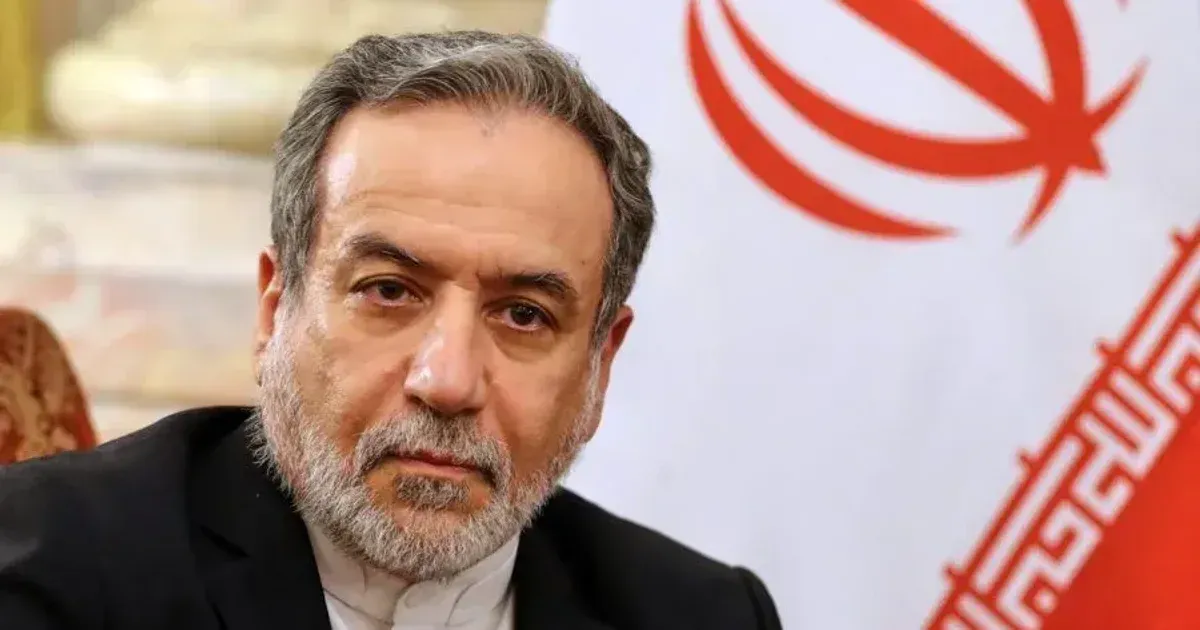
Abbas Araghchi faced a rare public rebuke from domestic state media on April 17, 2026, after the foreign minister issued a social media statement regarding maritime access in the Strait of Hormuz. His unexpected post on the platform X suggested that the essential waterway would remain open for all commercial vessels during the 10-day ceasefire between Israel and Lebanon. Hardline outlets inside Tehran immediately questioned the authority behind such a declaration. These news organizations typically reflect the views of the security establishment rather than the diplomatic wing of the government.

The Strait of Hormuz is a choke point for roughly one-fifth of the world’s daily oil consumption. Any Iranian suggestion that its status depends on temporary regional truces introduces new volatility into global energy markets. Iranian diplomats hoped to leverage the brief cessation of hostilities between Israel and Lebanon to project an image of regional stability. Araghchi claimed the passage was fully operational for commercial traffic for the remainder of the ceasefire period. His phrasing implied that maritime safety was a conditional offering from Tehran instead of a permanent state of affairs.

Iranian State Media Questions Foreign Policy Shift

State-run news agencies in Tehran described the timing of the tweet as problematic. They argued that foreign policy regarding the Persian Gulf falls under the jurisdiction of the Supreme National Security Council. Critics within the Iranian media suggested that Araghchi spoke without consulting the military commanders who oversee the gulf waters. Diplomatic messaging usually undergoes rigorous vetting before reaching international audiences. A tweet appearing suddenly on a Friday afternoon suggests a lack of coordination within the upper levels of the Iran leadership.

Journalists at the state outlet highlighted the ambiguity of the phrase for the remaining. This wording sparked confusion among maritime insurers and shipping conglomerates in London and Singapore. If the opening of the strait is tied specifically to the Israel-Lebanon truce, the risk of closure returns the moment fighting resumes. International law defines the strait as an international waterway, yet Tehran frequently asserts sovereign control over its narrowest sections. Direct challenges from state media against a sitting foreign minister often indicate internal power struggles between the moderate bureaucracy and the Islamic Revolutionary Guard Corps.

The Strait of Hormuz is open for all commercial vessels for the remaining duration of the ceasefire.

Foreign ministry officials attempted to clarify the statement by Saturday morning. They insisted that the message was intended to reassure global markets instead of set new conditions. This clarification did little to silence hardline commentators who view any concession on the strait as a sign of weakness. Some analysts believe Araghchi acted unilaterally to prevent a spike in shipping insurance premiums. High costs for tankers in the region directly impact the ability of Iran to export its own crude through third-party intermediaries.

Commercial Vessel Access and Regional Security Constraints

Merchant fleets rely on predictable transit through the 21-mile wide passage. The 10-day ceasefire between Israel and Lebanon offered a window of relative calm in a year defined by maritime skirmishes. Araghchi sought to capitalize on this pause to attract foreign investment back to Iranian ports. Military leaders in Tehran however maintain that maritime security is an internal matter not subject to diplomatic negotiation. They have previously used the threat of blockade as a primary deterrent against Western sanctions.

Naval units from the IRGC operate high-speed patrol boats throughout the Hormuz passage. These forces have a history of seizing commercial vessels when political tensions escalate in the Levant. Araghchi’s tweet seemed to bypass the chain of command that these naval units follow. Discrepancies between the Ministry of Foreign Affairs and the armed forces create a dangerous environment for civilian captains. Shipping data from early April showed a 15% decrease in traffic through the strait because of heightened war risk assessments. Araghchi hoped to reverse this trend with a single social media post.

Global energy prices reacted sharply to the internal Iranian dispute. Brent crude futures dipped 1.2% immediately after the tweet before recovering when state media issued its critique. Traders remain wary of any diplomatic promise that does not have the explicit backing of the Iranian military. The 10-day ceasefire is currently on its fourth day. Most of the commercial shipping industry continues to avoid the northern gulf routes despite the minister’s assurances.

Domestic Tensions Rise Within Tehran Governance Circles

Abbas Araghchi occupies an unstable position within the current administration. His efforts to de-escalate tensions with the West often clash with the ideological mandates of the clerical establishment. State media outlets act as the mouthpiece for these conservative factions. By labeling his tweet as unexpected, the news agency signaled that Araghchi had stepped outside his defined lane. Such public disagreements are rarely accidental in the tightly controlled Iranian information environment.

Government insiders report that the Supreme Leader’s office was displeased with the casual nature of the announcement. Important maritime policy is typically announced via formal state decrees instead of social media threads. The use of X, a platform technically banned for the general Iranian public, adds another layer of irony to the controversy. Araghchi has used the platform to reach Western audiences directly, bypassing traditional diplomatic cables. This strategy has now backfired by exposing the fractured nature of Iranian decision-making.

The current ceasefire is scheduled to expire at the end of next week. If hostilities between Israel and Lebanon resume, the fate of the Strait of Hormuz will once again become a central concern for global trade. Araghchi has not deleted the tweet despite the domestic backlash. His silence suggests a refusal to back down even as his own government’s media arms attack his credibility. Intelligence agencies in the West are monitoring the rift for signs of a broader shake-up in Tehran. Stability in the Persian Gulf depends on a unified command structure that currently appears to be in disarray.

The Elite Tribune Strategic Analysis

Abbas Araghchi’s attempt to play the role of a stabilizing regional statesman is a transparent fiction that has finally collided with the reality of Iranian power dynamics. By tying the freedom of navigation in the Strait of Hormuz to a temporary ceasefire, the foreign minister has inadvertently confirmed the world’s worst fears. Tehran views international waters as a political faucet to be turned on and off at the whim of the regime. The social media move was not a gesture of peace but a clumsy effort to exert leverage over the global economy while the IRGC keeps its finger on the trigger.

The internal rebuke from state media is the most telling aspect of this saga. It proves that Araghchi is a minister without a mandate, a diplomat whose words carry no weight with the men who actually control the patrol boats. Investors and shipping companies would be fools to take his tweets at face value. The foreign ministry is merely a decorative facade designed to distract the West while the security apparatus pursues a policy of maritime extortion. If Iran truly wanted to secure the strait, it would stop using commercial shipping as a hostage in its regional wars.

Instead, the regime offers 10 days of safety like a kidnapper granting a brief phone call. It is not diplomacy. It is a racket.

Expect the hardliners to consolidate control over maritime messaging in the coming weeks. Araghchi’s relevance is fading as the shadow of the IRGC grows longer over every aspect of Iranian life. The international community must treat the Strait of Hormuz as a permanent trigger point regardless of whatever soothing words appear on social media. Tehran is a house divided against itself, and in such a house, the most aggressive tenant always wins. Araghchi’s tweet was a mistake of vanity. The subsequent crackdown is a reminder of who really holds the keys to the gulf.