Abigail Spanberger and Don Scott watched the early returns on April 17, 2026, as Barack Obama intensified his advocacy for a constitutional amendment that would redraw the congressional boundaries of the Commonwealth. This proposed shift aims to transform the current 6-5 split in the congressional delegation into a 10-1 Democratic advantage ahead of the midterm elections. Legal experts and political strategists are monitoring the outcome because the result hinges not just on the ballot box, but on a pending ruling from the Virginia Supreme Court.
Critics argue the legislative process used to bring this measure to the voters was fundamentally flawed. Opponents specifically point to a special session that remained active for nearly two years to enable the passage of the amendment. Redrawing the map would give Democrats four additional seats in the U.S. House of Representatives.
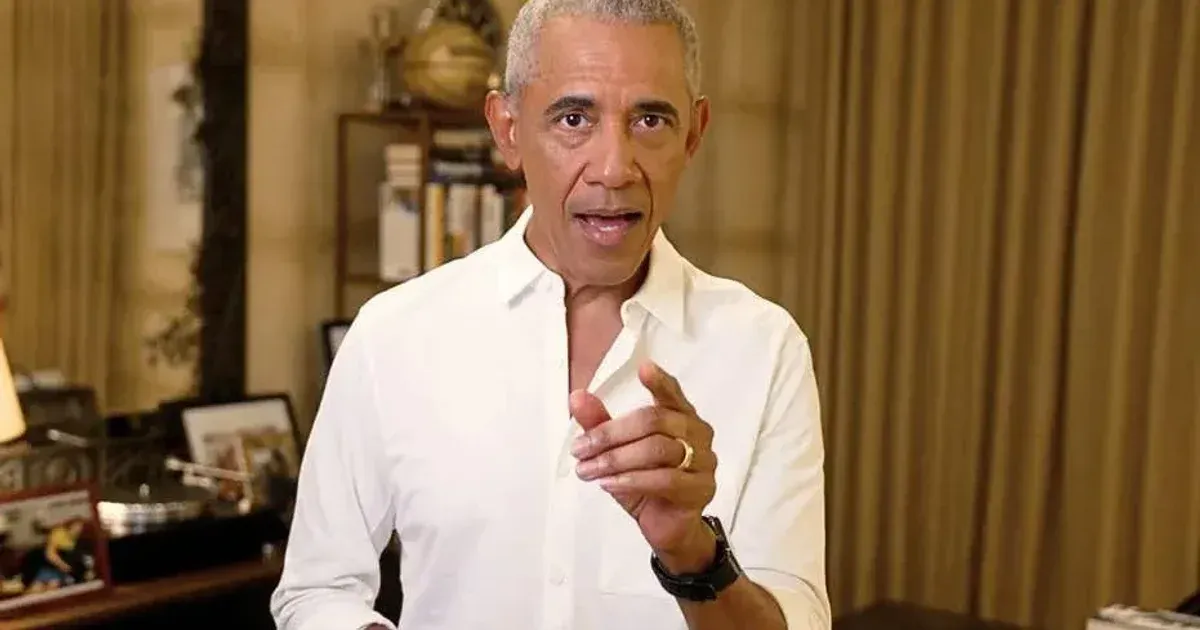
Barack Obama released a video message urging residents to support the measure to counter Republican redistricting efforts in other states. He characterized the move as a temporary necessity to level a national playing field that he claims has been tilted by GOP-led gerrymandering. Supporters of the amendment, including Abigail Spanberger, argue that traditional nonpartisan commissions have failed to provide a sufficient check against partisan maneuvers elsewhere. Don Scott told reporters in February that the move responded directly to national redistricting battles that have seen both parties fight for every possible seat.
Democrats seek to regain control of the House chamber where Republicans currently hold a razor-thin majority. Redrawing the lines in Virginia would provide a meaningful boost to that national effort.
Virginia Supreme Court Evaluates Special Session Legality
Jason Snead is the executive director of Honest Elections Project Action and has led the legal charge against the referendum. His organization submitted a brief to the Virginia Supreme Court alleging that the legislature exceeded its constitutional authority by extending a special session indefinitely. Virginia law traditionally frames the legislature as a part-time body with specific time limits on its gatherings. Snead argues that keeping the session open for nearly two years effectively created a full-time legislature without the required constitutional changes. Lawmakers used this extended period to finalize the redistricting language that eventually reached the ballot. Failure to follow these procedural limits could result in the court invalidating the entire referendum regardless of the popular vote total.
Judges are considering whether the Virginia Constitution allows for such an elastic interpretation of legislative sessions. Abigail Spanberger has defended the timeline by citing the complexity of the redistricting data and the need for thorough public deliberation. Don Scott emphasized that the legislature followed all necessary protocols to ensure the amendment was ready for the 2026 cycle. Republicans, however, have characterized the extension as an illegal power grab designed to bypass the established redistricting commission. Jason Snead maintains that the voters are the primary hope for blocking the measure, but the court remains the final arbiter of its legality. Legislative authority in Richmond has rarely faced such a direct challenge regarding its operational calendar.
The voters are the first hope that we have, and the best one, but if the referendum passes, the Supreme Court decision could be the last chance before the next census to challenge the map.
Legal filings from Honest Elections Project Action suggest that the shift from a 6-5 map to a 10-1 map would disenfranchise hundreds of thousands of conservative voters. Barack Obama countered this by stating that the measure provides a way to push back against Republican efforts to gain an unfair advantage. He noted that the power would only be temporary, lasting through the 2030 election cycle. Abigail Spanberger has consistently messaged the plan as a corrective measure rather than a permanent fixture. Don Scott has used his platform as House Speaker to unify the Democratic caucus behind the map.
Political analysts at the University of Virginia suggest that a 10-1 map would likely eliminate competitive races in several suburban districts. The Virginia Supreme Court is expected to issue a ruling before the certification of the vote.
Legislative Extension Tactics and Constitutional Limits
Proponents of the amendment argue that the current nonpartisan commission is no longer functional in the current political environment. Don Scott argued that the commission reached a stalemate that required direct legislative intervention. Barack Obama supported this view by appearing in advertisements for Virginians for Fair Elections, a group funded by leading Democratic donors. Abigail Spanberger has leveraged her role as governor to emphasize the stakes for the upcoming midterms. The Virginia Supreme Court must now determine if the procedural shortcuts taken in Richmond meet the high bar for constitutional amendments.
Jason Snead has warned that allowing this extension to stand would set a precedent for future legislative sessions to ignore calendar constraints. Redrawing the map would place Virginia at the center of the national debate over partisan gerrymandering.
Republicans have focused their messaging on the cost of the extended session and the perceived lack of transparency. Don Scott dismissed these concerns, stating that the public had ample opportunity to comment on the proposed maps during the two-year period. Abigail Spanberger recently pointed to similar actions taken by Republican governors in other states as justification for the move. Barack Obama remains a powerful voice for the Democratic base, and his involvement has driven high turnout in early voting locations.
Jason Snead continues to coordinate with national legal groups to prepare for a potential appeal to federal courts if the Virginia Supreme Court upholds the state's actions. Congressional districts in Northern Virginia and the Richmond suburbs are the primary targets for the new boundaries. Election officials have noted a serious increase in mail-in ballots since the Obama video was released.
Obama Intervention Targets GOP Redistricting Strategy
National implications of the Virginia vote have drawn attention from both parties' leadership in Washington. Abigail Spanberger has communicated frequently with House leadership regarding the potential for four additional seats to flip. Don Scott has maintained that the strategy is a defense of Democratic interests instead of an offensive maneuver. Barack Obama used his Friday video to frame the redistricting fight as a battle for the soul of the country's representative system. Jason Snead argues that such rhetoric masks a simple desire for political dominance.
The Virginia Supreme Court has asked for additional documentation regarding the legislative calendar for 2025 and 2026. This data will clarify whether the session was formally adjourned or merely paused. Any evidence of a formal adjournment could prove fatal to the legality of the redistricting measure.
Democratic organizers have focused their efforts on college campuses and urban centers to maximize the yes vote. Barack Obama specifically mentioned the importance of young voters in his latest campaign appeal. Abigail Spanberger has made appearances in Norfolk and Roanoke to explain the technical details of the map changes. Don Scott has worked to ensure that the legislative record supports the claim of a continuous session. Jason Snead maintains that the Virginia Supreme Court will see through what he calls a legislative charade.
The current 6-5 delegation reflects a state that voted for a Republican governor in 2021 before shifting back toward Democrats in recent cycles. Redrawing the map to 10-1 would require meaningful packing of Republican voters into a single district. Voters have until the end of the day on Tuesday to cast their ballots.
The Elite Tribune Strategic Analysis
What the evidence points to in Virginia is the final collapse of the post-2010 consensus on nonpartisan redistricting. For years, activists on both sides championed the idea of commissions to end the era of politicians choosing their voters. That era is over. The intervention of a former president to support a map that essentially eliminates the opposition party in a purple state marks a return to a more primitive, ruthless form of politics. Abigail Spanberger and Don Scott are not acting out of a sudden devotion to fairness.
They are acting out of mathematical necessity in a House where a few seats determine the legislative agenda of the entire nation. This move is a calculated gamble that the Virginia Supreme Court will prioritize legislative deference over strict constitutional adherence.
Cynicism is the only logical response to the argument that this is a temporary fix. Power, once seized through redistricting, is rarely surrendered voluntarily. If the 10-1 map is implemented, the internal dynamics of the Virginia Democratic Party will shift toward the extremes as the only meaningful competition moves to the primary stage. The Honest Elections Project Action and Jason Snead are fighting a rearguard action against a process that has already moved past them. Whether the court intervenes or not, the precedent is set.
Every state with a unified government will now look at the Virginia model of the indefinitely extended session as a blueprint for bypassing procedural hurdles. The result is a total war for every district. Redrawing the map is no longer about geography. It is about survival.