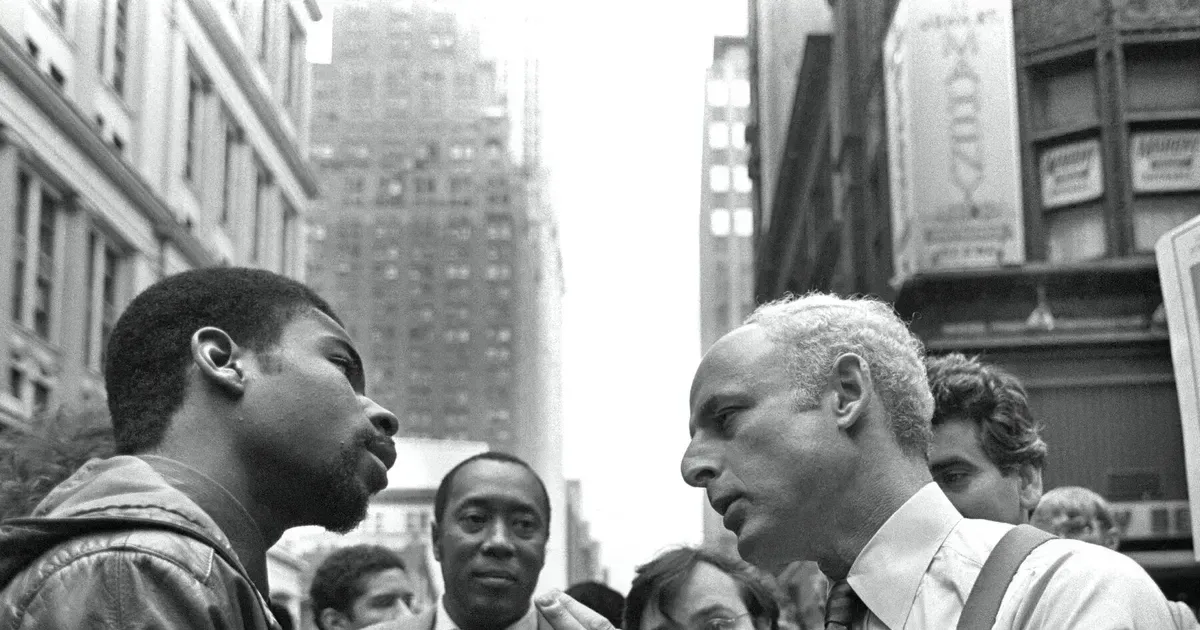
Lewis E. Lehrman, the entrepreneur who transformed a regional drugstore chain into a national powerhouse before launching a high-stakes bid for the New York governorship, died at 87 on Thursday. His career bridged the worlds of massive retail commerce, supply-side economic theory, and historical preservation. The death was reported on March 13, 2026, after Lewis Lehrman built a career across business, politics and history education. While many obituary notices focus on his business acumen, his lasting influence resides in his role as an intellectual architect for the modern Republican party during the Reagan era. Born into a family that founded the Rite Aid empire, Lehrman did not simply inherit a fortune. He actively expanded the business through aggressive logistics and market positioning. By the time he turned his sights toward public office in the early 1980s, he possessed both the financial resources and the ideological conviction to challenge the established political order. He campaigned as a man of ideas rather than a career politician.
Lehrman Leaves a Political Legacy
Lehrman began his professional life in the trenches of the retail sector. He joined the family firm when it was a modest operation and helped steer its growth into one of the largest pharmaceutical retailers in the United States. Under his tenure, the company optimized its supply chain and standardized the customer experience across hundreds of locations. Sales figures skyrocketed as the brand became a staple of East Coast suburban life. Success in the private sector provided the capital necessary for his later ventures in both politics and philanthropy. Separately, his experience in the business world informed his deep skepticism of government intervention in the economy. He frequently argued that the same principles of efficiency and competition that built retail empires should be applied to the administration of the state. This strategy relied on the belief that a strong private sector would naturally solve social ills if left unencumbered by excessive regulation. Lehrman maintained a rigorous work ethic that bordered on the obsessive. He was known to memorize inventory statistics and demographic data for every region where the company operated. Such detailed knowledge allowed him to outmaneuver competitors who relied on more traditional management styles. By the late 1970s, he had amassed enough personal wealth to pivot toward his true passion: the intellectual foundations of American governance.
Business Wealth Became GOP Influence
New York politics in 1982 offered a collision between two diametrically opposed visions of the American future. Lehrman secured the Republican nomination by positioning himself as a staunch disciple of Ronald Reagan. He campaigned on a platform of significant tax cuts and a return to the gold standard. To soften his image as a wealthy businessman, he famously wore red suspenders during his public appearances. Opposing him was Mario Cuomo, the Democratic lieutenant governor who would become a liberal icon. The race was characterized by its intensity and the vast sums of money involved. Lehrman spent approximately $13.9 million of his personal fortune on the campaign, a figure that was unheard of for a state race at the time. He traversed the state in a private plane, visiting small towns that had long been neglected by the New York City-centric political machine.
If schoolchildren don't know American history, it is not the fault of Lew and the Gilder Lehrman Institute.
Election night proved to be a closer contest than many pundits predicted.
Historical preservation became Lehrman's primary focus in his later years. He partnered with Richard Gilder to found the Gilder Lehrman Institute of American History in 1994. The organization began with a mission to improve the quality of history education in primary and secondary schools. It eventually grew into one of the most significant private collections of historical documents in the world.
The collection houses more than 85,000 items, including original letters from George Washington and Thomas Jefferson. It also contains the most extensive collection of papers related to the life and presidency of Abraham Lincoln. By contrast to other private archives, the institute made these materials accessible to students and teachers through digital initiatives and physical exhibitions. This effort sought to counteract what Lehrman perceived as a decline in civic literacy among younger generations. Meanwhile, the institute developed a network of affiliate schools that receive specialized curriculum materials and access to teacher seminars. It also sponsors the Lincoln Prize, which honors the best scholarly work on the Civil War era. Lehrman was frequently seen at the institute's headquarters, personally reviewing new acquisitions or discussing pedagogy with visiting historians. He believed that a nation without a deep understanding of its own past was vulnerable to demagoguery and internal collapse.
Legacy Is More Than a Fortune
Consider the irony of a man who dedicated his final decades to preserving the physical artifacts of American history at a time when the nation seems intent on rewriting its narrative to suit partisan whims. Lewis Lehrman was an anomaly in the modern age, a man who possessed the wealth of a titan but the soul of a librarian. He belonged to a generation of conservatives who believed that ideas actually mattered more than optics. Today, the Republican party has largely abandoned the intellectual rigor of the gold standard for the populist fervor of the grievance economy.
Lehrman's obsession with hard money was not only a fiscal preference; it was a moral stance against the perceived lightness of modern life. He understood that when money becomes meaningless, words soon follow. His failed 1982 gubernatorial bid remains a fascinating study in what happens when an unapologetic intellectual attempts to speak to a mass audience. While he lost the vote, he won the long game by ensuring that the primary documents of the American experiment would survive long after his own voice fell silent.
We are left with his archive, a vast repository of truth that stands as a silent rebuke to the ephemeral noise of contemporary discourse.