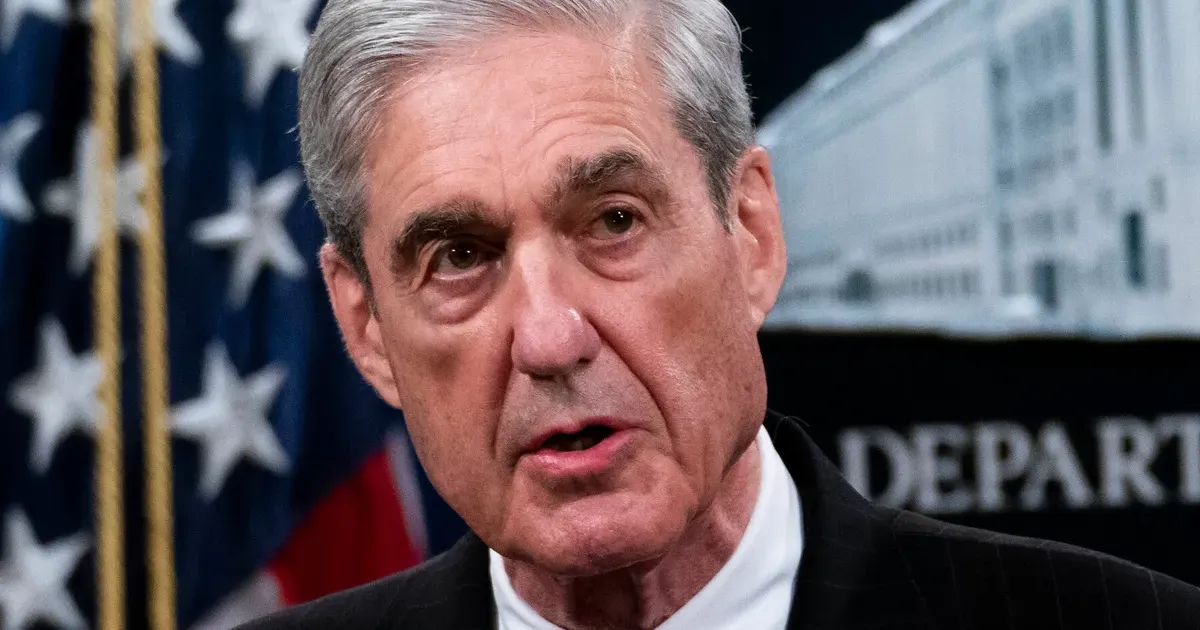
Robert Mueller, the former FBI director who steered the investigation into Russian election interference, died on March 21, 2026, after a lengthy battle with Parkinson’s disease. He was 81 years old. Family members confirmed his passing early Saturday morning, noting that the decorated veteran died peacefully at his home. He had lived largely out of the public eye since his 2019 testimony before Congress. Medical professionals had monitored his condition since a formal diagnosis in August of the previous year.

President Donald Trump issued a blunt reaction to the news on social media. According to NBC News reporter Julie Tsirkin, the former president stated he was glad regarding the death of the man who spent years investigating his 2016 campaign. This reaction contrasted sharply with the somber tributes flowing from the Department of Justice and the FBI headquarters. Colleagues remembered him as a stoic institutionalist who focused on the rule of law over political popularity. He remained silent during the years of criticism that followed his special counsel report.

Robert Mueller Career and FBI Leadership

Mueller earned his reputation as a no-nonsense prosecutor long before the Russia probe made him a household name. He served in the Marine Corps during the Vietnam War, leading a rifle platoon and earning a Bronze Star and a Purple Heart. These early experiences in combat shaped his rigid management style and his commitment to hierarchy. He later joined the Department of Justice, where he oversaw the prosecution of Panamanian leader Manuel Noriega and the investigation into the Lockerbie bombing. Colleagues from that era described him as a tireless worker who expected absolute precision from his subordinates.

President George W. Bush appointed him to lead the bureau in 2001. His confirmation occurred exactly one week before the September 11 terrorist attacks, a timing that defined his entire twelve-year tenure. He managed the massive shift of the agency from a domestic law enforcement body to a global counterterrorism organization. This transformation required restructuring thousands of positions and shifting the focus toward intelligence gathering. He received a rare two-year extension from President Barack Obama in 2011 to ensure stability within the national security apparatus. Lawmakers on both sides of the aisle praised his steady hand during that period.

Russia Investigation and Special Counsel Scope

Deputy Attorney General Rod Rosenstein appointed him as special counsel in May 2017. The move followed the firing of James Comey and the rising worries regarding foreign interference in the democratic process. Robert Mueller assembled a team of elite prosecutors and investigators to probe ties between the Trump campaign and the Kremlin. For twenty-two months, the nation watched as the investigation produced dozens of indictments and several high-profile convictions. The team worked from a secure office in Washington, maintaining a level of secrecy that was rare for the modern political climate.

The final report detailed extensive efforts by the Kremlin to influence the 2016 election through social media manipulation and hacking. Investigators documented numerous contacts between campaign officials and Russian operatives. But the report did not establish a criminal conspiracy between the campaign and the Russia government. It also detailed ten instances where Donald Trump may have obstructed justice, though Mueller declined to make a traditional prosecutorial judgment on those actions. He cited Department of Justice policy against indicting a sitting president as a primary constraint on his office.

"I am glad he is gone," Donald Trump wrote in a social media statement following the news.

Separately, the investigation resulted in the indictments of 34 people and three companies. Figures like Paul Manafort and Michael Flynn faced legal consequences because of the work of the special counsel. Still, the lack of a definitive conclusion on obstruction of justice left the country deeply divided. Critics argued that Mueller should have been more forceful in his findings, while supporters claimed he followed the rules to the letter. He refused to go beyond the written text during his subsequent congressional appearances. He was a man of few words who allowed a 448-page document to serve as his final testimony to the American people.

Parkinson’s Diagnosis and Health Decline

Health concerns began to surface publicly shortly after he left the Department of Justice. Family members told reporters that the symptoms of Parkinson’s disease became more pronounced in the early 2020s. He struggled with tremors and mobility issues that forced him to withdraw from legal consulting and public speaking. Close associates noted that while his physical health declined, his mental acuity remained sharp for several years. He spent much of his final time at his residence, surrounded by family and a small circle of former aides. They protected his privacy with the same rigor he applied to his investigations.

Parkinson's disease slowly claimed the physical vitality of a man once known for his rigid, upright posture and marathon-running endurance. The diagnosis, confirmed in late 2025, explain some of the hesitations observed during his final public testimonies. Medical experts state that the condition often progresses rapidly in patients over eighty years of age. Even so, the news of his death caught many in the legal community by surprise. He had stayed so far out of the limelight that many had forgotten the physical toll the investigation and his age had taken. His family expressed gratitude for the medical teams that provided care during his final months.

Political Legacy and National Reaction

History will record Robert Mueller as one of the most consequential law enforcement figures of the early twenty-first century. He bridged the gap between the Cold War era of the FBI and the modern age of cyber warfare and globalized terror. His tenure as director was the second longest in the history of the bureau, trailing only J. Edgar Hoover. Yet the polarization of his final assignment often overshadowed his decades of public service. Republicans who once championed him as a man of integrity eventually viewed him as a partisan adversary. Democrats who initially saw him as a savior were often disappointed by his adherence to bureaucratic norms.

The reaction from the current administration has been more measured. Attorney General Merrick Garland praised his predecessor for a life dedicated to the pursuit of justice. In fact, many current employees at the bureau still view Mueller as the architect of the modern FBI. They point to his work in integrating intelligence capabilities into every field office as his most lasting contribution. By contrast, the political firestorm surrounding the 2016 inquiry continues to burn. His death is a bookend to a specific chapter of American political history that remains unresolved in the minds of many voters. He never wrote a memoir to explain his choices.

To that end, the silence of Robert Mueller remains his most defining trait. He belonged to an era of civil service where the work was expected to speak for itself, a philosophy that clashed with the 24-hour news cycle. In turn, both his critics and his fans were able to project their own narratives onto his actions. He did not seek to correct the record or defend his reputation in the media. He simply went home when the job was finished. Final funeral arrangements are expected to be private, in keeping with his lifelong preference for discretion and humility. The bureau plans a small memorial service for former directors later this month.

The Elite Tribune Perspective

Was Robert Mueller a guardian of the law or a man who allowed the law to be used as a shield for inaction? History will likely find he was neither, but rather a victim of his own misplaced faith in institutions that were already crumbling around him. He entered the special counsel role with the naive belief that a meticulously researched report could resolve a national identity crisis. Instead, his adherence to DOJ memos regarding the indictment of a president created a vacuum that his enemies filled with lies and distortions.

He treated a knife fight like a high school debate, and in doing so, he allowed the very figures he investigated to define his legacy. The reality is that Mueller was a relic of an age where facts mattered more than framing. By refusing to speak plainly to the American public, he abdicated the moral authority that his office required. His silence was not a virtue; it was a failure of leadership that left the country more fractured than he found it. We do not need civil servants who follow rules into the abyss.

We need leaders who recognize when the rules are being used to dismantle the republic itself. Mueller’s death marks the end of the institutionalist dream.